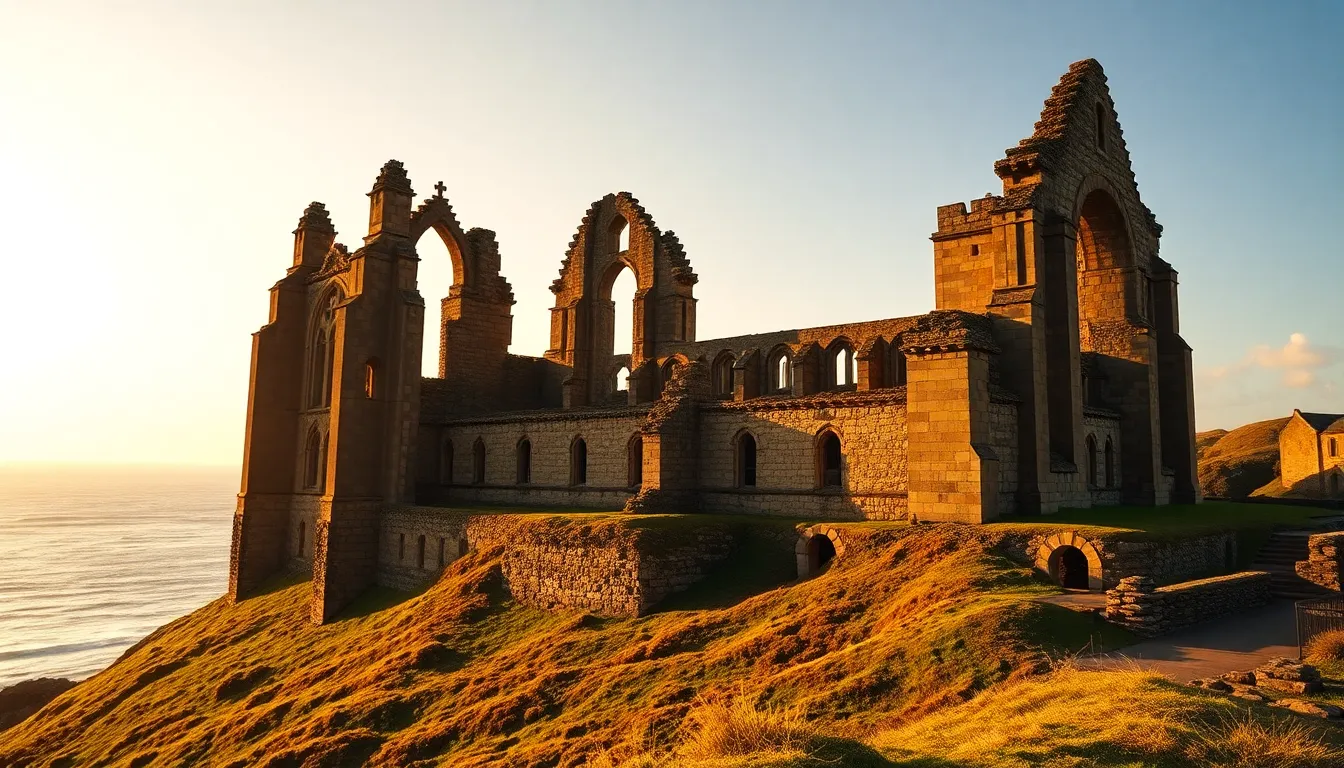
Most people know St Andrews for golf. When I bring a faith group here, I tell them to forget the golf for an afternoon, because long before it was the home of the game, St Andrews was the religious capital of Scotland. The largest cathedral the country ever built stood here. Pilgrims came from across Europe to venerate relics believed to be those of the Apostle Andrew. And on these same streets, the Scottish Reformation reached one of its sharpest, most violent flashpoints. Few places in Britain compress so much church history into one small town on the North Sea.
Standing among the cathedral ruins with the sea wind coming off the water, a group feels the layers immediately. This was the center, and then it was the battleground, and the ruins hold both truths at once. Let me take you through it.
How St Andrews Became Scotland’s Religious Capital
The town takes its name from the Apostle Andrew. According to long-held tradition, relics associated with the apostle were brought to this part of Scotland in the early medieval period, and the site grew into a major center of pilgrimage. Over time St Andrews became the seat of the leading bishop, and later archbishop, of Scotland, the ecclesiastical heart of the nation.
The relics tradition is central to understanding the place, and I am careful with groups to present it as tradition. The accounts of how Andrew’s relics came to Scotland are wrapped in legend, and historians treat the details cautiously. What is not in doubt is that medieval Scotland believed it possessed them, that St Andrews became a pilgrimage destination of the first rank, and that this belief drove the building of an enormous cathedral and shaped the spiritual life of the country. The Saltire, the white diagonal cross of Scotland’s flag, derives from the cross of Saint Andrew. The apostle’s connection to Scotland runs deep into national identity.
St Andrews Cathedral: Once the Largest in Scotland
The cathedral, begun in the twelfth century and consecrated in the early fourteenth, was the largest church ever built in Scotland. Even in ruin its scale is hard to take in. You walk the length of what was the nave and realize the building stretched far beyond what most cathedrals of its day attempted. The surviving east gable and fragments of the towers give you the height; the foundations and standing walls give you the length.
Alongside the cathedral stands St Rule’s Tower, a tall, narrow early structure that predates the great cathedral and is connected with the earlier church on the site. Groups that climb it, and the climb is steep and not for everyone, get a commanding view over the ruins, the town, and the sea. I tell people the view is the best way to grasp just how vast the cathedral complex was.
The cathedral fell into ruin after the Reformation, when it ceased to be used and was stripped over time. The skeleton that remains is a direct, physical record of what the Reformation meant in Scotland: the end of the medieval, relic-centered, pilgrimage church, and the beginning of something very different.
The Reformation Flashpoint
St Andrews is not only a place where the medieval church flourished. It is one of the places where the Reformation in Scotland turned violent, and the story is essential for a faith group.
In 1546, the Protestant preacher George Wishart was tried for heresy and burned at the stake in front of St Andrews Castle, on the orders of Cardinal David Beaton, the archbishop. Wishart’s death was a turning point. Within weeks, a group of Protestant lairds stormed the castle and assassinated Beaton, hanging his body from the castle wall. The killers then held the castle in a siege that drew in John Knox, who became a preacher to the besieged garrison. When the castle finally fell to French forces aiding the Scottish crown, Knox was captured and sent to the French galleys.
I walk groups through this carefully, because it is brutal and because it shows the Reformation as it actually was in Scotland, not a clean theological transition but a struggle with real blood in it. Standing between the castle, where Beaton died and Knox first preached, and the cathedral, the symbol of the old order, you can see the whole conflict mapped onto a few hundred yards of coastline. Later, after his galley years and exile, Knox would return and preach in St Andrews again, this time as the Reformation triumphed.
The Bottle Dungeon and the Castle
St Andrews Castle, perched on the coast beside the cathedral, is worth time on its own. The castle holds the notorious bottle dungeon, a pit cut into solid rock and shaped like a bottle, into which prisoners were lowered with no way to climb out. It is a grim reminder of how religious and political power was enforced in that age. Groups stand over it in silence more often than not.
The castle also preserves a remarkable mine and counter-mine from the siege that followed Beaton’s death, tunnels dug by attackers and defenders that visitors can still enter in part. For a group, the castle ties the Reformation drama to the physical ground better than any plaque.
St Andrews as a Hub for a Wider Itinerary
St Andrews sits on the Fife coast, an easy distance from Edinburgh, which makes it a natural anchor for a Scottish heritage itinerary. Most groups I lead set St Andrews within a route that also takes in Reformation Edinburgh and, for those with more time, the Border abbeys and Covenanter country.
A few practical points. The cathedral and castle are coastal ruins, so the sea wind is real and the weather can change fast; layers matter. St Rule’s Tower involves a tight, steep climb that some group members will sit out, so plan an alternative for them at ground level. And St Andrews is a working university town, lively and walkable, which makes it a pleasant base with good places to gather a group for a meal and reflection at the end of a day.
For the wider story, see our United Kingdom spiritual sites hub. St Andrews connects directly to the Scottish Reformation and John Knox, since Knox’s own story passes through here, and it pairs well with the Border abbeys for a fuller picture of medieval Scottish church life.
FAQ: St Andrews Heritage for Faith Groups
Why is St Andrews important in Christian history?
St Andrews was the ecclesiastical capital of medieval Scotland, the seat of its leading archbishop and a major pilgrimage center linked to relics traditionally associated with the Apostle Andrew. It was home to the largest cathedral ever built in Scotland, and it later became one of the flashpoints of the Scottish Reformation. Few towns hold so much church history in one place.
Is the relic tradition at St Andrews historically proven?
The accounts of how relics of Saint Andrew came to Scotland are wrapped in legend, and historians treat the details cautiously. What is certain is that medieval Scotland believed it held them, that St Andrews became a leading pilgrimage destination, and that this belief drove the building of the great cathedral and shaped the nation’s spiritual identity, including the Saltire flag drawn from Andrew’s cross.
What happened at St Andrews during the Reformation?
In 1546 the Protestant preacher George Wishart was burned for heresy outside St Andrews Castle. In response, Protestant lairds stormed the castle and assassinated Cardinal Beaton. John Knox joined the besieged garrison as a preacher and, when the castle fell, was captured and sent to the French galleys. St Andrews thus sits at the heart of the Reformation’s most violent Scottish chapter.
Can you go inside St Andrews Castle and cathedral?
Yes. Both are open as historic sites. The cathedral survives as extensive ruins with St Rule’s Tower offering a steep climb to a commanding view. The castle preserves the notorious bottle dungeon cut into the rock and the siege mine and counter-mine tunnels. Because these are coastal ruins, weather and footing matter, so plan for wind and layers.
How does St Andrews fit into a Scotland heritage trip?
St Andrews works well as an anchor on the Fife coast, within easy reach of Edinburgh. Most group leaders combine it with Reformation Edinburgh and the John Knox sites, and with more time add the Border abbeys and Covenanter country. The town is walkable and pleasant, making it a comfortable base for a group.
If your congregation wants to stand where Scotland’s medieval church reached its height and where the Reformation turned, we can help you build St Andrews into a journey that does it justice. Explore our United Kingdom destination page, see how the leader experience works on our group heritage tours, or contact us to begin planning.