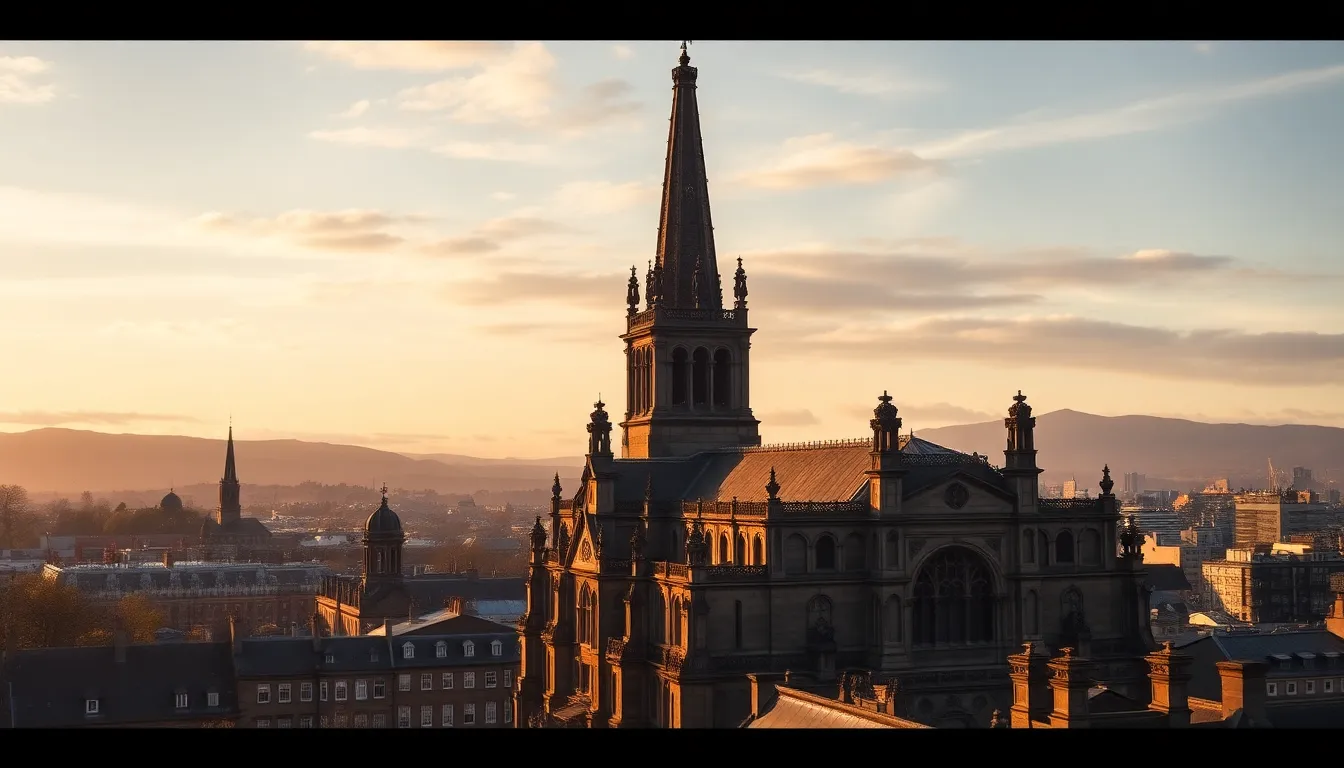
I have led groups down Edinburgh’s Royal Mile many times, and there is a moment I wait for every trip. We stop outside St Giles, and I ask the group to picture this same street in 1560, when the Scottish Parliament met just up the hill and, in a matter of days, voted to break Scotland from Rome. People sometimes assume the Reformation was a slow drift. In Scotland it arrived as a decision, made in a specific building, in a specific year, with John Knox preaching a short walk away. That concreteness is what makes Scotland such a strong destination for a Reformation-minded congregation.
If your people care about how the Protestant faith took root in the English-speaking world, Scotland is not a side note. It is one of the main chapters. Let me lay out the story and the sites.
Why Scotland’s Reformation Was Different
The Reformation in Scotland did not unfold the way it did in England. South of the border, the break with Rome began as a royal act under Henry VIII, driven heavily by the crown. In Scotland, the Reformation was more genuinely a movement from below and from the pulpit, advancing against, not led by, the reigning monarch. When the Scottish Parliament adopted a Reformed confession in 1560, the Catholic Mary, Queen of Scots, was the sovereign. The Reformation in Scotland happened in tension with the throne, not as an extension of it.
I make this distinction early with every group, because it shapes everything. The Scottish Reformation produced a Presbyterian rather than an episcopal church settlement over time, a church governed by elders and assemblies rather than by bishops appointed through the crown. That difference echoes through Scottish, and later American, Presbyterian history. Standing in Edinburgh, you are at the headwaters of a global tradition.
John Knox: The Man at the Center
John Knox is the towering figure. Born around 1514, he came to the Reformed cause early and paid for it. After the murder of the Protestant preacher George Wishart and the events at St Andrews, Knox was captured and spent roughly nineteen months as a galley slave on a French ship. That detail tends to land hard with groups. This was not a comfortable theologian. He suffered for the cause before he led it.
After his release, Knox spent years in exile, including time in England under Edward VI and on the Continent, where he was deeply shaped by John Calvin in Geneva. He called Geneva the most perfect school of Christ since the apostles. When he returned to Scotland for good around 1559, he brought that Genevan vision with him and became the driving preacher of the Scottish Reformation.
Knox was a fierce, uncompromising figure, and I do not sand off his edges for a group. His confrontations with Mary, Queen of Scots are famous, and his writing could be blistering. But he was also a serious pastor and a gifted shaper of worship and church order. The Book of Common Order and the structures of the Reformed Kirk owe much to him. He died in Edinburgh in 1572.
St Giles Cathedral: Knox’s Pulpit
St Giles on the Royal Mile is the central site of any Knox trail. This was Knox’s church. From here he preached during the most decisive years of the Reformation, and it became the symbolic heart of the Reformed cause in Scotland. A statue of Knox stands inside, and the building carries the weight of being the place where his voice shaped a nation.
A note I always give groups: St Giles is commonly called a cathedral, but in strict Presbyterian terms it has not had a bishop’s seat for most of its post-Reformation history, since Presbyterianism does not have bishops in the episcopal sense. The name stuck for historical and architectural reasons. It is a small point, but it captures the whole story of the Scottish Reformation in one building. The structure looks like a medieval cathedral and functions as a Reformed parish church.
The John Knox House and the Royal Mile
A short walk from St Giles, lower down the Royal Mile, stands the John Knox House. The building is one of the oldest surviving houses in Edinburgh, and tradition connects it to Knox in his final years. Whether or not he lived there for long, it is now a museum that tells his story and that of the period, and it makes a natural stop on a walking route through Reformation Edinburgh.
For a group, the Royal Mile itself is the teaching tool. In the space of a single walk you pass the area where Parliament sat in 1560, Knox’s pulpit at St Giles, and the house that bears his name. The whole drama is compressed into a stretch of street you can cover on foot in an afternoon, which makes Edinburgh unusually rewarding for a faith group with limited days.
1560: The Year It Became Official
The hinge year is 1560. In August of that year, the Scottish Parliament met and took three decisive actions. It adopted the Scots Confession, a Reformed statement of faith largely drafted by Knox and a group of fellow ministers known as the six Johns. It abolished the jurisdiction of the Pope in Scotland. And it forbade the celebration of the Mass.
I want groups to hold onto that year, because it anchors everything. The First Book of Discipline followed, laying out a vision for the church, for education, and for care of the poor that was strikingly ambitious. The vision of a school in every parish, though never fully realized in that era, fed Scotland’s later reputation for widespread literacy and learning. The Reformation in Scotland was not only theological. It carried a social program.
Planning a Scottish Reformation Itinerary
Edinburgh is the natural base, and most of the core Knox sites sit within walking distance on and around the Royal Mile. From there, many groups extend to St Andrews, where Knox preached and where the Reformation reached an early flashpoint, and to sites connected to the later Covenanters, who carried the Reformed cause into a century of conflict.
A practical word. Edinburgh is compact and walkable, but the Royal Mile is steep and cobbled. For a mixed-age group, build in an unhurried pace and let a good guide carry the narrative so people can look up at the buildings instead of down at a map.
For the wider picture, see our United Kingdom spiritual sites hub. The story continues naturally into the Covenanters of Scotland and reaches one of its sharpest moments at St Andrews.
FAQ: The Scottish Reformation and John Knox for Faith Groups
Who was John Knox and why does he matter?
John Knox, born around 1514, was the leading preacher of the Scottish Reformation and the figure most responsible for shaping Scotland’s Reformed, Presbyterian church. He spent time as a French galley slave, lived in exile under Calvin’s influence in Geneva, and returned to Scotland to drive the Reformation forward. He died in Edinburgh in 1572. His influence runs through Scottish and later Presbyterian history worldwide.
What is the main site connected to John Knox?
St Giles on the Royal Mile in Edinburgh was Knox’s church and is the central site. From its pulpit he preached during the decisive years of the Reformation. The nearby John Knox House, one of Edinburgh’s oldest surviving houses, is now a museum that tells his story, and both sit within an easy walk along the Royal Mile.
When did the Scottish Reformation officially happen?
The decisive year was 1560, when the Scottish Parliament adopted the Reformed Scots Confession, rejected the authority of the Pope, and forbade the Mass. The First Book of Discipline soon followed, setting out an ambitious vision for the church, education, and care of the poor.
How was the Scottish Reformation different from the English one?
In England the break with Rome began largely as a royal act under Henry VIII. In Scotland the Reformation advanced against the reigning Catholic monarch, Mary, Queen of Scots, and was driven more by preaching and popular movement. It produced a Presbyterian church governed by elders and assemblies rather than by bishops, a difference that shaped Reformed traditions far beyond Scotland.
How many days should a Scottish Reformation itinerary take?
The core Knox sites in Edinburgh can be walked in a day, since they cluster along the Royal Mile. Most group leaders extend to St Andrews and Covenanter sites, building a three to five day Reformation and Reformed-heritage route. Edinburgh works well as the base for the whole journey.
If your congregation wants to stand at the headwaters of the Reformed tradition, from Knox’s pulpit at St Giles to the year Scotland changed, we can help you build it well. Explore our United Kingdom destination page, see how the leader experience works on our group heritage tours, or contact us to start planning.