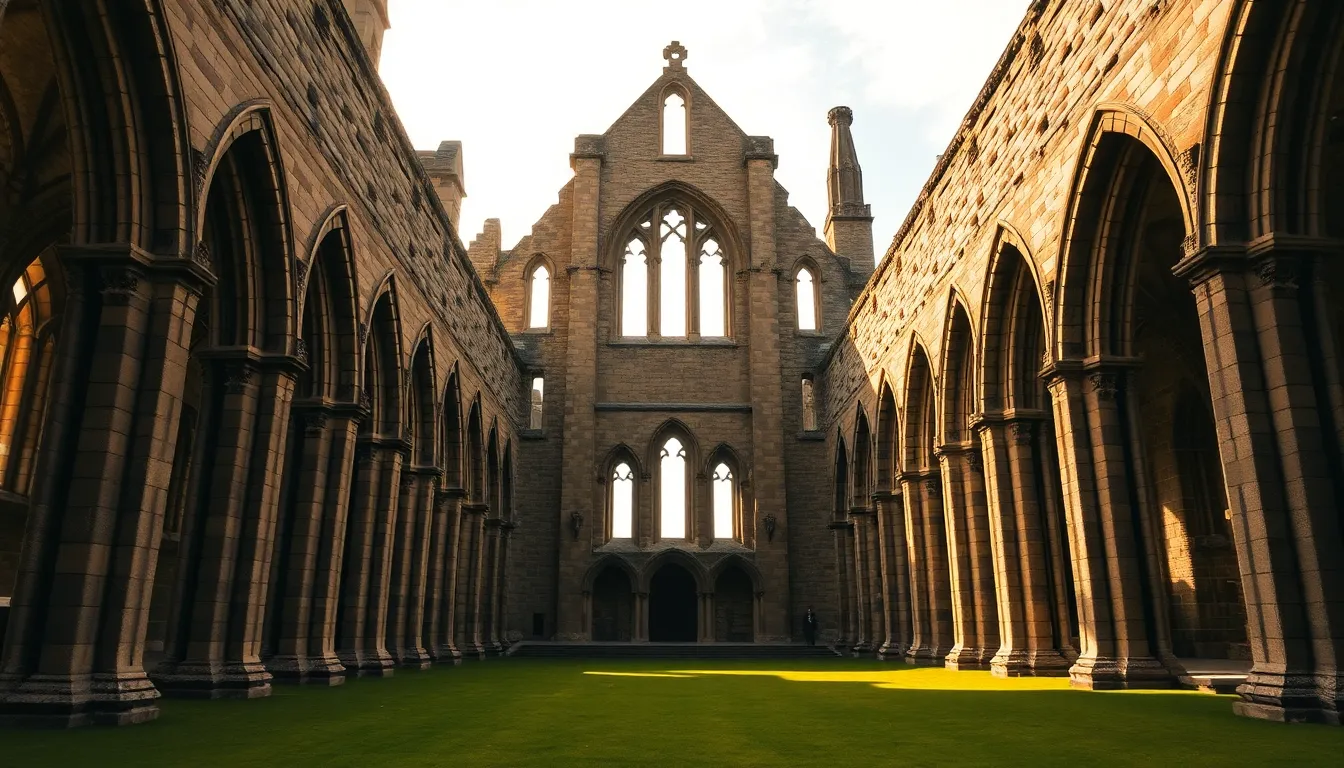
The Quietest Corner of Scotland’s Faith Story
Most groups who come to me about Scotland want Iona, or Edinburgh, or the Covenanter country of the southwest. Almost none of them ask about the Borders. And every time I take a group there, the same thing happens: someone tells me, on the last evening, that the Borders were the part they did not expect and cannot stop thinking about.
I have led groups through these green valleys for years, and I understand why they get overlooked. The Borders do not shout. There is no single famous island, no one set-piece moment. What there is instead is a string of four medieval abbeys, set in some of the gentlest country in Scotland, holding a story that runs from the Celtic missionaries through the great age of the monasteries to the wreckage of the Reformation. For a group willing to slow down, this is one of the most rewarding stretches of the whole United Kingdom. This guide is meant to orient you before you plan.
Why the Borders Matter
The Scottish Borders sit just north of the line with England, a rolling country of river valleys and sheep hills. For centuries this was a frontier, fought over and burned again and again. And yet, in the twelfth century, it became home to a remarkable cluster of monasteries: Melrose, Dryburgh, Jedburgh, and Kelso, the four great Border abbeys, all founded within a few decades of one another under King David I.
For a heritage group, the Borders hold two layers of the faith story at once. Underneath sits the older Celtic Christian root, the same Gospel-by-sea tradition you can trace across the wider region in our hub guide to United Kingdom heritage travel. On top of it sits the medieval monastic age and then the Reformation, which swept through here in the sixteenth century and left these vast churches as the roofless, sky-open ruins you walk today.
The Four Abbeys, Site by Site
Melrose Abbey
Melrose is the one most groups remember. Founded in 1136 by Cistercian monks, it became the wealthiest and most influential of the four. Even as a ruin it is breathtaking, with carved stonework so fine that visitors still pick out the famous pig playing the bagpipes high on the roofline. Tradition holds that the heart of Robert the Bruce is buried here, a detail that always catches a group’s imagination.
But the deeper Melrose story reaches back further. A few miles away stood Old Melrose, an early Celtic monastery where Saint Cuthbert, one of the great figures of northern Christianity, served in the seventh century. Standing at Melrose, you are standing where the Celtic and the medieval streams of Scottish faith meet.
Dryburgh Abbey
Dryburgh is the quiet one, and for many groups the most moving. Set in a loop of the River Tweed among ancient cedar and yew trees, it has an atmosphere that the busier sites cannot match. The ruins are softer here, wrapped in greenery, and the silence is real. I often plan Dryburgh as the place where a group pauses to read, pray, or simply sit. It is also the burial place of Sir Walter Scott, whose writing did so much to fix the romance of the Borders in the wider imagination.
Jedburgh Abbey
Jedburgh is the most complete in its scale, towering over the little town that grew around it. Founded for Augustinian canons around 1138, it gives you the best sense of how high and how grand these churches once stood. Because it sat closest to the English border, Jedburgh was burned and rebuilt repeatedly across the centuries of cross-border war, and its visitor center tells that frontier story well. For a group, Jedburgh is the site that makes the violence of this borderland real.
Kelso Abbey
Kelso is the smallest fragment today, but it was once the grandest of them all. Little survives beyond a striking section of the west end, yet that fragment alone hints at the ambition of the original. Kelso works well as a brief stop rather than a long visit, often paired with the handsome market town beside it.
The Reformation Layer
Here is the part many first-time visitors do not expect. These abbeys are ruins not mainly because of war, though war damaged them badly, but because of the Reformation. When the Scottish Reformation took hold in 1560, the monasteries were dissolved, their wealth seized, and their great churches abandoned or stripped. Walking these roofless naves, you are reading the physical record of one of the most consequential religious turns in European history.
For Protestant groups, this gives the Borders a particular weight. The wider story of the Scottish Reformation, John Knox, and what followed runs through our companion guide to Stirling and the heart of Reformation Scotland, and the later suffering of those who held the line is told in the Covenanters heritage trail. The Borders are a fine place to begin that conversation, because here you see what the Reformation swept away as well as what it built.
Planning the Trail
The four abbeys sit close together, all within a short drive of one another along the Tweed valley. This is one of the easiest stretches of Scotland to move a group through, with no ferries, no single-track roads, and no long transfers. A full day lets you see all four at a gentle pace, though I usually give the Borders a full day and a half so the group can linger at Melrose and Dryburgh rather than rushing.
Melrose itself makes a good base, a small, walkable town with enough hotel and guesthouse options for a group. From there the abbeys, the Cuthbert sites, and the wider valley are all within easy reach. The Borders also pair naturally with Edinburgh, which sits about an hour to the north, so many groups treat this as a day or two added to an Edinburgh-based itinerary rather than a separate trip.
On timing, the same rule applies here as across these northern nations. Late spring through early autumn, May to September, gives you long daylight and the gentlest weather. The Borders are especially lovely in early summer, when the valleys are deep green and the light lasts past nine in the evening. You can see how the seasons shape the wider region in our United Kingdom heritage hub.
What to Prepare Your Group For
The abbeys are open ruins, which means uneven stone floors, grassy graveyards, and steps without modern handrails in places. Comfortable shoes that handle uneven ground matter here, and a waterproof layer is wise in any season, since Border weather turns quickly.
A little reading beforehand pays off, as it always does. A group that arrives knowing something of Cuthbert, of King David’s great age of abbey-building, and of what the Reformation did to these places gets far more from standing in them. When people already carry the story, the silence of Dryburgh and the scale of Jedburgh speak for themselves.
FAQ: The Scottish Borders Heritage Trail
What are the four Border abbeys?
Melrose, Dryburgh, Jedburgh, and Kelso. All four were founded in the twelfth century under King David I and sit within a short drive of one another along the River Tweed. Each has its own character: Melrose for its carved grandeur and Bruce connection, Dryburgh for its riverside calm, Jedburgh for its towering scale, and Kelso for the fragment of a once-magnificent church.
How does the Borders trail fit with the rest of a Scotland trip?
Beautifully, because it is so easy to reach. The Borders sit about an hour south of Edinburgh, so most groups add a day or a day and a half onto an Edinburgh-based itinerary. There are no ferries or remote roads here, which makes it one of the simplest stretches of Scotland to move a group through.
Why are the abbeys ruins?
Two forces. Centuries of cross-border war with England damaged them repeatedly, since this was a frontier land. Then the Scottish Reformation of 1560 dissolved the monasteries and abandoned their churches for good. The roofless naves you walk today are a physical record of that religious turn, which makes the Borders a meaningful stop for Protestant groups.
How much time should a group spend in the Borders?
A full day lets you see all four abbeys at a reasonable pace. I usually recommend a day and a half so the group can linger at Melrose and Dryburgh without rushing the others. Melrose makes the best base, a small walkable town with enough accommodation for a group.
Do group leaders really travel free?
Yes. On all Heritage Tours group itineraries, when your group includes 15 or more participants, the group leader travels free. It is how we honor the work that pastors, rabbis, and educators put into bringing their communities together.
If the quiet of the Borders is calling to your community, I would love to talk through what the trip could look like. Start with our United Kingdom heritage destination and our group heritage tours, then contact us whenever you are ready to begin the conversation.