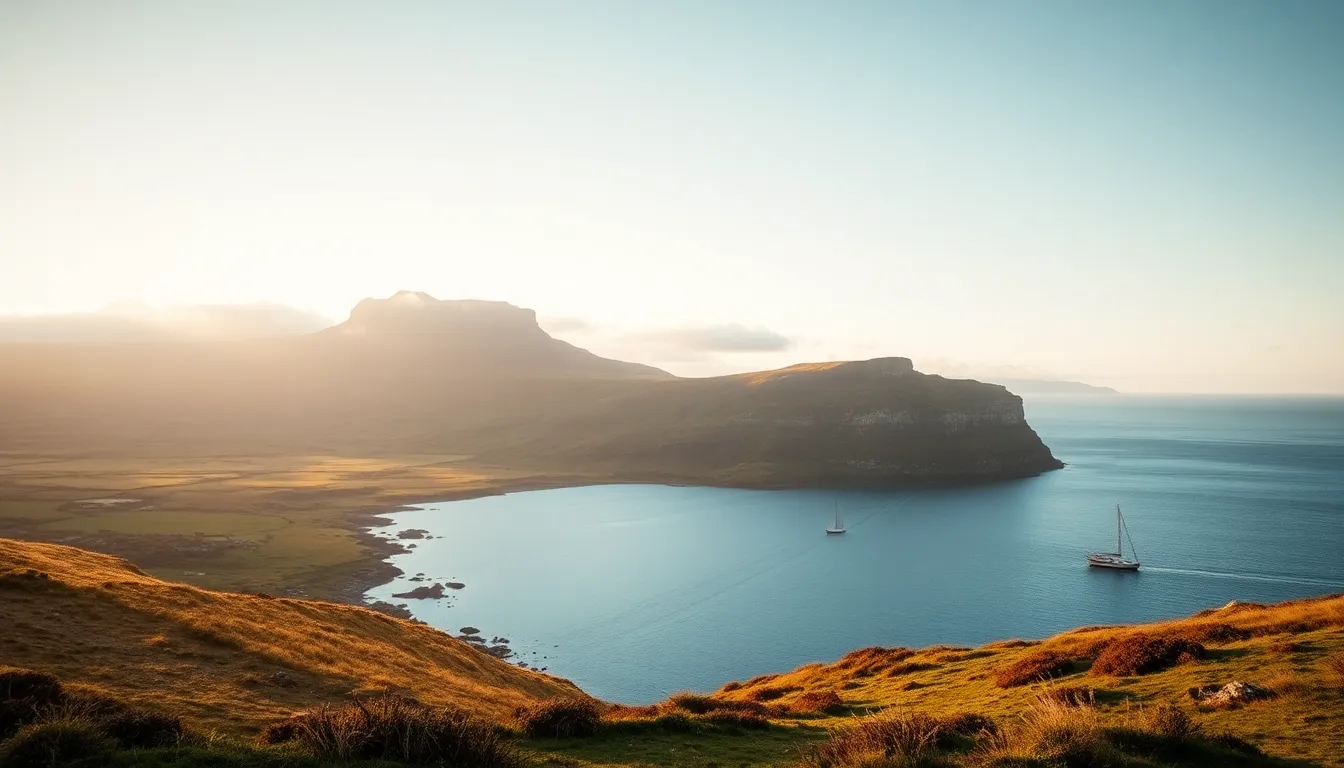
The first time I traced Columba’s route with a group, we started in Ireland and ended on Iona, and I watched a transformation happen that I did not plan. We began in Derry, a busy modern city, and over a few days we moved north and west until we were standing on a small Hebridean island with the Atlantic at our backs. One of the pastors with me said it felt like we had not just traveled a map, we had traveled a decision. That is exactly what Columba’s journey was. A man left everything familiar and sailed into exile, and out of that exile came the conversion of a kingdom. Following his footsteps in order, from Ireland to Iona, gives a faith group something rare: a story with a road you can actually drive.
Let me walk you through that road the way I would walk you through it on the ground.
Who Columba Was Before He Left
You cannot understand the journey without understanding the man, so I always start a Columba trip with his Irish life. Columba, or Colum Cille in the Irish, “the dove of the church,” was born around 521 into the powerful Cenel Conaill, a branch of the northern Ui Neill. He was royal by blood, eligible in principle for the high kingship, and instead he became a monk.
In Ireland he was already a founder of monasteries, with Derry, Durrow, and Kells associated with his name. He was not an unknown when he sailed. He was a prince of the church in his own country. That makes what happened next more striking, not less.
For a group, this is the setup that gives the journey its weight. Columba did not leave Ireland because he had nothing. He left because of what happened, and he chose to turn loss into mission.
The Reason for the Journey: Exile and Penance
The tradition, preserved in the early sources and in Adomnan’s later Life of Columba, holds that Columba became embroiled in a dispute, often connected to a copied manuscript and a contested judgment, that escalated into the bloody Battle of Cul Drebene. Whatever the precise chain of events, Columba left Ireland in 563, and the early tradition frames it as a penitential exile, a vow to win for Christ as many souls as had fallen in the conflict, by some accounts to go into “pilgrimage for Christ” and not look on Ireland again.
I am careful with groups to present this honestly. The sources are a mix of history and hagiography, and the exact cause is debated. But the shape is well attested and deeply human: a gifted man, a serious failure or controversy, and a life redirected toward repair. Congregations connect with that immediately, because it is the pattern of grace they know in their own lives.
From Derry to the Sea: The Irish Leg
A Columba itinerary that honors the journey usually begins in the northwest of Ireland, in the territory of his kin. Derry, founded by Columba according to long tradition, is the natural starting point. From there the route moves through the Donegal and Antrim country toward the coast, the lands his people knew, the last Irish ground beneath his feet.
I tell leaders not to rush this leg. The Irish beginning is what makes the Scottish arrival mean something. Your group should feel, even a little, the weight of leaving. When you stand on the northern coast and look across the water toward Scotland, the crossing stops being a line on a map and becomes a real act of departure.
This Irish portion also lets you connect Columba to the wider family of early Irish saints, the same generations that produced Patrick a century before and the founders who carried the faith across the islands. It roots the journey in a movement, not a single hero.
The Crossing and the Landing on Iona
In 563, Columba sailed with twelve companions, the deliberate echo of the apostles, and after the crossing he arrived at Iona, a small island in the Inner Hebrides granted, the tradition says, by his kinsman among the rulers of Dal Riata, the Irish-founded kingdom that spanned the sea between Ireland and western Scotland.
The famous tradition holds that he first landed elsewhere but moved on because he could still see Ireland, finally settling where home was out of sight. Whether or not that detail is literal, it captures the spiritual logic of the journey. The exile had to be real. He had to commit to the new place.
On Iona he built his monastery, simple wooden and wattle structures at first, and from that base began the work that would define the rest of his life and outlast him by centuries. When your group steps off the ferry onto Iona, having traveled the road from Ireland, they arrive the way he did, at the end of a long leaving and the start of something new.
What His Footsteps Led To
The point of following Columba is not nostalgia. It is what the journey produced. From Iona, Columba and his successors evangelized the Picts of Scotland, trained missionaries, and built a network that carried Celtic Christianity across Scotland and, within a generation of his death, into northern England through Aidan and Lindisfarne.
Columba himself, by Adomnan’s account, traveled into the Scottish mainland, including a famous meeting with the Pictish king Bridei near Inverness. He was a diplomat as well as a monk, involved in the affairs of Dal Riata, and his influence shaped the politics of the region as well as its faith. He died on Iona in 597.
So the footsteps that began in penance in Ireland ended in the christianizing of a kingdom. That arc, from failure to mission, from exile to fruitfulness, is the lesson most groups carry home. It is a more honest and more hopeful story than a simple tale of a saintly hero, and pastors tell me it preaches well.
How to Build a Columba Itinerary for a Group
The strength of this trip is that you travel it in order. Begin in the Irish northwest, around Derry and Donegal, move to the coast and the crossing, then travel through Scotland to Mull and the ferry to Iona. Following the sequence lets your group live the journey rather than just visit its endpoints.
For pacing, give the Irish leg two to three days, the Scottish approach and Iona at least two more, with an overnight near or on Iona so your group gets the quiet island in the early morning and evening. Iona itself deserves a full unhurried day. You can read more about what awaits at the destination in our guide to Iona, the cradle of Celtic Christianity, and see how the early founders connect across the islands in our overview of Christian heritage sites across the UK. Groups interested in the parallel Irish saints often pair this with Saint Patrick in Armagh.
One practical note worth mentioning to your congregation early: with Heritage Tours, the group leader travels free when you bring fifteen or more participants. For a journey that crosses from Ireland into Scotland, that is worth factoring into the plan from the start.
FAQ: Following Saint Columba From Ireland to Iona
Why did Columba leave Ireland for Iona?
The early tradition presents his departure in 563 as a penitential exile following a dispute that led to a battle, with Columba vowing to win as many souls for Christ as had died in the conflict. The exact cause is debated among historians, but the sources consistently frame the journey as a deliberate leaving of his homeland for the sake of mission and repair.
When did Columba make the journey, and who went with him?
He sailed in 563 with twelve companions, a deliberate echo of the apostles. He arrived at Iona, an island within the sea kingdom of Dal Riata that linked Ireland and western Scotland, where he was granted land to found his monastery.
Can a group travel the route in the actual order Columba traveled it?
Yes, and that is the best way to do it. Begin in the Irish northwest around Derry and Donegal, move to the northern coast and the crossing, then travel through Scotland to the Isle of Mull and the ferry to Iona. Following the sequence lets your group experience the journey as a real departure and arrival rather than two separate visits.
Is Columba the same as Saint Columban or Columbanus?
No, these are different saints often confused. Columba, or Colum Cille, founded Iona in 563. Columbanus was a later Irish monk who evangelized on the European continent, founding monasteries in Gaul and Italy. Both were important Irish missionaries, but the Iona founder is Columba.
How many days does a Columba pilgrimage need?
Plan for roughly five to seven days to do it well, giving two to three days to the Irish leg, the crossing, and at least two days to the Scottish approach and Iona, ideally with an overnight on or near the island. Rushing the journey undercuts the whole point, which is to feel the distance Columba traveled.
If this journey speaks to you for your congregation, I would be glad to help you shape it from the Irish beginning to the island end. The road is real, the story is honest, and it stays with people. You can see how we structure these trips on our United Kingdom heritage page or learn how the group experience works on our group heritage tours page.
Contact us whenever you are ready to start planning.