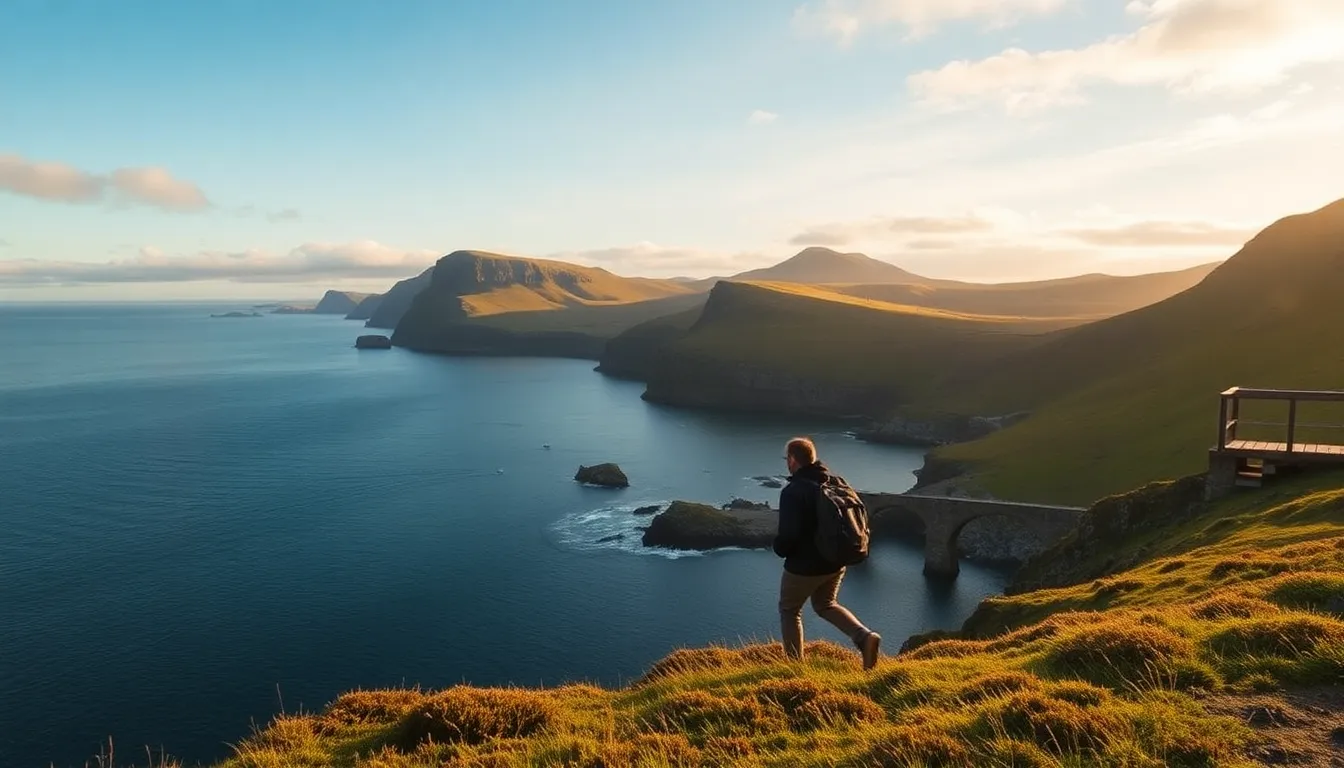
An Island Where Sunday Still Stops
The first time I brought a group to the Isle of Lewis on a Saturday evening, I warned them: tomorrow, nothing will be open. They half-believed me. Then Sunday came, and the islands went quiet in a way that none of them had ever experienced. No shops, no ferries running, the streets still, and from the chapels the sound of unaccompanied Gaelic psalm-singing rising and falling like the sea itself. By the end of that day, a group that had come for the scenery understood they had stumbled into one of the most distinctive living faith cultures in all of Europe.
I have led heritage groups across these nations for over twenty years, and the Outer Hebrides remain the most spiritually singular place I take people. This is not a region of grand cathedrals. It is something rarer: a place where a whole community still orders its life around the Sabbath and where the Gaelic faith tradition is not a museum piece but a Sunday reality. This guide orients you to the islands and how to plan a group trip that honors what is here. For the wider picture across all three nations, start with our United Kingdom heritage travel guide, then come back for the islands.
Lewis and Harris: The Northern Isles
The Outer Hebrides are a long chain of islands off Scotland’s northwest coast, and the heart of the faith heritage sits in the north, on Lewis and Harris. They are technically one landmass, Lewis to the north with its moorland and crofting villages, Harris to the south with its mountains and pale beaches, joined by a narrow neck of land.
This is one of the last strongholds of Scottish Gaelic as a living, everyday language, and the faith and the language are bound tightly together. The psalms are sung in Gaelic, the older services are held in Gaelic, and the culture of the islands carries a depth that comes from centuries of a people praying in their own tongue. For a group, simply being present in a place where this is normal, not performed for visitors but lived, is the heart of the experience.
Stornoway and the Crofting Villages
Stornoway, on Lewis, is the main town and the practical base for a group: the place with the ferry connection, the hotels, and the services. Out from it spread the crofting villages, small communities strung along the coast and the moorland roads, each with its chapel at the center. I take groups out among these villages to see how the faith and the land and the community all hold together here, a way of life that has largely vanished elsewhere but endures on these islands.
The Free Church and the Gaelic Sabbath
To understand the Outer Hebrides, a group needs to understand the Free Church tradition. In 1843, a great division swept the Church of Scotland, and large parts of the Highlands and Islands aligned with the new Free Church, a movement marked by deep seriousness, plain worship, and a fierce commitment to the things the people held sacred. On Lewis and Harris, that tradition took deep root and shaped the islands’ faith to this day.
Unaccompanied Psalm-Singing
The most striking expression of this heritage is the Gaelic psalm-singing. There are no instruments. A precentor lines out each phrase of the psalm, and the congregation answers, voices overlapping in a slow, surging harmony unlike anything most groups have heard. It is one of the oldest forms of Christian worship still practiced anywhere, and hearing it in its home, in Gaelic, in a plain island chapel, leaves a deep mark on people. For many groups, this is the single most memorable thing in the whole of Scotland.
The Sabbath as a Living Reality
And then there is the Sabbath. On Lewis and Harris, Sunday is still widely kept as a day of rest in a way that has disappeared almost everywhere else in the Western world. Shops close. Ferries traditionally did not run, and the rhythm of the islands stops. For a faith group, especially one that thinks seriously about Sabbath, whether Christian or Jewish, this is extraordinary. You are not reading about Sabbath observance. You are standing inside a community that still lives it. I have led both church and synagogue groups here, and both have found the experience moving in ways they did not expect, because the question the islands ask, what does it mean to actually stop, lands on everyone.
How the Hebrides Fit a Wider Trip
The Outer Hebrides are remote, and that remoteness has to be planned for honestly. Reaching them means a ferry crossing or a flight, and the islands are not somewhere you pass through on the way to anywhere else. They are a destination you commit to.
Because of that, I usually build the Hebrides as a focused movement within a Scottish trip rather than a quick add-on. They pair naturally with Iona and Celtic Christianity in the west, since both speak to the ancient and the island faith of Scotland, though Iona’s story is Celtic and medieval while the Hebrides’ is the living Free Church tradition. Groups wanting to understand the Reformation roots of that tradition can connect it to the Covenanters heritage trail on the mainland, and to the wider Reformation story that shaped Presbyterian Scotland.
Practical Notes for Group Leaders
A few honest things about planning the islands.
First, the Sabbath shapes everything. This is the rare destination where Sunday is not a travel day but the destination itself. Plan to be settled on the islands over a Sunday so the group can experience the stillness and, where welcome, attend worship. Do not plan to travel or sightsee on the Hebridean Sunday; that misses the entire point and disrespects the community.
Second, ferry and flight schedules drive the itinerary. The islands are reached by sea or air on limited timetables, and those timetables, not your preferred dates, set the shape of the trip. Lock these early.
Third, come as a guest, not a tourist. The faith here is lived and serious, not a performance. Groups that arrive with humility, that attend worship respectfully and let the community set the terms, receive far more than groups who treat it as a spectacle. I brief every group carefully on this before we arrive.
Fourth, prepare the group. A group that understands the 1843 division, the Free Church, and the meaning of the Gaelic Sabbath before arriving will grasp what they are seeing. A group that arrives cold sees only an island where the shops are shut. The difference is preparation.
A heritage tour to the Hebrides is not a standard coach trip, and the right operator is essential to doing it respectfully and well. At Heritage Tours, we build every itinerary around your community’s interests, arrange worship where welcome, brief the group on the culture, and handle the remote logistics so you can lead your people. With 15 or more participants, the group leader always travels free.
If the Gaelic faith and the island Sabbath are calling your community, start with our United Kingdom heritage destination and our group heritage tours. There is no obligation, just a conversation about what is possible.
FAQ: Outer Hebrides Heritage Travel
What makes the Outer Hebrides unique for a faith group?
They are one of the last places in the Western world where a whole community still keeps the Sabbath as a day of complete rest, and where the Gaelic faith tradition is lived rather than displayed. The unaccompanied Gaelic psalm-singing of the Free Church, heard in a plain island chapel, is one of the oldest forms of Christian worship still practiced anywhere.
Is the Sabbath observance something we can actually experience?
Yes, and it is the heart of the trip. On Lewis and Harris, Sunday still stops: shops close and the islands go quiet. We plan for the group to be settled over a Sunday so you can experience the stillness and, where welcome, attend worship. Both Christian and Jewish groups find it moving, because it asks everyone what it means to truly stop.
Is this trip suitable for a synagogue group as well as a church group?
Yes. The living Sabbath tradition resonates deeply with Jewish groups who think seriously about rest and observance, and the Gaelic psalm-singing tradition moves people across faiths. We brief every group, whatever their background, on visiting respectfully as guests of a serious faith community.
How hard is it to reach the islands?
They are genuinely remote, reached by ferry or flight on limited schedules, and they are a destination you commit to rather than pass through. We build them as a focused part of a Scottish trip and lock the ferry and flight timings early, since those schedules set the shape of the itinerary.
Do group leaders really travel free?
Yes. With 15 or more participants, the group leader travels free on all Heritage Tours group itineraries, including the Outer Hebrides. It is our way of honoring the work that pastors, rabbis, and educators put into bringing their communities together.