Most people think of Jewish heritage in Britain and picture London. The East End, Bevis Marks, the great immigrant story of the docks. All of that is real. But there is a quieter, less-traveled Jewish history in the north of these islands, in Scotland and Northern Ireland, that I find moves groups even more deeply, precisely because they did not expect it.
I have brought synagogue groups, mixed congregations, and Jewish educators along this route, and the reaction is almost always the same. People arrive thinking they know the shape of the story, and they leave having met communities they had never heard of, built by families who came off the same boats their own grandparents did. This itinerary runs six days through Glasgow, Edinburgh, and Belfast. It is built around the Eastern European immigration of the 1880s and the communities those families raised out of nothing. Treat it as a strong frame. We shape every detail around your group.
Day 1: Arrival in Glasgow
Most groups fly into Glasgow, which suits this itinerary well, because Glasgow holds the largest and oldest of the communities we will visit. I keep the first afternoon light. A short walk to orient the group, a chance to rest after the flight, and an evening meal together where I lay out the arc of the week. I want people to understand from the first night that this is not a checklist of buildings. It is a journey into a community’s life.
Over dinner I usually tell the group one thing that frames everything to come. The Jews who built these northern communities were not wealthy. They arrived fleeing the pogroms of the Russian Empire, often with a single trade and very little else. What they built, they built fast and they built to last.
Day 2: Jewish Glasgow
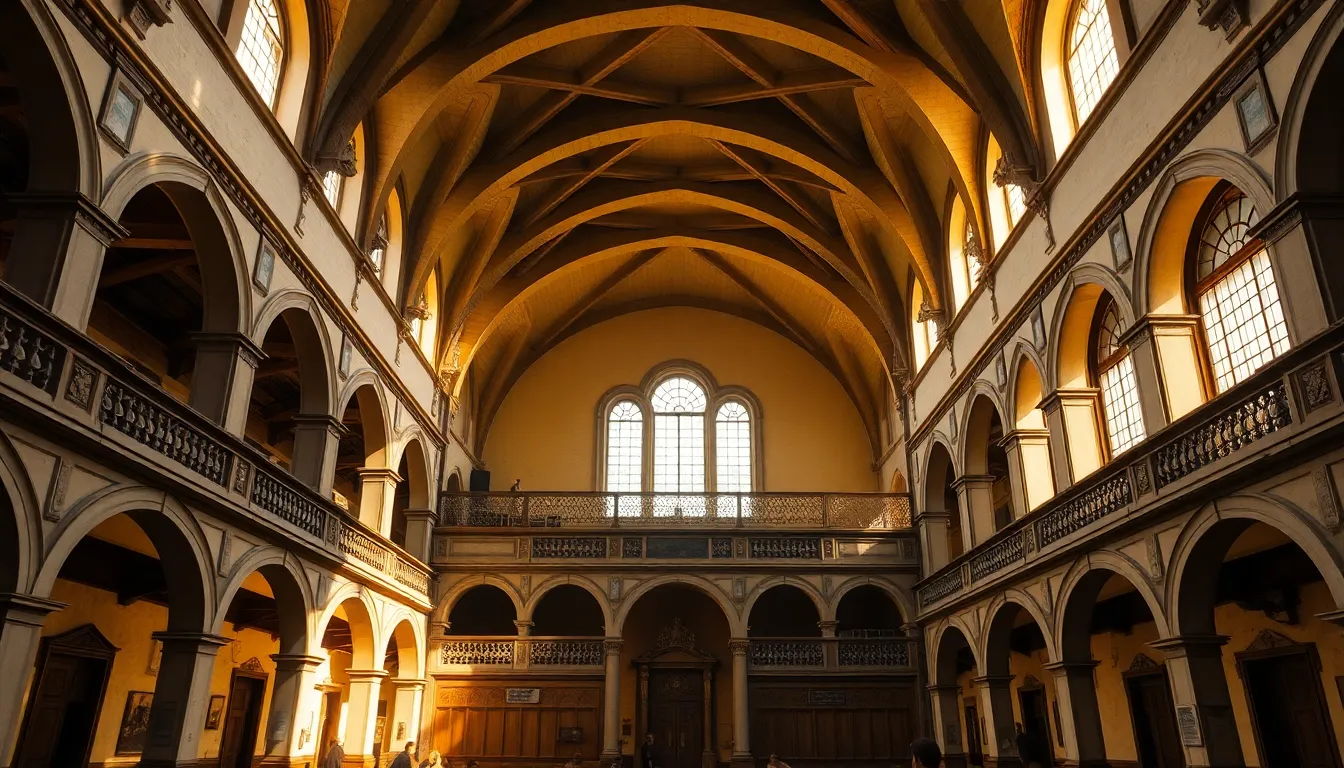
The first full day belongs to Glasgow. We begin at Garnethill Synagogue, opened in 1879 and the oldest purpose-built synagogue in Scotland. The interior tells you almost everything. The confidence of the arched gallery, the care in the woodwork, the sheer ambition of a community that had arrived with nothing and built this within a single generation. Standing inside, groups feel the determination of those founding families before I say a word about it.
Housed in the same building is the Scottish Jewish Archives Centre, and this is where the history becomes personal. Records, photographs, ledgers, the names of families who landed at the Broomielaw and made their way into the city. For many in a synagogue group, this is genuinely living family history.
In the afternoon we trace the immigrant journey across the city itself. We start in the Gorbals, the crowded riverside district where the refugees first crowded into tenements, and we follow the community south as it prospered and moved out to the suburbs of Giffnock and Newton Mearns, where Jewish Glasgow lives today. That physical movement, from the poverty of the Gorbals to the settled life of the suburbs, is the immigrant story written into a map. Our fuller guide to Jewish Glasgow covers the sites and the background in depth.
Day 3: Travel to Edinburgh and the Old Town Community
Day three takes us east to Edinburgh, a short and easy leg that leaves the whole afternoon free. Edinburgh’s Jewish community was always smaller than Glasgow’s, but its story is no less remarkable, and there is something about tracing it through the closes and wynds of the Old Town that stays with people.
The first Jews settled in Edinburgh in the late eighteenth century, and the community grew through the same Eastern European wave that built Glasgow. We walk the Old Town to find where they lived and worshipped, and we visit the sites that mark the community’s life in the city. Edinburgh also gave the Jewish world some unexpected figures, including students who came to study medicine when other doors across Europe were closed to them. Our guide to Jewish heritage in Edinburgh maps the route through the Old Town and beyond.
We overnight in Edinburgh. In the evening I like to leave the group time in the city. After two days focused on community history, an evening to walk the Royal Mile and let the place settle is its own kind of reflection.
Day 4: Edinburgh to Belfast
Day four is a travel day, and I never apologize for one. Moving a group well is part of the craft, and these longer legs are often where the best conversations of the whole trip happen. We make our way from Edinburgh across to Northern Ireland, by air or by the ferry route depending on the group, and arrive in Belfast in time to settle before dinner.
I use the journey to prepare the group for what Belfast holds. Of the three communities on this route, Belfast’s is the one that surprises people most, and I would rather they arrive ready to be moved than caught off guard.
Day 5: Jewish Belfast and the Herzog Connection
Belfast is the heart of this itinerary’s final act. A Jewish community grew here from the 1880s, built by the same wave of Eastern European immigration that raised Glasgow and Edinburgh. We trace where they settled, where they worshipped, and how a small northern community held together through everything the twentieth century threw at this city.
Belfast’s most remarkable connection is Chaim Herzog, the sixth President of Israel, who was born here in 1918. His father, Yitzhak HaLevi Herzog, served as the Chief Rabbi of Ireland before becoming the Ashkenazi Chief Rabbi of Mandatory Palestine and then of the State of Israel. Standing in the city where a future Israeli president spent his earliest years, and where his father led the Irish community, ties this small northern congregation directly to the founding story of the modern Jewish state. I have watched this connection land on group after group, and it never fails to move people. Our guide to Jewish Belfast and the Herzog family tells the full story.
In the afternoon I leave room for reflection. After five days following one immigrant story across three cities, the group has met the same courage in three different forms, and it deserves time to sit with that.
Day 6: Belfast and Departure
The final day brings the journey to a close. Depending on flight times, I keep the morning open for any sites the group wants to return to, or for a closing reflection together before we travel to the airport. Groups leave Belfast carrying something they did not arrive with: a sense that the Jewish story in Britain is wider and braver than the London chapter they already knew.
A Note on Pacing and Flexibility
Six days is a comfortable frame for this route. It crosses the water once and asks for one real travel day, but the legs are manageable and there is room to breathe. For groups who want to go deeper, I sometimes extend it to add the smaller communities or to fold in Dublin, where Rabbi Herzog’s story continues. For groups who want it gentler, we can slow the Glasgow and Belfast days and trim the middle.
What I protect on every version is the time for reflection. A heritage tour that races between synagogues is just sightseeing. The moments that stay with people, the silence in Garnethill, the archives that hold a family name, the realization in Belfast, need space to breathe.
If this journey speaks to your community, I would love to help you shape it into the trip that fits your people. Heritage Tours builds every itinerary around your group, and with 15 or more participants, the group leader travels free. Explore our United Kingdom heritage destination and our group heritage tours to see how it works. You can also read the broader United Kingdom heritage itinerary for a route that weaves Jewish and Christian history together.
FAQ: A Jewish Heritage Itinerary for Scotland and Northern Ireland
Is this itinerary suitable for a synagogue group specifically?
Yes. It was built with synagogue groups in mind. The whole route follows the Eastern European immigration of the 1880s and the communities those families built in Glasgow, Edinburgh, and Belfast. We can add Shabbat observance, coordinate with local communities for services, and shape the pacing around your congregation’s needs.
Why Scotland and Northern Ireland rather than London?
London’s Jewish history is well known and well traveled. The communities of Glasgow, Edinburgh, and Belfast are less expected, and that is exactly why groups find them so moving. These families came off the same boats and faced the same hardships, but they built their lives in the north, and their story is rarely told. For many groups, meeting it for the first time is the highlight of the trip.
What is the significance of Belfast for a Jewish group?
Belfast is home to one of the most remarkable connections in British Jewish history. Chaim Herzog, the sixth President of Israel, was born there in 1918, and his father served as Chief Rabbi of Ireland before leading the Jewish community in pre-state and then independent Israel. Standing in the city where that family lived ties this small community directly to the founding of the modern Jewish state.
Can we observe Shabbat and keep kashrut on this trip?
Yes. We coordinate kosher catering and work with the local communities in each city to arrange Shabbat services and meals. Glasgow in particular has an active community with kosher provision. We build the itinerary around your observance, not the other way round.
Do group leaders travel free on this itinerary?
Yes. When your group includes 15 or more participants, the group leader travels free on all Heritage Tours group itineraries, including this one. It is our way of honoring the work that rabbis and educators put into bringing their communities together for a journey like this.
If this route fits your congregation, I would love to talk it through with you. Contact us whenever you are ready to start planning.