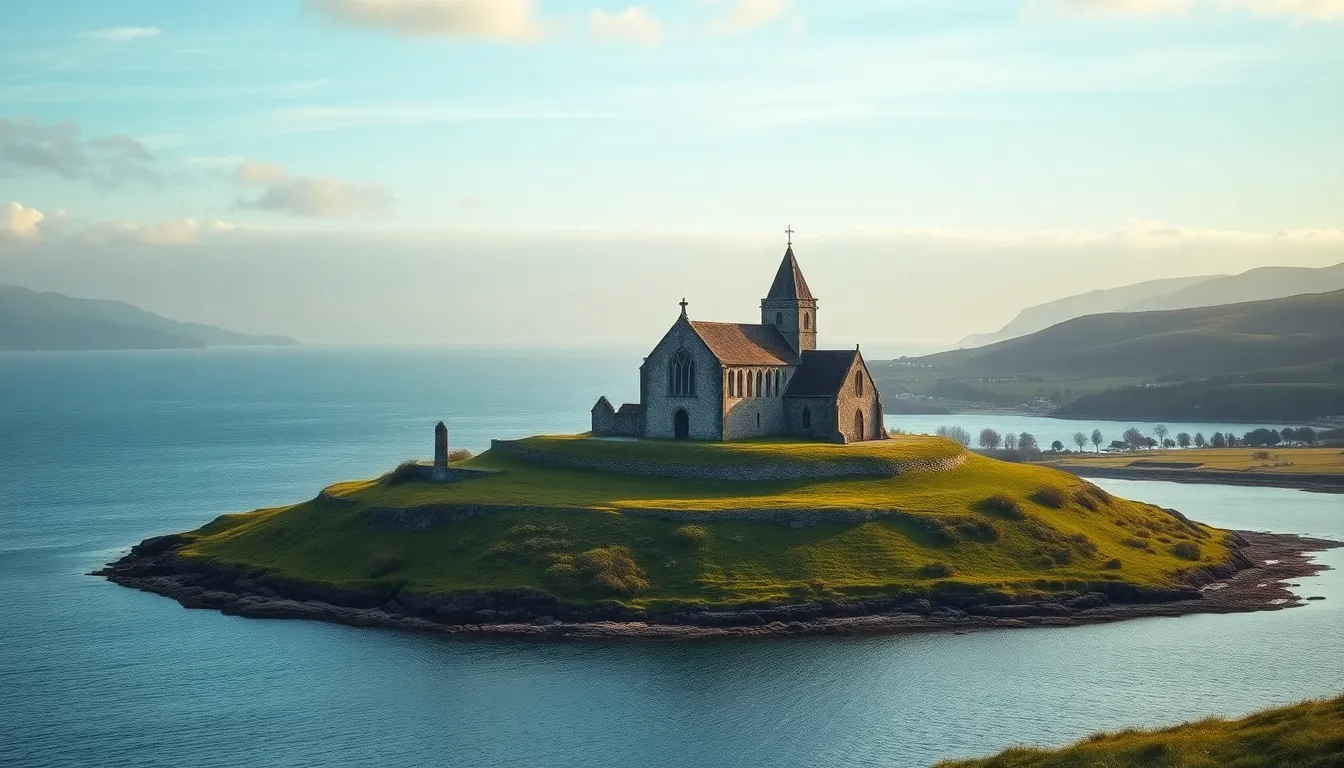
The Island Worth the Whole Journey
I have led groups to a great many sacred places, and there are only a handful I would call the spiritual high point of an entire trip no matter what else is on the itinerary. Iona is one of them. This small green island off the west coast of Scotland is where the Christian faith first took root in Scotland in the sixth century, and there is a quality of stillness here that I have rarely found anywhere else. Groups arrive tired from the journey, and within an hour something in them settles. The island does that.
I will be honest with you from the start: Iona takes effort to reach. It is not a place you swing past on the way to somewhere else. Getting there is a commitment of the better part of a day, by road, by ferry, across another island, and by ferry again. But that effort is not a problem to be solved. It is part of what makes Iona Iona. The pilgrims who came here for centuries earned the island, and your group will too. This guide tells you what is here, why it matters, and exactly how to get your people there and spend the day well.
Columba and the Birth of Scottish Christianity
The story of Iona begins in 563, when an Irish monk named Columba landed here with twelve companions and founded a monastery. Columba belongs to the oldest layer of faith in these nations, the Celtic Christianity that arrived by sea and spread through wandering missionary monks, the same world as Mungo in Glasgow and the early Welsh saints. From this tiny island, Columba and the monks who followed him carried the Gospel into Scotland and beyond, and Iona became a powerhouse of mission, learning, and devotion that shaped the faith of a nation.
For three centuries Iona was one of the most important Christian centers in northern Europe. Monks here produced illuminated manuscripts of extraordinary beauty, and many scholars believe the famous Book of Kells was begun on Iona before being carried to Ireland for safety from Viking raids. Kings were buried here. Pilgrims came from across the Christian world. Standing on the island, a group is standing at one of the true sources of faith in these islands, older than the cathedrals, older than the Reformation, reaching back to the very beginning.
For groups who want to set Iona in the wider sweep of Celtic Christianity and the other faith layers of these nations, our United Kingdom heritage travel guide is the place to begin.
What You Will See on Iona
The island is small, and that is part of its gift. Everything a group comes for is within walking distance of the ferry landing, and the walking is gentle.
The Abbey
Iona Abbey is the heart of the island. The present abbey, beautifully restored in the twentieth century, stands on the site of Columba’s monastery, and it is a working, living place of worship, home to the Iona Community, an ecumenical Christian community committed to peace and justice. A group can attend worship in the abbey church, and I always try to arrange this, because singing in that ancient space is something people carry home with them for years. The restored cloisters, the carved stones, and the sheer presence of the building reward slow, quiet exploration.
Saint Oran’s Chapel and the Burial Ground
Near the abbey stands the Reilig Odhrain, the ancient burial ground, and Saint Oran’s Chapel, one of the oldest intact buildings on the island. Tradition holds that many early kings of Scotland, and rulers from Ireland and Norway, were laid to rest here. It is a profound place to stand, a reminder of how central this little island once was to the whole northern world.
The High Crosses and the Abbey Museum
Iona’s carved high crosses are among the finest early Christian monuments in these islands. St Martin’s Cross still stands outside the abbey where it has stood for over a thousand years, and the abbey museum holds others, sheltered from the weather, where a group can see the craftsmanship of the Celtic Christian world up close.
The Island Itself
Beyond the built sites, Iona is a place to walk and be still. The white sand beaches, the green machair, the views across the Sound to the larger island of Mull, all of it carries the same quiet that drew Columba and the pilgrims who followed. I always leave my groups unstructured time here. Some of the most meaningful moments of a whole trip happen when people simply sit on the shore and let the island speak.
How Groups Reach Iona
This is the part every group leader needs to understand clearly, because the journey shapes the whole day, and getting it wrong can cost you the island.
You cannot drive to Iona. The journey runs in stages. From the Scottish mainland you take a ferry across to the Isle of Mull, then cross Mull by road, a beautiful but slow drive of more than an hour on largely single-track roads, to the far southwestern tip at Fionnphort. From there a small passenger ferry carries you across the short Sound of Iona to the island. No large coach can make the crossing to Iona itself, and the roads on Mull are not built for big vehicles, so the right transport, a smaller bus, is not a luxury. It is a requirement.
What this means in practice is that Iona is a full-day commitment, often best done as an overnight in the area so the group is not rushed. Ferry schedules drive everything, and they run on reduced timetables outside the summer season, so dates and timings have to be locked early. I treat the journey out as part of the pilgrimage, not as travel time to be endured. Some of the best conversations of a whole trip happen on the road across Mull, when the group has time to talk and reflect on where they are going.
For groups building a Scottish itinerary, Iona pairs with the Reformation heritage of Edinburgh and the immigrant and Celtic heritage of Glasgow, which are the natural arrival points and bases before heading west to the island.
Practical Notes for Group Leaders
A few things I tell every group leader planning Iona.
First, give it time. Iona cannot be rushed, and a group that tries to squeeze it into a half day will arrive harried and leave having missed the point. Plan a full day, ideally with a night nearby, and let the island do its work.
Second, the weather is changeable and the island is exposed. Even in summer, pack genuinely waterproof layers and shoes that handle grass, sand, and uneven stone. A bright morning can turn to rain, and there is little shelter on the island. This is not a reason to hesitate. It is a reason to prepare.
Third, season matters more here than almost anywhere. Ferry schedules are fuller from May to September, daylight stretches long into the evening, and the crossings are more reliable. Winter trips to Iona are possible but demanding, with short days and reduced ferries. For a group, I steer firmly toward the late spring through early autumn window.
Fourth, the right operator is essential for Iona in a way it is not for an easy city visit. You need someone who can arrange the right smaller transport, lock the ferry timings, book worship in the abbey, and handle the multi-stage journey so you can focus on leading your people. A heritage tour is not a standard coach trip, and Iona proves it. At Heritage Tours, we build every itinerary around what matters to your specific community, and with 15 or more participants, the group leader always travels free.
If Iona is calling to your group, and for many groups it is the call that starts the whole conversation, I would love to talk about what the journey could look like. Start by exploring our United Kingdom heritage destination and our group heritage tours. There is no obligation, just a conversation about what is possible.
FAQ: Visiting Iona with a Faith Group
Why is Iona so important to Christian heritage?
Iona is where Saint Columba founded a monastery in 563 and began the mission that brought Christianity to Scotland. For three centuries it was one of the most important Christian centers in northern Europe, a place of mission, learning, and the creation of illuminated manuscripts. It belongs to the oldest Celtic Christian layer of faith in these nations, and many groups find it the spiritual high point of the entire trip.
How do groups actually get to Iona?
The journey runs in stages. From the Scottish mainland you take a ferry to the Isle of Mull, drive across Mull on single-track roads to its southwestern tip at Fionnphort, then take a small passenger ferry across the Sound to Iona. No large coach can reach the island, so a smaller bus is required, and ferry schedules must be coordinated in advance. Plan a full day, ideally with an overnight nearby.
How long do you need on Iona?
A full day is the minimum to see the abbey, Saint Oran’s Chapel and the ancient burial ground, the high crosses, and to have unstructured time to walk and reflect. Because the journey out is long, many groups stay overnight in the area so the day is unhurried. Rushing Iona defeats the purpose of going.
When is the best time to visit Iona?
May through September is the comfortable window, with fuller ferry schedules, long daylight, and more reliable crossings. June and September offer lighter crowds and beautiful light. Winter is possible but demanding, with short days and reduced ferries, so we generally steer groups toward late spring through early autumn.
Do group leaders really travel free?
Yes. When your group includes 15 or more participants, the group leader travels free on all Heritage Tours group itineraries, including Iona and the wider Scottish journey. It is our way of honoring the work that pastors, rabbis, and educators put into bringing their communities together for these experiences.