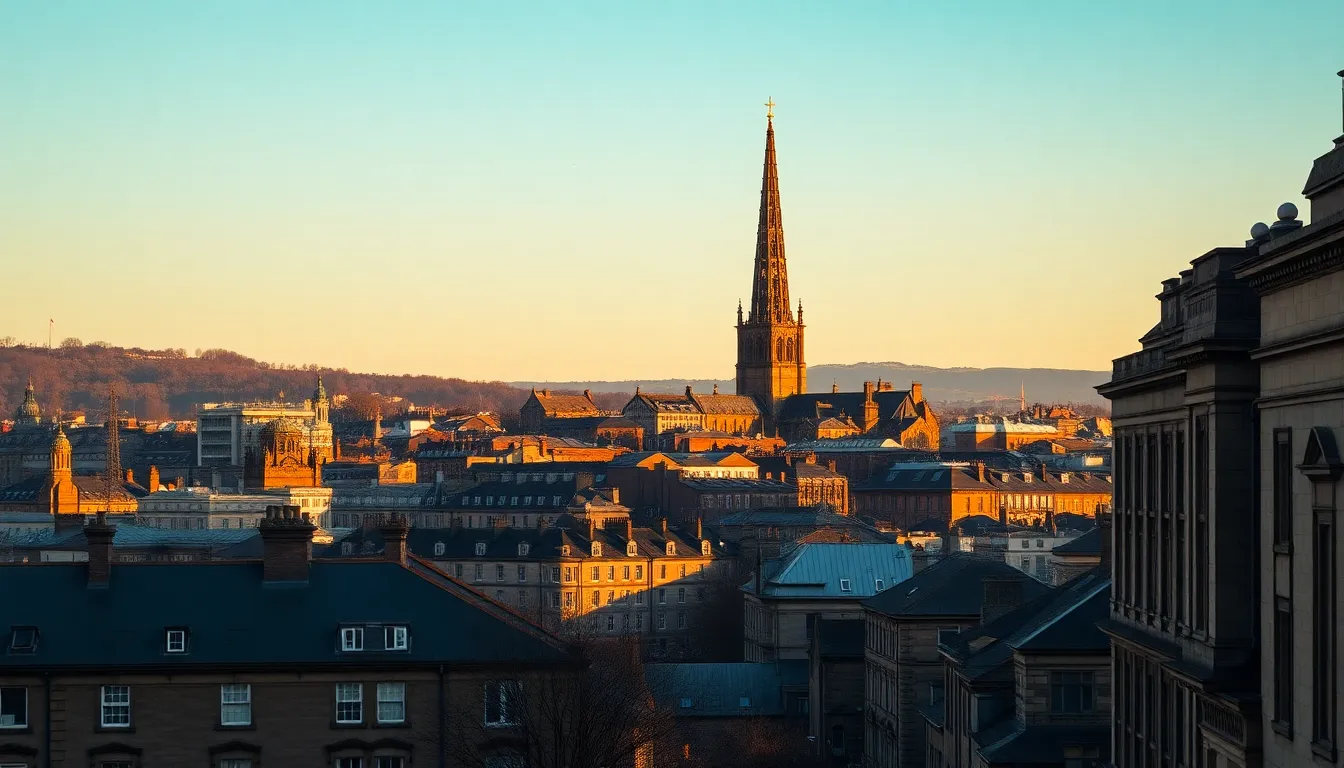
The City Where the Reformation Got Loud
I have walked the Royal Mile with more church groups, synagogue groups, and school groups than I can count, and I always start them at the same spot: the worn flagstones outside St Giles, looking down the slope toward Holyrood. Because Edinburgh is a city you read with your feet. The history is not behind glass. It is in the steps you climb, the kirkyards you cross, and the narrow closes that drop away on either side of the high street.
What surprises most first-time group leaders is how compact it all is. The heart of Edinburgh’s faith heritage, the part that matters for a heritage group, sits along a single mile of the Old Town and a few streets just off it. You can stand in one place and point to the church where John Knox preached, the graveyard where the Covenanters signed their National Covenant, and the route that the city’s Jewish families walked to synagogue a few generations ago. This guide is meant to give you the layers, the sacred sites, the history that connects them, and the practical knowledge to lead your group well.
The Reformation Heart: St Giles and John Knox
St Giles is where I begin every Edinburgh visit, and not by accident. This was John Knox’s church. When the Scottish Reformation broke in 1560, Knox preached here as the first Protestant minister of Edinburgh, and from this pulpit the new Presbyterian faith found its voice in the capital. For a Protestant group, standing inside St Giles is standing at the source of a tradition that crossed oceans and shaped congregations on the other side of the world.
The building itself rewards slow looking. The crown spire is the symbol of the Old Town skyline. Inside, the Thistle Chapel is a piece of craftsmanship worth pausing over, and there are memorials throughout that tell the long story of Scottish faith and nationhood. I always give my groups time to simply sit. The acoustics carry a whisper, and a few minutes of quiet here does more than any lecture I could give.
Just outside, set into the pavement, is a heart-shaped pattern of cobblestones called the Heart of Midlothian. It marks the site of the old tollbooth, a prison and place of execution. I mention it because it sits in the same few yards as the cathedral, and it is a useful reminder to a group that faith and power and suffering were never far apart in this city. For the fuller sweep of how the Reformation reshaped these nations, our Covenanters heritage trail carries the story out of Edinburgh and into the countryside where it turned to blood.
The Covenanters: Greyfriars Kirkyard
A short walk south brings you to Greyfriars, and for many of my Protestant groups this is the emotional center of the whole Edinburgh visit. In 1638, in this kirkyard, the National Covenant was signed, the document in which Scots pledged to defend their Presbyterian faith against the crown’s attempt to control how they worshipped. People are said to have signed in their own blood. That single act set off decades of conflict and persecution that the Covenanters carried with extraordinary courage.
In one corner of Greyfriars stands the Covenanters’ Prison, where, after a later defeat, hundreds of Covenanter prisoners were held in brutal conditions. I walk my groups there slowly. It is a sobering place, and it should be. These were ordinary believers who would not surrender the right to worship as their conscience demanded, and many paid with their lives.
Greyfriars is also, I will admit, where I have to manage expectations. The kirkyard is famous to the wider world for a loyal little dog, Greyfriars Bobby, whose statue sits just outside the gate and draws crowds. That is a charming story, but it is not why your group is here. I usually let people take their photo of Bobby, then bring them back inside the walls to the Covenant story that actually matters for a faith heritage trip. To understand why so many of these believers eventually fled to the New World, our guide to Scottish Presbyterian emigration traces what happened to that tradition once it crossed the Atlantic.
The Jewish Community of Edinburgh
Edinburgh’s Jewish story is smaller than Glasgow’s but real, and for a synagogue group it is a meaningful stop. Jews settled in Edinburgh from the late eighteenth century, and the community grew through the nineteenth as families arrived from Eastern Europe fleeing persecution. They built a life in the city, opened businesses, sent their children to its schools and university, and established the congregation that became Edinburgh Hebrew Congregation.
The community’s roots cluster in the southern part of the city, around the area near the university and the old neighborhoods where immigrant families first settled. For groups interested in the wider picture, the city has documented its Jewish heritage well, and a knowledgeable guide can walk you through the streets where that community took shape. It is the same story you find across these nations: a small congregation, arriving with little, building something durable within a single generation. Our overview of Jewish heritage across Scotland, Wales, and Northern Ireland sets Edinburgh’s chapter alongside Glasgow, Cardiff, and Belfast.
Beyond the Old Town
While the Old Town holds most of what a heritage group comes for, a few other sites are worth knowing about depending on your group’s interests.
The Castle and the National Story
Edinburgh Castle dominates the city, and while it is a military and royal site rather than a faith site, St Margaret’s Chapel inside the castle walls is the oldest surviving building in Edinburgh, a tiny twelfth-century chapel dedicated to a queen remembered for her piety. For groups who want to understand how faith and Scottish nationhood intertwined, it is a quiet, powerful few minutes.
The New Town and the Disruption
If your group’s interest runs into church history beyond the Reformation, the events of 1843, when hundreds of ministers walked out of the established Church of Scotland to form the Free Church, played out in Edinburgh. It is a chapter that matters to Presbyterian groups with roots in those traditions, and a good guide can point out where it happened.
Practical Notes for Group Leaders
A few things I tell every group leader planning Edinburgh.
First, the Old Town is walkable but steep. The Royal Mile runs downhill from the castle to Holyrood, and the closes and stairs off it are uneven and often slick in the rain. For a mixed-age group, plan a route that works with the slope rather than against it, and build in places to rest. Comfortable shoes are not optional here.
Second, Edinburgh is busy. In August the city fills for its festivals, and the Old Town can be shoulder to shoulder. For a heritage group that wants room to reflect, I steer toward May, June, or September. The weather is kinder and the streets are calmer.
Third, Edinburgh pairs naturally with Glasgow and the Covenanter country to the south, which means it works as a base for a wider Scottish trip rather than a stop on its own. Our United Kingdom heritage travel guide lays out how to build the full journey across these nations.
Fourth, the right operator makes the difference between a sightseeing day and a heritage encounter. A heritage tour is not a standard coach trip. You need someone who understands why your group is here, who can arrange worship at St Giles or quiet reflection at Greyfriars, brief the group on the Covenant story, and handle the logistics so you can focus on leading your people. At Heritage Tours, we build every itinerary around what matters to your specific community, and with 15 or more participants, the group leader always travels free.
If Edinburgh is calling to your group, I would love to talk about what the visit could look like. Start by exploring our United Kingdom heritage destination and our group heritage tours. There is no obligation, just a conversation about what is possible.
FAQ: Edinburgh Heritage Travel for Faith Groups
What are the most important faith heritage sites in Edinburgh?
The three core stops for most faith groups are St Giles, where John Knox preached and the Scottish Reformation found its voice, Greyfriars Kirkyard, where the National Covenant was signed in 1638, and the streets that hold Edinburgh’s Jewish heritage in the south of the city. All sit close together in and around the Old Town, which makes Edinburgh unusually walkable for a heritage trip.
How much time should a group spend in Edinburgh?
For the core faith heritage sites, a full, unhurried day in the Old Town covers St Giles, Greyfriars, and the Jewish heritage streets with time for reflection. Most groups use Edinburgh as a base for two or three nights and combine it with Glasgow and the Covenanter country to the south, which makes a richer Scottish itinerary.
Is Edinburgh suitable for older group members?
Yes, with planning. The Old Town is steep and the closes and stairs are uneven, so we route mixed-age groups to work with the slope and build in rest stops. The core sites themselves are accessible, and a good guide paces the day so that no one is rushed up the hill.
When is the best time to visit Edinburgh?
May, June, and September offer the best combination of mild weather and manageable crowds. August brings the city’s festivals, which fill the Old Town to capacity and make quiet reflection harder. Winter is possible but the days are short and the weather can close in.
Do group leaders really travel free?
Yes. When your group includes 15 or more participants, the group leader travels free on all Heritage Tours group itineraries, including Edinburgh and the wider Scottish journey. It is our way of honoring the work that pastors, rabbis, and educators put into bringing their communities together for these experiences.