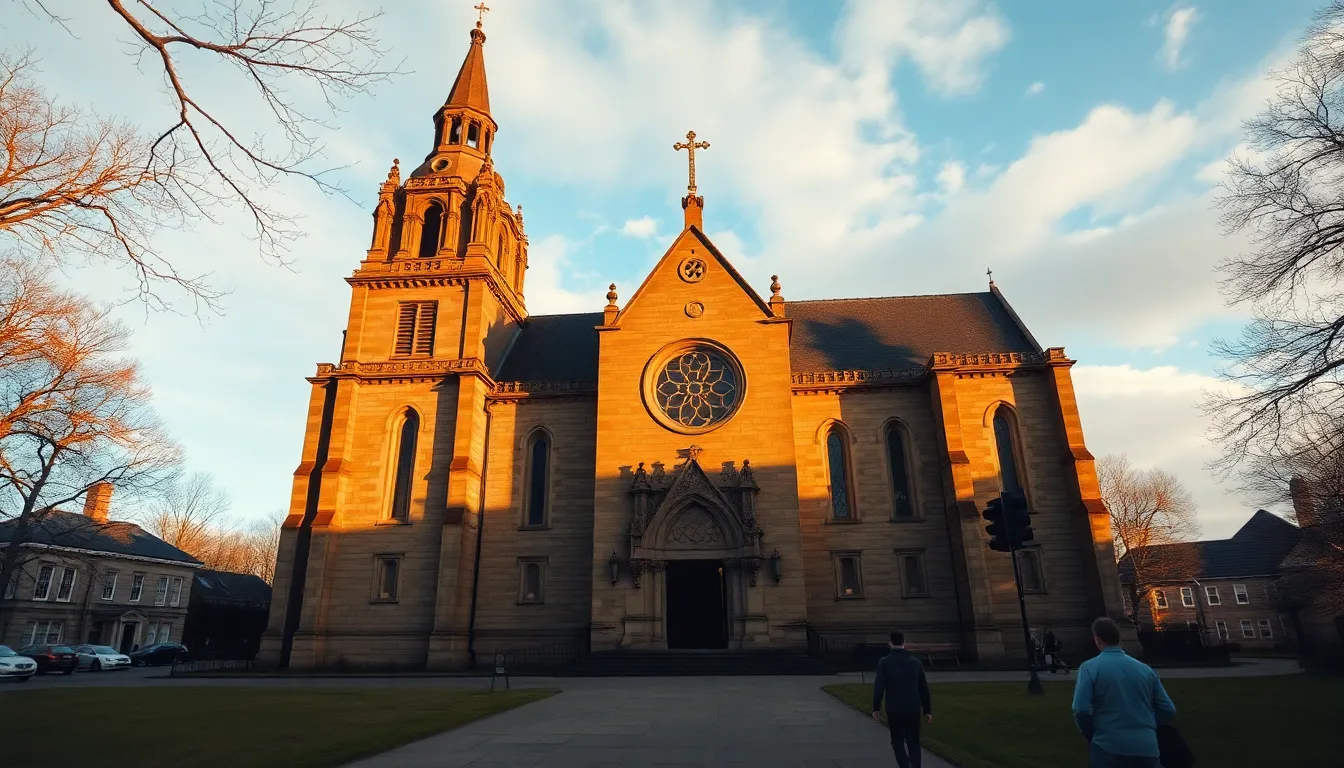
A Church Where a King Was Crowned
Most groups come to Stirling for the castle, and rightly so, since it is one of the great fortresses of Scotland. But I always make sure we walk the short distance down from the castle esplanade to the Church of the Holy Rude, because this is where a piece of British history happened that shaped the faith of two nations. In 1567, in this church, a thirteen-month-old boy was crowned King James VI of Scotland, and John Knox, the great preacher of the Scottish Reformation, is said to have preached at the coronation. That boy grew up to become James VI of Scotland and James I of England, the king who gave his name to the King James Bible.
The Church of the Holy Rude, its name meaning the Holy Cross, stands on the slope below Stirling Castle, the second oldest building in the town after the castle itself. For a Christian group, and especially for any group with an interest in the Reformation or the Bible that carries James’s name, this is a site that connects the broad sweep of history to a single, walkable stone church. Standing in the nave, you are standing where a king was made and where the Reformed faith took hold in the old capital of Scotland.
The History of the Holy Rude
There has been a church on this site since at least the early twelfth century, but the building that stands today dates mainly from the fifteenth and early sixteenth centuries, raised when Stirling was effectively the capital of Scotland and the favored seat of the Stewart kings. The oldest part, the nave with its magnificent timber roof, was completed by around 1414. The church grew in importance alongside the castle above it, serving the royal court that gathered in Stirling through the fifteenth and sixteenth centuries.
The most famous moment in its history came with the Reformation. Scotland’s break with Rome in 1560, driven by John Knox and the Reformers, transformed every church in the land, and the Holy Rude became a center of the new Reformed worship. When the infant James VI was crowned here in 1567, after his mother Mary, Queen of Scots, was forced to abdicate, the coronation was a Protestant one, a sign of how completely the Reformation had reshaped the kingdom. The sermon preached that day marked the church as a stage on which the Scottish Reformation played out.
The Divided Church
The Holy Rude carries one more remarkable chapter. In the seventeenth century, a dispute within the congregation led to the church being physically divided by a wall into two separate places of worship, the East Church and the West Church, each with its own minister. This unusual arrangement lasted for more than two hundred years, until the wall was finally removed in the 1930s and the church reunited as one. The story is a vivid reminder of how seriously Scots took their religion, and how the passions of the Reformation era echoed down the generations.
Why the Holy Rude Matters for a Christian Group
For a group tracing the Reformation in Scotland, the Holy Rude offers something specific that the larger sites cannot. It is intimate, complete, and tied to a single dramatic event that most people have heard of without knowing where it happened. The coronation of James VI, and the connection to the King James Bible that bears his name, gives the church a thread that runs all the way to the Bibles many in the group grew up reading. That connection lands powerfully when it is made standing in the very building.
The church also tells the human story of the Reformation in a way the textbooks cannot. The dividing wall, the two congregations, the centuries of worship through war and upheaval, all of it brings the era down to the level of real people in a real town. I find groups leave the Holy Rude with a clearer sense of what the Reformation actually meant in the life of a Scottish community.
Stirling sits naturally within a wider Reformation itinerary. Groups who come here usually pair it with the great Reformation sites of Edinburgh and the Borders, including the story of the Covenanters and the National Covenant, and with Glasgow Cathedral, the medieval cathedral that survived the Reformation largely intact. Together they trace how the Reformed faith took hold across the heart of Scotland.
How Groups Visit the Holy Rude
The Holy Rude is straightforward for a group to visit, which makes it an easy and rewarding addition to a Stirling day. The church sits in the old town, a short walk down from the castle, on the historic route that links the great buildings of medieval Stirling. It is a working church belonging to the Church of Scotland, and it opens to visitors through the warmer months, typically from spring into early autumn, with volunteers often on hand to share the history.
Practical Access
Because the church lies in the old town near the castle, a group can combine the Holy Rude with Stirling Castle and the surrounding historic quarter in a single visit, walking between them on foot. The approach involves the slope of the old town, which is worth noting for any group members with limited mobility, though the church itself is at street level once you reach it. Entry is generally free, with donations welcomed, and the church can accommodate groups for a quiet visit or, with advance arrangement, a short act of worship under that ancient timber roof. As opening is seasonal, I always confirm access ahead of a visit so the group is not met by a locked door. For a group interested in the Reformation or the King James Bible, the small effort of including the Holy Rude pays off many times over.
FAQ: Visiting the Church of the Holy Rude
Why is the Church of the Holy Rude important?
It is the church where the infant James VI was crowned King of Scotland in 1567, in a Protestant coronation that marked how completely the Reformation had reshaped the kingdom. John Knox is associated with the event. James later became James VI and I, the king who gave his name to the King James Bible. The church is also the second oldest building in Stirling after the castle.
What does the name Holy Rude mean?
Rude is an old word for the cross, so the Church of the Holy Rude means the Church of the Holy Cross. The name reflects the medieval devotion to the cross of Christ that was common across Scotland before the Reformation. The church has carried the name since its founding in the twelfth century.
Why was the church divided by a wall?
In the seventeenth century, a dispute within the congregation led to the building being split by a physical wall into two separate churches, the East Church and the West Church, each with its own minister. This lasted more than two hundred years until the wall was removed in the 1930s and the church reunited. It is a striking reminder of how deeply Scots felt their religion in the Reformation era.
Is the Holy Rude easy for a group to visit?
Yes, with one note. The church sits in Stirling’s old town, a short walk down from the castle, so a group can easily combine the two. The approach follows the slope of the old town, which is worth noting for anyone with limited mobility, though the church is at street level. Opening is seasonal, generally spring into autumn, so we always confirm access before a visit.
Can the Holy Rude be combined with other Reformation sites?
Very naturally. Stirling pairs well with the Reformation story in Edinburgh, the Covenanter sites, and Glasgow Cathedral, which survived the Reformation largely intact. Together they show how the Reformed faith took hold across central Scotland. We build itineraries that link these sites with honest travel time so nothing feels rushed.
If the Reformation story draws your group, I would be glad to help you plan it. Heritage Tours builds every itinerary around your community, and with 15 or more participants, the group leader travels free. Begin with our spiritual sites of the United Kingdom, our United Kingdom heritage destination, and our group heritage tours. When you are ready, contact us and we will shape the journey together.