A Capital That Wears Its Faith Quietly
The first thing I tell groups arriving in Cardiff is to slow down their expectations. This is not a city that announces its faith heritage with a single towering monument. Cardiff is a capital that grew up fast on coal and shipping, and its spiritual story sits in quieter places: a cathedral tucked into a green close away from the center, plain stone chapels that once held whole communities, and the streets where an immigrant Jewish congregation made its home. You have to go looking. That is part of what makes Cardiff rewarding for a group willing to slow down and read it properly.
I have brought Welsh heritage groups here many times, and what I love is how the city holds the three great threads of faith in these nations side by side. There is the ancient Celtic Christian root at Llandaff. There is the Nonconformist chapel tradition that defined Welsh religious life for two centuries and fed the great Revival of 1904. And there is the Jewish community that built its life here from the nineteenth century onward. This guide walks you through each thread and gives you the practical knowledge to lead your group well.
Llandaff Cathedral and the Celtic Root
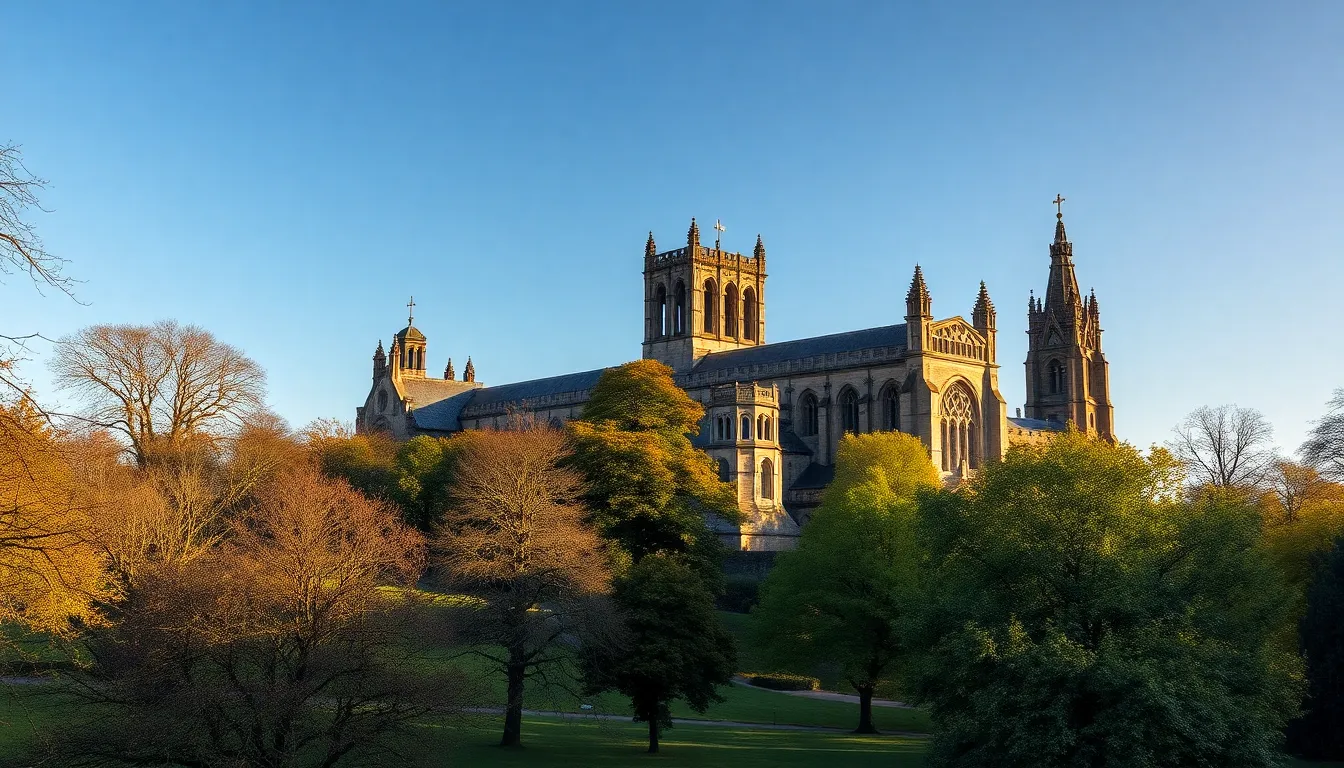
Llandaff is where I begin every Cardiff visit. The cathedral sits a couple of miles from the city center in its own quiet green close, and the contrast with the busy capital is part of the experience. The site is ancient. Tradition traces Christian worship here back to the sixth century and to Saint Teilo, one of the early Welsh saints who belong to the same world as David in the southwest and Columba off the Scottish coast. This is the oldest layer of faith in these nations, the Celtic Christianity that arrived by sea and spread through wandering holy men.
The building itself has had a hard history. It fell into ruin, was rebuilt, and was badly damaged by a bomb in the Second World War, then restored again. Inside, the great figure of Christ that dominates the nave is a striking modern work set within ancient walls, and that mix of old and new tells the cathedral’s whole survival story in a glance. For a group, Llandaff is a chance to connect Cardiff to the deep Celtic root, and to set up the wider Welsh story that runs out to the southwest. Our guide to the heart of that tradition follows the saints out to the coast in the United Kingdom heritage travel guide.
The Chapels and the Welsh Revival
If Llandaff is the ancient root, the chapels are the Welsh soul, and for many Christian groups they are the real reason to come to Wales.
For two centuries, Nonconformist chapels, Baptist, Methodist, Congregationalist, and more, were the center of Welsh life. These were not grand buildings. They were plain, often austere stone halls, and that plainness was the point: the focus was the preaching, the singing, and the community. At their height the chapels held the religious, social, and cultural life of whole towns and valleys. Cardiff and the mining valleys to its north were dense with them, and you can still read that history in the chapel buildings scattered across the city and the surrounding region, some still worshipping, some repurposed, some standing quiet.
This chapel culture is what made the Welsh Revival of 1904 possible. In that year a spiritual awakening swept through Wales under the preaching of a young miner named Evan Roberts, and more than a hundred thousand people are said to have come to faith within a year. Cardiff and its valleys felt it directly. For a Christian group, standing in the chapel world that produced the Revival, within recent generations rather than ancient history, is one of the most stirring experiences these nations offer. A heritage day from Cardiff can reach up into the Revival valleys to the north, where the awakening burned brightest.
The Jewish Community of Cardiff
Cardiff’s Jewish story is real and, for a synagogue group, a meaningful stop. A Jewish community established itself here in the nineteenth century as the city boomed, and it grew through the arrival of families fleeing the pogroms of Eastern Europe. They built synagogues, opened businesses, and wove themselves into the life of the growing capital, becoming part of the merchant and professional fabric of the city.
As in Glasgow and Belfast, the community moved over time, and the buildings and streets that held its earlier life have changed, but the story is well documented and a knowledgeable guide can walk your group through where the community took shape and how it lived. It is the same arc you find across these nations, a congregation arriving with little and building something durable within a generation. Our Glasgow heritage guide sets Cardiff’s chapter alongside the larger Jewish heritage of Scotland, and our Belfast heritage guide carries it across to Northern Ireland.
Cardiff Castle and the Civic Story
No orientation to Cardiff is complete without the castle, which sits right in the heart of the city. The castle is not a faith site in itself, but it is where Cardiff’s long story is most visible, from Roman walls through Norman keep to the extravagant Victorian interiors created when the city’s coal wealth was at its height. For a group, it is a useful hour to understand how Cardiff grew from a small town into a capital, and that growth is exactly what drew the immigrant communities, Jewish and others, who shaped the city’s modern faith life. I treat it as context rather than the main event, but it earns its place on the itinerary.
Practical Notes for Group Leaders
A few things I tell every group leader planning Cardiff.
First, Cardiff’s sites are spread out. Llandaff sits a couple of miles from the center, the chapels are scattered across the city and the valleys, and the Jewish heritage streets lie elsewhere again. You will move between them by coach. The walking at each site is gentle, which suits mixed-age groups, but the day needs planning around the driving.
Second, Cardiff is a gateway, not usually a destination on its own. Its real power comes when it is paired with the Welsh Revival valleys to the north and with the Celtic heartland of St Davids in the southwest. A focused Welsh trip uses Cardiff as a base and reaches out from it. Our United Kingdom heritage travel guide lays out how to build the wider Welsh journey.
Third, chapel and synagogue visits often need arranging ahead. Many chapels are no longer in regular use, and synagogue visits require coordination. A heritage operator handles this so your group arrives to open doors and a guide who can tell the story.
Fourth, the right operator makes the difference between a sightseeing day and a heritage encounter. A heritage tour is not a standard coach trip. You need someone who understands why your group is here, who can arrange worship and singing in a chapel where the Revival once burned, brief the group on Teilo and Evan Roberts, and handle the logistics so you can lead your people. At Heritage Tours, we build every itinerary around what matters to your specific community, and with 15 or more participants, the group leader always travels free.
If Cardiff and the Welsh story are calling to your group, I would love to talk about what the trip could look like. Start by exploring our United Kingdom heritage destination and our group heritage tours. There is no obligation, just a conversation about what is possible.
FAQ: Cardiff Heritage Travel for Faith Groups
What are the most important faith heritage sites in Cardiff?
For most faith groups, the core stops are Llandaff Cathedral, with its ancient Celtic root reaching back to Saint Teilo, the Nonconformist chapels that defined Welsh religious life and fed the Revival of 1904, and the streets that hold Cardiff’s Jewish heritage. Cardiff Castle adds civic context for how the city grew into a capital that drew its immigrant communities.
Why are the chapels so important to a Welsh heritage trip?
For two centuries the Nonconformist chapels were the center of Welsh life, plain stone halls built around preaching and singing rather than grandeur. This chapel culture produced the Welsh Revival of 1904, when more than a hundred thousand people are said to have come to faith within a year. For Christian groups, standing in that chapel world is one of the most moving experiences in these nations.
Can a Cardiff trip include the Welsh Revival valleys?
Yes, and most groups should plan it that way. The Revival burned brightest in the mining valleys to the north of Cardiff, which are within reach for a heritage day. Cardiff works best as a base from which to reach the Revival country and, on a longer trip, the Celtic heartland of St Davids in the southwest.
How long should a group spend in Cardiff and Wales?
Cardiff’s core sites fill a comfortable day. A focused Welsh heritage trip that includes the Revival valleys and St Davids usually runs seven to nine days, which allows a meaningful pace with time for worship and reflection. Cardiff is rarely visited on its own.
Do group leaders really travel free?
Yes. When your group includes 15 or more participants, the group leader travels free on all Heritage Tours group itineraries, including Cardiff and the wider Welsh journey. It is our way of honoring the work that pastors, rabbis, and educators put into bringing their communities together for these experiences.