The Island You Have to Earn
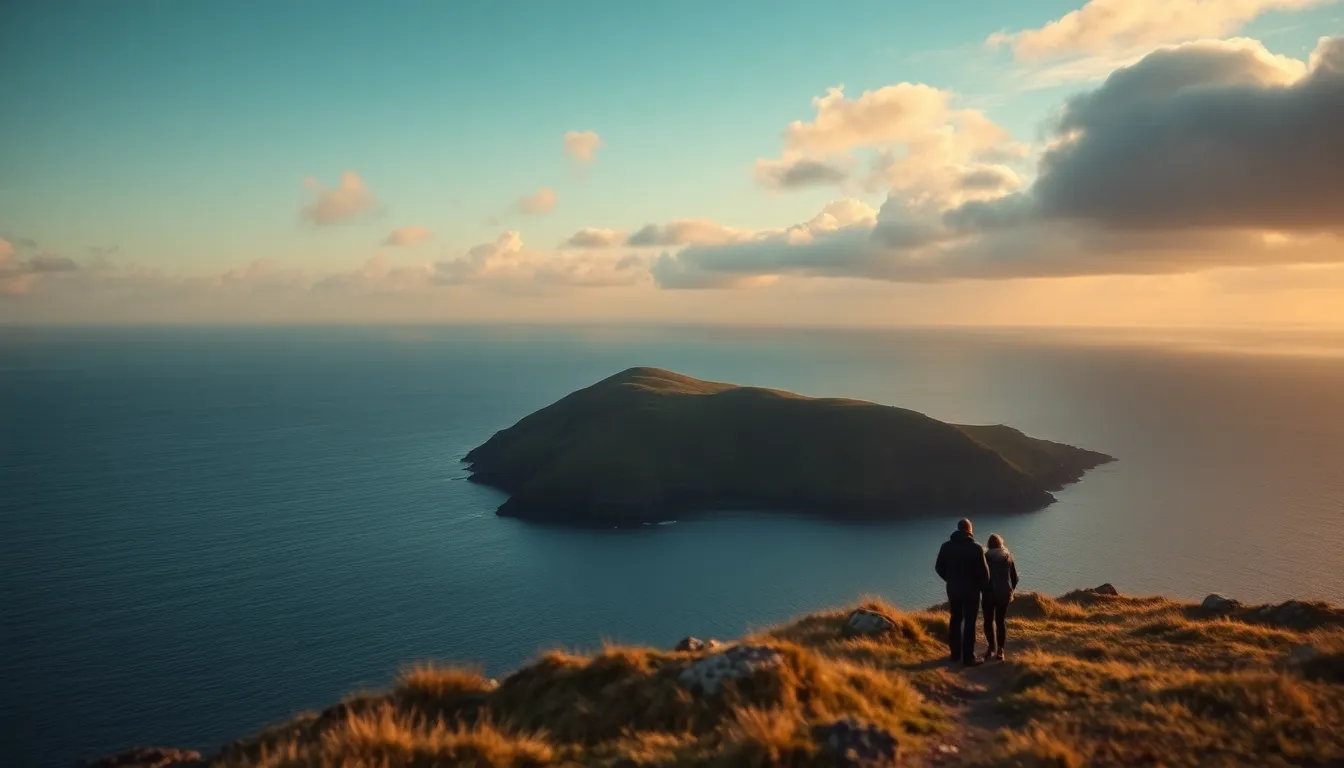
The first time I brought a group to the end of the Llyn Peninsula in northwest Wales, we stood on the cliffs at Aberdaron and looked across the sound at Bardsey Island, and nobody spoke for a while. The island sits low and green in the water, a mile and a half offshore, with a single hill rising at its northern end. It does not look like much from the mainland. But for more than a thousand years, this was one of the great pilgrim destinations of the medieval world, and standing there, you can feel the weight of it.
Bardsey is known in Welsh as Ynys Enlli, the island in the currents, and in the old tradition as the Island of 20,000 Saints. Getting there is not simple, and that is part of the point. The pilgrims who came in the Middle Ages walked for weeks to reach this last edge of Wales, then waited for the tides to allow a crossing. A group that makes the same journey today, in a small boat across a fast and unpredictable sound, arrives in the right spirit. They have earned the island, and it shows in how they receive it.
Why Bardsey Drew the Pilgrims
The tradition holds that twenty thousand saints are buried on Bardsey. The number is symbolic rather than a census, a way of saying that countless holy men and women lived, prayed, and died here across the centuries. From the early sixth century, the island held a monastic community, traditionally linked to Saint Cadfan, who is said to have founded a monastery here around 516. Over the following centuries it became a place of retreat, burial, and pilgrimage.
The pull was so strong that the medieval church declared three pilgrimages to Bardsey equal to one pilgrimage to Rome. For the people of Wales and beyond, who could never hope to reach Jerusalem or even Rome, this was the great journey, the one a person might make once in a lifetime. The pilgrim road across the Llyn Peninsula, marked by churches and holy wells, carried streams of people toward the crossing point at Aberdaron, where the small church of Saint Hywyn still stands as the last church before the sea.
The Monastery and the Augustinian Abbey
The early Celtic monastery gave way in time to an Augustinian abbey, the Abbey of Saint Mary, established on the island in the thirteenth century. The ruins of its tower still stand, a single weathered fragment near the center of the island, marking where the community gathered to pray for centuries. After the dissolution of the monasteries in the sixteenth century, the religious community ended, but the island never lost its hold on the imagination of Welsh Christians.
What the Island Means for a Christian Group
For a Christian group, Bardsey offers something that few sites in Britain can match: a place where the ancient pilgrim instinct still feels entirely natural. There are no crowds, no gift shops, no coaches. There is the crossing, the walk up to the abbey ruin, the old chapel, the lighthouse at the southern tip, and the burial ground where the saints are said to lie. The whole island can be walked in an afternoon, and the silence is broken mostly by seabirds and the wind.
I have found that groups respond to Bardsey on a level they did not expect. Part of it is the effort of getting there. Part of it is the scale, an island small enough to hold in the mind, where the work of prayer and labor went on quietly for a thousand years. And part of it is the sense of company, the knowledge that you are walking ground that countless pilgrims walked before you, drawn by the same hope. It is a place that turns a tour into a pilgrimage almost without trying.
Bardsey sits naturally alongside the wider story of Welsh Christianity. Groups who come here often pair it with Saint David and his cathedral in the southwest, the other great founding site of the Welsh church, and with the quieter shrines we cover in our guide to hidden heritage sites. Together they trace the contemplative, sea-facing strand of the faith that took root along this coast.
How Groups Visit Bardsey
A visit to Bardsey takes planning, and honesty about the logistics serves a group far better than wishful thinking. The island is reached by a small passenger boat from Porth Meudwy, a tiny cove near Aberdaron, and the crossing depends entirely on the weather and the tides. The sound between the mainland and the island holds some of the fastest currents in Britain, which is why the medieval pilgrims spoke of it with such respect. Boats do not run every day, and a sailing can be cancelled at short notice if the sea turns.
For these reasons, I never build a tight schedule around Bardsey. We allow a flexible window, with a meaningful alternative on the mainland if the crossing cannot run, so the group is never left disappointed or stranded. The boat is small, which limits how many can cross at once, and the landing is onto rocks rather than a harbor, so a degree of mobility is needed. None of this should deter a group. It simply needs an operator who knows the crossing and plans around its rhythms rather than against them.
Practical Access
The nearest base for a group is the Llyn Peninsula itself, with Aberdaron the natural staging point. The peninsula is a long drive from the main Welsh cities, so I usually treat Bardsey as the high point of a wider Llyn and North Wales itinerary rather than a quick add-on. On the island, facilities are minimal, so we brief groups carefully on bringing what they need and respecting the working farm and nature reserve that share the island today. With the right preparation, a mixed-age group can manage it well, and the reward more than matches the effort.
FAQ: Visiting Bardsey Island
Why is Bardsey called the Island of 20,000 Saints?
The name reflects a medieval tradition that twenty thousand saints are buried on the island, drawn there over centuries of monastic life and pilgrimage. The number is symbolic rather than literal, a way of expressing how many holy men and women lived and died on Bardsey from the sixth century onward. The island was so revered that three pilgrimages there were counted equal to one to Rome.
How do groups get to Bardsey Island?
By a small passenger boat from Porth Meudwy near Aberdaron, at the tip of the Llyn Peninsula. The crossing is short but depends entirely on weather and the strong tides in the sound, so sailings are not guaranteed on any given day. We always build a flexible window and a mainland alternative into the itinerary so a group is never left disappointed by a cancelled crossing.
Is Bardsey suitable for a mixed-age group?
It can be, with planning. The crossing is in a small boat and the landing is onto rocks rather than a pier, so a reasonable degree of mobility is needed. The island itself is walkable in an afternoon over gentle terrain. We assess each group’s needs and advise honestly on whether the crossing suits everyone, and we plan a meaningful mainland alternative for any who cannot make it.
What is there to see on the island?
The ruined tower of the medieval Augustinian abbey, an old chapel, the burial ground of the saints, a nineteenth-century lighthouse at the southern tip, and the hill at the northern end with wide views back to the mainland. The island is also a working farm and nature reserve rich in birdlife. The experience is one of quiet, space, and the sense of treading ancient pilgrim ground.
How does Bardsey fit into a wider Welsh tour?
It works best as the high point of a North Wales and Llyn Peninsula itinerary rather than a standalone trip, given the distance and the dependence on the tides. Many groups pair it with St Davids in the southwest for the fuller story of the Welsh founding saints. We shape the route so the journey to the island feels like the pilgrimage it has always been.
If Bardsey speaks to your group, I would be glad to help you plan it. Heritage Tours builds every itinerary around your community, and with 15 or more participants, the group leader travels free. Begin with our spiritual sites of the United Kingdom, our United Kingdom heritage destination, and our group heritage tours. When you are ready, contact us and we will start shaping the journey.