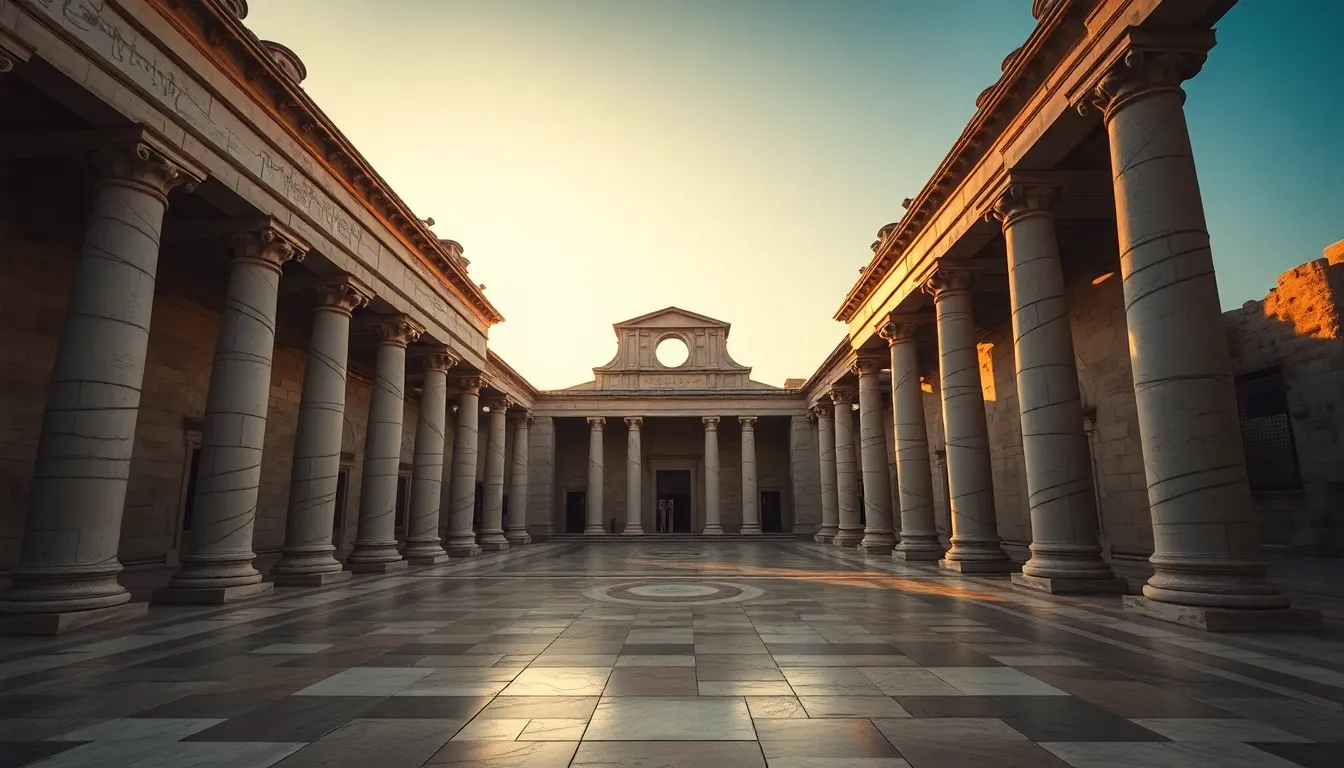
I have stood in a lot of ancient places with groups, but few stop people the way the synagogue at Sardis does. You walk into a marble hall the length of a cathedral, with mosaic floors stretching out before you and Hebrew and Greek inscriptions still legible in the stone, and you realize you are standing in the largest synagogue the ancient world has left us. A Jewish community worshipped here, in confidence and in the open, in a major Roman city, for centuries. For Jewish groups it is deeply moving. For Christian groups it fills in a part of the story that most tours leave out entirely.
Sardis is also one of the seven churches of Revelation, which means Jewish and Christian heritage meet here in a single set of ruins. Let me explain what is here and how a group takes it in with the care it deserves.
The Largest Ancient Diaspora Synagogue
Sardis was an ancient capital, once the seat of the legendary King Croesus, whose wealth became a byword, and later a major city of the Roman province of Asia. Excavations by Harvard and Cornell, running since the 1950s, uncovered a synagogue that changed how scholars understand Jewish life in the Roman world.
The building is vast. It measures roughly ninety meters long and was capable of holding a thousand worshippers. It stood not on the edge of town but at the very center of the city’s civic life, built into the same monumental complex as the great Roman bath and gymnasium, opening onto the main colonnaded shopping street. That location tells you something important. This was not a small, hidden, or tolerated community. The Jews of Sardis were established, prosperous, and visibly woven into the public life of a major Roman city, and they had been there for a very long time.
What survives is remarkable. A grand forecourt with a fountain, a long assembly hall paved in colored marble and mosaic, two shrines that held the Torah scrolls, a great marble table flanked by carved Roman eagles and lions, and more than eighty inscriptions in Greek and Hebrew naming donors and members of the congregation. You can read the names of the people who worshipped here. That is rare and precious.
A Community That Reaches Back to the Bible
Here is what I want my groups to understand about the Jewish presence at Sardis, because it has biblical roots that surprise people.
The Jewish community here was ancient. There is good reason to connect it to the diaspora that scripture itself records. The prophet Obadiah, in verse 20, refers to exiles “in Sepharad,” and Jewish tradition has long associated Sepharad with Sardis. By the time of the Romans, Jewish communities across Asia Minor were well established, and Sardis was among the most prominent. When you stand in this hall, you are looking at one of the great centers of the Jewish diaspora, a community that kept Torah, kept the festivals, and kept its identity, generation after generation, far from Jerusalem.
I treat this with the dignity it deserves, and I encourage every group leader to do the same. This is not a backdrop for the Christian story. It is the living heritage of the Jewish people in exile, and it stands on its own. For Jewish travelers, walking this floor is walking among their own ancestors in the diaspora. For Christian travelers, it is a chance to grasp the Jewish world the apostles moved through, the synagogues Paul entered first in every city, the deep roots of the faith they share. I have seen pastors moved to tears here, realizing how much of the story they had never been shown.
The Church of Revelation
Sardis is also one of the seven churches John addresses in the Book of Revelation, and the letter to it is among the most sobering. In Revelation 3, the risen Christ tells the church at Sardis, “You have a reputation of being alive, but you are dead.” It is a warning against complacency, against a faith that looks healthy on the surface and is hollow within.
There is a poignancy in reading that letter on this site. Sardis was a city that had been proud, wealthy, and seemingly secure, the city of Croesus, and yet it had fallen to conquest twice in its history when its defenders grew careless. The warning to the church draws on the city’s own memory. I read the Revelation letter with my groups standing near the synagogue and the ruins of the city, and the message about being awake rather than merely appearing alive carries the full weight of the place.
How Groups Visit Sardis
The site has two main areas a short distance apart. The synagogue, the bath-gymnasium complex, and the Roman shops cluster together near the main road and are the heart of a visit. A little way off stand the remains of the Temple of Artemis, one of the largest temples of the ancient world, with a few towering columns still standing.
Here is how I structure it. We begin in the synagogue and the bath-gymnasium complex, giving the synagogue the unhurried time it deserves, reading from the prophets and considering the diaspora community that built it. We walk the restored colonnade of Roman shops alongside it. Then we read the Revelation letter, and for groups with time and energy we visit the Temple of Artemis as well.
The main synagogue and gymnasium area is fairly level and accessible underfoot, with the mosaic floors and marble forecourt easy to walk, which makes it comfortable for mixed-age groups. The Temple of Artemis involves a bit more uneven ground.
Sardis in the Wider Circuit
Sardis is one of the seven churches of Revelation and sits in western Turkey within the circuit that runs through Ephesus, Pergamon, and the rest. Groups following John’s letters take Sardis in sequence, and for Jewish heritage travelers it stands as a destination in its own right. For how the broader route connects, see our overview of spiritual sites across Turkey, and for a nearby Revelation site we cover the Asklepion of Pergamon.
For 15 or more travelers we arrange a guide who can teach both the Jewish diaspora history and the Revelation letter with care, and we coordinate Sardis with the wider circuit so the route flows well. We plan the pace around the people you bring.
FAQ: Visiting the Sardis Synagogue
Why is the Sardis synagogue significant?
It is the largest ancient synagogue ever discovered, around ninety meters long and able to hold a thousand worshippers. It stood at the center of a major Roman city, built into the civic bath and gymnasium complex on the main street, which shows that the Jewish community here was prosperous, established, and visibly part of public life rather than hidden or marginal.
How old is the Jewish community at Sardis?
Very old. Jewish presence in Asia Minor goes back centuries before the Romans, and tradition has long linked the “Sepharad” of Obadiah 20 with Sardis. By Roman times it was among the most prominent diaspora communities in the region, with a continuous identity maintained far from Jerusalem.
Is Sardis one of the churches of Revelation?
Yes. Sardis is one of the seven churches John addresses in the Book of Revelation. The letter in Revelation 3 warns the church that it has a reputation of being alive but is dead, a sobering call against complacency that echoes the city’s own history of falling to conquest through carelessness.
What does a group see at the synagogue?
A grand marble forecourt with a fountain, a long assembly hall paved in colored marble and mosaic, two Torah shrines, a marble table flanked by carved eagles and lions, and more than eighty Greek and Hebrew inscriptions naming the congregation’s donors and members. The names of the worshippers can still be read in the stone.
Is Sardis easy for older travelers to visit?
The main synagogue and bath-gymnasium area is fairly level and accessible, with the mosaic floors and forecourt easy to walk, which suits mixed-age groups well. The Temple of Artemis a short way off involves more uneven ground, so we tailor the route to the group.
Sardis is where Jewish and Christian heritage meet in one extraordinary set of ruins, and it deserves a place on any serious Turkey journey. If you want to build it into a trip for your congregation or community, I would be glad to help. You can see how we structure these trips on our Turkey heritage page or explore our group heritage tours.
Contact us whenever you are ready to start the conversation.