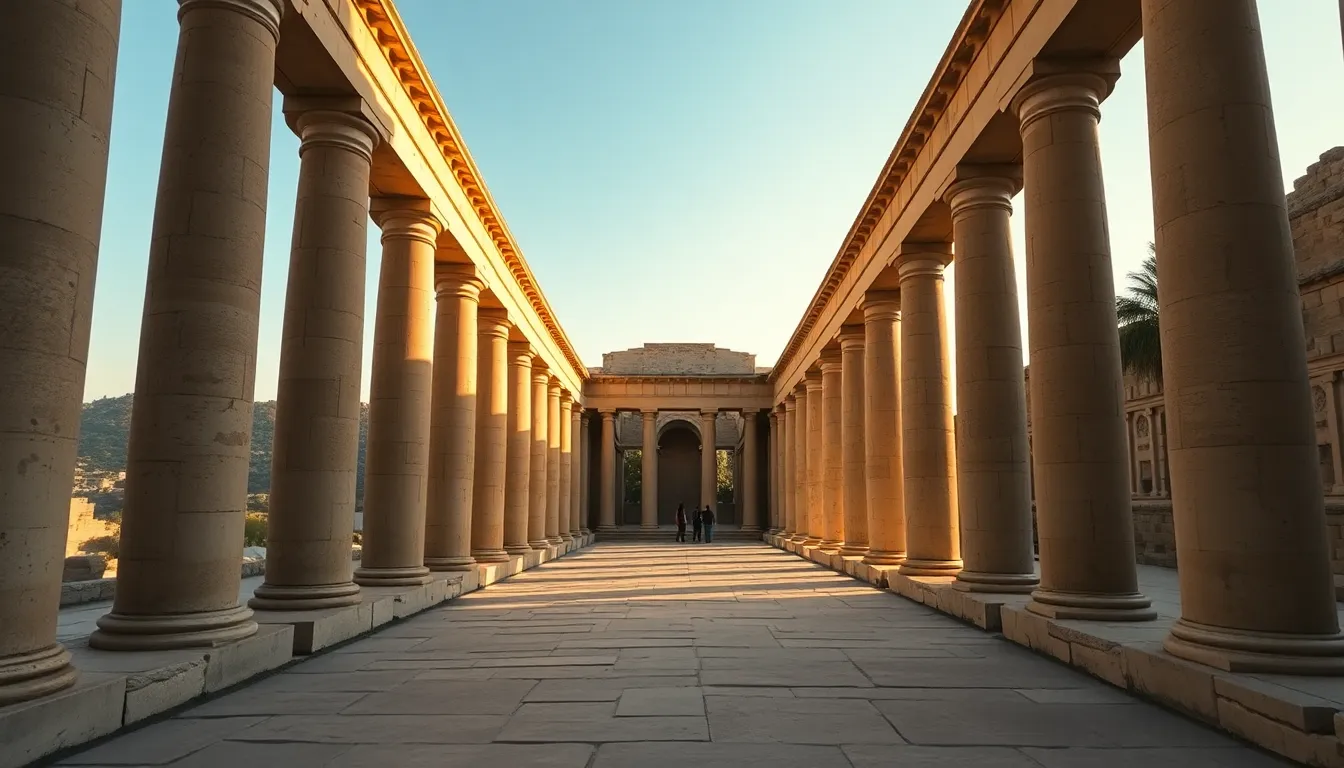
When I lead a group through Pergamon, I save the Asklepion for after we have read the letter to the church there in Revelation 2. There is a line in that letter that the standard tour guides rush past. Jesus tells the church at Pergamon that it dwells “where Satan’s throne is.” Scholars have argued for generations about what that phrase meant. Stand in this ancient healing center, with its serpent symbol carved into the stone, and one strong answer is right in front of you. The connection lands hard, and it is one of the reasons I think no faith group should skip this site.
The Asklepion was one of the most famous medical centers of the ancient world, and it sat in the shadow of a church John addressed by name. Let me explain what it was, why it speaks to a Christian group, and how to visit it well.
The Ancient Healing Center
The Asklepion of Pergamon was a sanctuary dedicated to Asklepios, the Greek god of healing, whose symbol was a serpent coiled around a staff. That symbol survives today as the emblem of medicine, and you will see versions of it carved at the site. Sick people came here from across the ancient world seeking cures, much as people travel to famous hospitals today.
By the second century AD, under the great physician Galen, who was born in Pergamon and trained here, the Asklepion was one of the three most important healing centers in the Roman Empire. The treatments were a blend of the medical and the religious. Patients walked the sacred colonnaded way into the complex, drank and bathed in the waters of sacred springs, slept in a special dormitory hoping the god would visit them in a healing dream, and received care that ranged from baths and diet to music, theater, and what we would now recognize as early psychology.
Walking the site today, your group sees the long marble colonnade of the sacred way, the sacred spring still flowing, a remarkable underground tunnel that patients passed through, the round treatment building, and a small theater where performances were part of the cure. It is one of the more atmospheric ancient sites in Turkey, green and quiet, and it gives a vivid sense of how the ancient world wove medicine and religion together.
The Serpent, the Throne, and the Church
Here is where it becomes powerful for a faith group, and it is worth taking time to do it justice.
Pergamon was one of the seven churches of Revelation, and in chapter 2 the risen Christ commends the believers there for holding fast to His name even where “Satan’s throne is” and where Antipas was martyred. That phrase has several proposed explanations, and I lay them out honestly for my groups rather than insisting on one.
Pergamon was crowned by a massive altar to Zeus on its acropolis, which some identify as the throne. The city was a leading center of the imperial cult, where Roman emperors were worshipped as gods, which others see as the throne, since that cult demanded the very allegiance Christians refused to give. And then there is the Asklepion, where a serpent was worshipped as a healing god, the serpent being a charged symbol throughout scripture. No one can prove which the text meant, and it may have meant the whole religious atmosphere of the city at once.
What I want my groups to feel is the pressure those early believers lived under. Pergamon was saturated with rival worship, the altar of Zeus above them, the emperor cult around them, the serpent god healing the sick across town. To follow Christ here was to stand against the entire spiritual current of your city. When you read the letter standing in the Asklepion, the courage Christ commends stops being abstract.
How Groups Visit the Asklepion
The Asklepion sits in the lower city of Pergamon, near the modern town of Bergama, while the famous acropolis with its theater and the site of the Zeus altar rises on the hill above. A group should plan to see both, and they tell the story together.
Here is how I structure a Pergamon day. We usually take the cable car up to the acropolis first for the steep theater, the library, and the foundation where the Zeus altar stood, reading the Revelation letter up there with the city spread below. Then we come down to the Asklepion in the lower city, where we walk the sacred way, the tunnel, and the spring, and revisit the “Satan’s throne” question with the serpent imagery in front of us. The two halves of the day reinforce each other.
The Asklepion itself is fairly level walking on the sacred way and through the main complex, easier underfoot than the steep acropolis above. There is some uneven ancient paving, so sturdy shoes help, and shade is limited, so we bring hats and water in the warm months.
Pergamon in the Seven Churches Circuit
Pergamon is one of the seven churches of Revelation, and it fits naturally into the circuit that runs through western Turkey. Groups often pair it with Ephesus to the south and with the other Revelation sites, building a route that follows John’s letters in order. For how the wider circuit comes together, see our guide to spiritual sites across Turkey, and for another of the seven we cover Sardis and its great synagogue.
For 15 or more travelers we arrange a guide who knows both the archaeology and how to teach the Revelation letters on site, and we coordinate Pergamon with the rest of the circuit so the driving stays efficient and the story unfolds in sequence. We plan the pace around the people you bring.
FAQ: Visiting the Asklepion of Pergamon
What was the Asklepion of Pergamon?
It was one of the most famous healing centers of the ancient world, dedicated to Asklepios, the Greek god of healing whose symbol was the serpent-entwined staff still used for medicine today. By the second century AD, under the physician Galen, it was among the three leading medical sanctuaries in the Roman Empire, blending baths, dream healing, diet, and early psychology.
How is the Asklepion connected to the church of Revelation?
Pergamon was one of the seven churches John addressed in Revelation. Christ tells that church it dwells “where Satan’s throne is.” The serpent worship at the Asklepion is one proposed meaning of that phrase, alongside the great altar of Zeus and the imperial cult. We present all of these honestly rather than insisting on one.
What does a group see at the site?
The long colonnaded sacred way, a sacred spring that still flows, an atmospheric underground tunnel that patients walked, a round treatment building, and a small theater used in the healing process. It is one of the greener and quieter ancient sites in Turkey.
Is the Asklepion easy to walk?
The Asklepion is mostly level along the sacred way and through the main complex, easier than the steep acropolis on the hill above. Some ancient paving is uneven, so sturdy shoes help, and shade is limited, so bring hats and water in warm months.
Should we visit the Pergamon acropolis as well?
Yes. The acropolis on the hill holds the steep theater, the library, and the foundation of the Zeus altar, while the Asklepion sits in the lower city. Seeing both tells the full story of Pergamon and the pressures the early church there faced. A cable car reaches the acropolis.
Pergamon is one of the richest stops on the Revelation circuit, and the Asklepion is the part most tours undersell. If you want to build the seven churches into a heritage journey for your congregation, I would be glad to help. You can see how we structure these trips on our Turkey heritage page or explore our group heritage tours.
Contact us whenever you are ready to start the conversation.