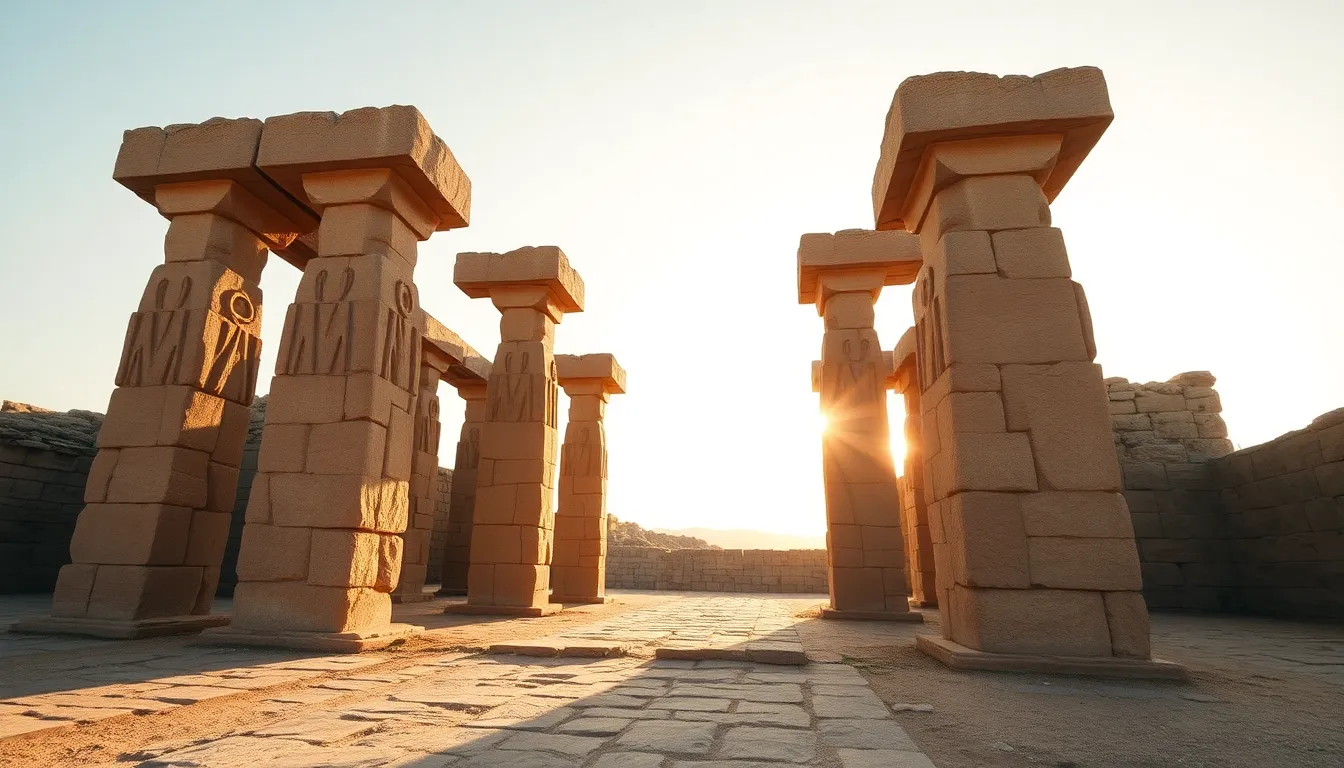
I remember the moment a rabbi in one of my groups went silent at the rail above the main excavation at Gobekli Tepe. We had spent the morning talking about how old the place is, but numbers do not land until you are looking down at it. He finally said, “These stones were already ancient when Abraham was born.” That is the right frame for this site. It is not a biblical location. It is older than the Bible, older than writing, older than the wheel. And for a faith-heritage group, that depth is exactly what makes it worth the visit.
Gobekli Tepe sits on a hilltop just outside Sanliurfa in southeastern Turkey. It has rewritten what scholars thought they knew about the origins of religion. Let me explain what it is, why it matters to a faith audience, and how to visit it without overreaching on the claims.
The World’s Oldest Temple
Gobekli Tepe was built roughly 11,500 years ago, around 9500 BC. To put that in perspective, it predates Stonehenge by about six thousand years and the great pyramids by even more. The German archaeologist Klaus Schmidt began serious excavation here in 1995, and what he uncovered overturned a long-standing assumption.
For a century, scholars believed the story went like this. First people learned to farm, then they settled into towns, and only then, once they had surplus and leisure, did they build temples. Gobekli Tepe reverses that order. Here was a monumental religious complex built by people who were still hunter-gatherers, before agriculture, before pottery, before settled villages. The implication is striking. The impulse to worship may have come first, and the gathering to worship may have been what drove people to settle and farm in the first place.
I put it to my groups simply. The deepest evidence we have suggests that the human drive to reach toward the sacred is not a late luxury. It is foundational. It may be the thing that built civilization. For people of faith, that is a profound idea to stand inside.
What the Site Actually Holds
What the diggers found are great circular and oval enclosures made of massive T-shaped limestone pillars, some standing over five meters tall and weighing many tons. The pillars are arranged in rings, with two larger pillars standing at the center of each.
The carving is what stops people. These stones are covered in reliefs of animals, foxes, boars, snakes, scorpions, vultures, cranes, and wild cattle. Some pillars carry carved arms and hands, suggesting they represent stylized human or supernatural figures. Whoever raised these stones had a developed symbolic world, a set of beliefs they considered worth moving tons of rock to express, and they did it with nothing but stone tools and human muscle.
And then, just as remarkably, the builders deliberately buried the whole complex. The enclosures were filled in and covered over, which is part of why they survived in such good condition. Why they buried it remains one of the great open questions of the site.
Reading It Well for a Faith Group
This is where I am careful, and I would encourage any group leader to be the same. Gobekli Tepe is not mentioned in scripture and has no direct biblical connection. You will sometimes see it linked online to the Garden of Eden or the tower of Babel. I do not teach it that way, and I steer my groups away from claims the evidence cannot carry. Those theories are speculation, not scholarship, and treating them as fact undermines the credibility of everything else you say on a trip.
Here is the honest and powerful frame instead. Gobekli Tepe gives physical, ancient witness to the universal human reach toward God. It sits in the same region of southeastern Turkey that Jewish, Christian, and Muslim tradition ties to Abraham. So while it is not Abraham’s site, it sets a backdrop. Long before the patriarch walked this land, people here were already building places to encounter the sacred. When God called Abraham out of this region, He called him from a world that had been worshipping for thousands of years. That context, handled truthfully, deepens the biblical story rather than competing with it.
How Groups Visit Gobekli Tepe
The site is well set up for visitors today. A modern visitor center and a protective canopy cover the main excavation areas, and raised walkways let your group look down into the enclosures from above. It is a UNESCO World Heritage Site, and the presentation is professional and clear.
The visit itself is not long, usually around ninety minutes to two hours including the visitor center. The walking is gentle on graded paths and boardwalks, which makes it comfortable for mixed-age groups, a welcome change from the rugged footing at many ancient sites. There is little shade beyond the canopy, so in the hot months we go early and bring water and hats.
I structure it as a contemplative stop. We watch the short orientation film, walk the platforms slowly while the guide explains the enclosures, and then I gather the group for a few minutes of reflection on the antiquity of human worship. It is a place that invites awe, and awe is the right response.
Pairing It With the Abraham Sites
Gobekli Tepe sits only a short drive from central Sanliurfa, which makes it natural to pair with the Abraham sites in the city. A common rhythm is Gobekli Tepe in the cool of the morning, then the Cave of Abraham and the sacred pools in the afternoon, which we cover in our guide to Sanliurfa and the Cave of Abraham. For groups drawn to the wider sweep of biblical-era sites in Turkey, it also fits alongside our overview of spiritual sites across Turkey.
For 15 or more travelers we can arrange the domestic flights into Sanliurfa, a local guide who knows both the archaeology and how to speak to a faith group, and the full southeastern circuit as one coordinated leg. We plan the pace around the people you bring.
FAQ: Visiting Gobekli Tepe
How old is Gobekli Tepe?
It dates to around 9500 BC, roughly 11,500 years ago, making it the oldest known monumental religious site in the world. It predates Stonehenge by about six thousand years and the pyramids by even more. It was built by hunter-gatherers before farming, pottery, or writing.
Is Gobekli Tepe mentioned in the Bible?
No. It has no direct biblical connection and predates the patriarchs by thousands of years. Online theories tying it to Eden or Babel are speculation, not scholarship. We present it honestly as ancient evidence of humanity’s reach toward the sacred, in the same region tradition links to Abraham.
Why is Gobekli Tepe important for a faith group?
It overturns the old assumption that worship came after settled civilization. The evidence suggests the drive to worship may have come first and helped drive people to settle. For people of faith, it is a powerful witness that reaching toward God is foundational to being human.
Is the site easy for older travelers to visit?
Yes. Gobekli Tepe has a modern visitor center, a protective canopy, and raised boardwalks on graded paths. The walking is gentle compared with most ancient sites, which makes it comfortable for mixed-age groups. There is little shade, so we visit in the cooler part of the day.
How does Gobekli Tepe fit into a Turkey itinerary?
It sits just outside Sanliurfa in the southeast, paired naturally with the Cave of Abraham and the sacred pools in the city and with a visit to Harran. Together these make a distinctive day or two that most standard Turkey tours skip entirely.
Gobekli Tepe is one of the most remarkable things a heritage group can stand before, and almost no one is teaching it well to people of faith. If you want to build it into a thoughtful Turkey journey for your congregation, I would be glad to help. You can see how we structure these trips on our Turkey heritage page or explore our group heritage tours.
Contact us whenever you are ready to start the conversation.