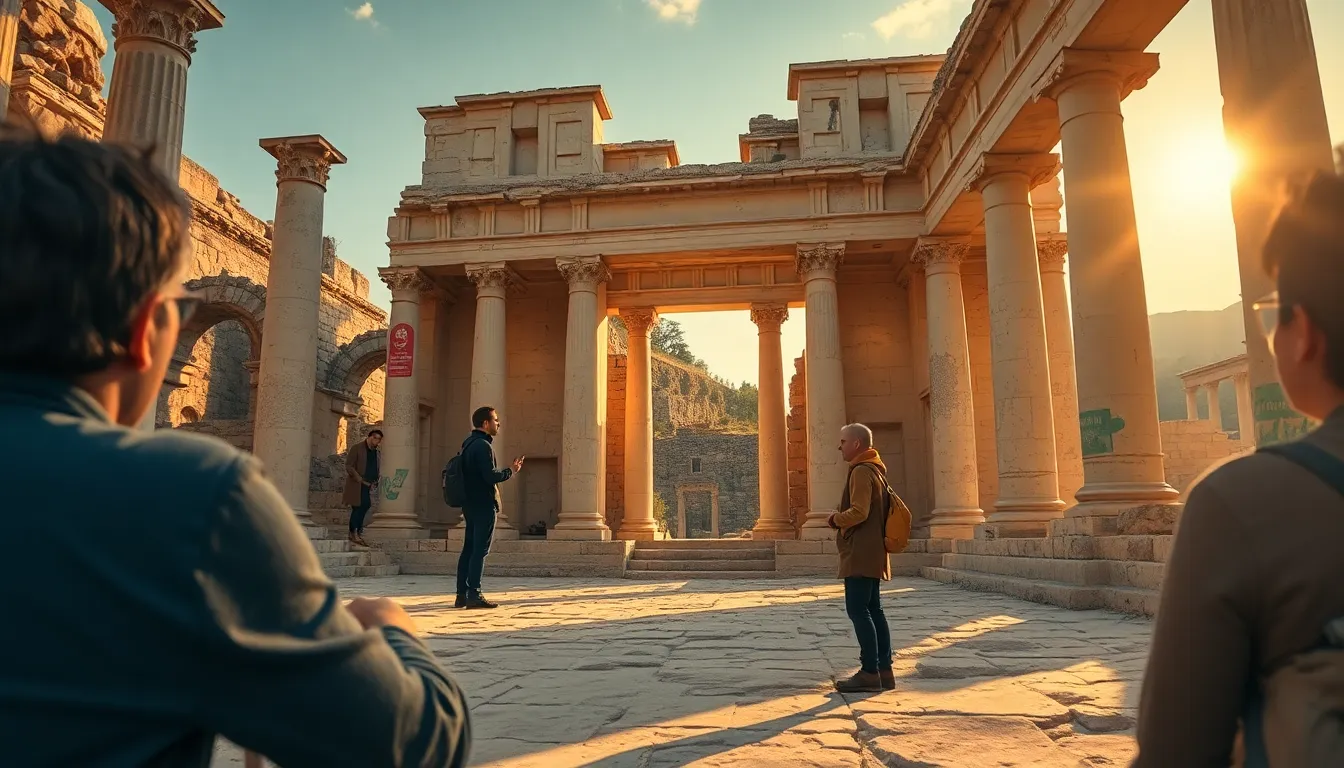
There is a moment at Ephesus that I plan for every time. The group is standing in the great theater, the one in Acts 19 where the silversmiths started the riot over Artemis. I ask someone to read the passage, the part where the crowd chants “Great is Artemis of the Ephesians” for two solid hours. Then I just let it sit. Because when you are standing in the actual stone bowl where twenty-five thousand people once roared that chant, the text stops being a story about somewhere else. It becomes a question your group has to answer for themselves. What do the crowds in our own lives chant, and do we join in?
That is the difference between a trip and a teaching trip. The sites are the same. The framing is everything. A group that flies to Turkey and looks at ruins comes home with photos. A group that flies to Turkey to study comes home changed. The work of the leader is to build the second kind, and the good news is that Turkey makes it easier than almost anywhere, because the geography is already a curriculum waiting to be taught.
Let me show you how I frame it.
Start With the Question, Not the Itinerary
Most trips get planned backward. Someone picks the sites first, then tries to find meaning in them on the bus. Flip it. Decide what you want your people to understand before you decide where to stand.
For a Christian group, the framing question is often something like this: what did it cost to be the church in a hostile empire, and what does that ask of us now? Turkey answers that question better than any classroom. The Seven Churches of Revelation are not abstractions here. They are addresses. The underground cities of Cappadocia where believers hid are not metaphors for faith under pressure. They are tunnels you walk through, bent at the waist, in the dark.
For an educator bringing students or adult learners, the question might be about how civilizations layer on each other, or how a single city can hold Roman, Byzantine, and Ottoman worlds in one skyline. Istanbul teaches that in an afternoon.
Once you have the question, the itinerary builds itself, because you are choosing sites that answer it rather than sites that merely impress. Our guide on planning a group heritage tour to Turkey covers the site-selection logic in more depth.
Turning the Seven Churches Into a Course
The Seven Churches of Revelation are the strongest teaching spine Turkey offers a Christian group. John addresses seven specific congregations in chapters two and three, and most of those cities are real places you can visit on the Aegean coast.
Here is how I turn that into a sequence of lessons rather than a list of ruins.
Ephesus: The Church That Lost Its First Love
Ephesus is the natural opening because it is the most complete. Beyond the theater and the library of Celsus, the teaching is in the letter itself. The Ephesian church is commended for endurance and then warned that it has abandoned the love it had at first. Standing in a city this grand, this accomplished, this busy, the warning lands. You can be right about everything and cold at the center. That is a lesson a congregation feels in their chest when they are surrounded by the marble of a church that drifted.
Smyrna and Pergamum: Faithfulness Under Pressure
Smyrna, modern Izmir, is the church that suffered and was told to be faithful unto death. Pergamum is called the place “where Satan’s throne is,” likely a reference to the great altar that dominated the acropolis. Teaching these two together gives your group the theme of faith held under real cost. For groups also interested in the Jewish story, Izmir doubles as a major Sephardic heritage city, which I address in our piece on co-leading an interfaith trip to Turkey.
Thyatira, Sardis, Philadelphia, Laodicea: The Range of the Church
The remaining four let you teach the full spectrum. Sardis, the church with a reputation for being alive but warned that it was dead. Laodicea, the lukewarm church, near hot springs and cold streams that made the metaphor literal to its first readers. Philadelphia, the faithful small church given an open door. You do not need to spend equal time at each. You need to let the seven together paint the honest range of what a church can be, then ask your group which letter is addressed to them.
By the end, the Seven Churches are no longer trivia. They are a mirror your people have looked into.
Teaching Paul Where Paul Walked
The Pauline material in Turkey is rich, and it teaches differently than Greece does. In Greece you follow Paul’s missionary route in sequence. In Turkey you encounter Paul at the source.
Tarsus is his hometown, the city that shaped the man before the road to Damascus. Standing there, you can teach the formation of Paul, the Roman citizen, the trained mind, the zealous Pharisee, before any of the letters. Antioch, where the disciples were first called Christians, is where you teach the birth of the movement’s identity. And Ephesus, again, is where Paul spent more than two years, where the riot broke out, where he wrote to the Corinthians. Reading the relevant passages on the actual ground turns a Bible study into a memory your people cannot unfeel.
The teaching trick is to read short and let the place do the work. I keep the passages brief, give the group a single question, and let the silence carry it. A long lecture in a hot ruin loses people. A single verse read in the right spot stays with them for years.
Building the Trip So Learning Actually Sticks
Framing is not only about what happens at the sites. It is about the rhythm around them.
I build in three teaching touchpoints a day. A short reading and question at the morning’s key site. A reflection on the bus while it is fresh. A gathered conversation in the evening, after dinner, where the group processes what they saw together. That evening session is where the trip turns into a course. People say things they would never say on the bus, and the group bonds around the meaning rather than the logistics.
I also assign light preparation before the trip, which I cover fully in our guide on preparing your group spiritually for Turkey. A group that has read Revelation two and three before they land arrives ready to learn. A group that has not spends the first three days catching up.
And I leave room for silence. The teaching impulse is to fill every space with content. Resist it. The underground city of Derinkuyu does not need narration. It needs a quiet minute for your people to imagine living there. The best educational moments on these trips are often the ones where the leader says nothing at all.
A Note for Educators in Formal Programs
If you are bringing a school, a seminary cohort, or an adult-education program with academic expectations, Turkey supports a more rigorous frame. We can structure pre-trip readings, on-site assignments, and reflective writing into the itinerary so the trip carries real instructional weight. Heritage and history educators have built credit-bearing programs around exactly these sites. Tell us the learning outcomes you need to document, and we build the trip to serve them.
And the leader economics make this workable. With fifteen or more participants, the organizing educator or clergy leader travels free, which I explain fully in our guide on how the free leader benefit works in Turkey. For a teacher building a program on a tight budget, that matters.
FAQ: Framing a Turkey Heritage Trip as Education
How do I turn a Turkey heritage trip into a real teaching experience? Start with the question you want your group to answer, then choose sites that answer it. Read short passages on the ground, ask one focused question per site, and hold an evening reflection where the group processes together. The framing, not the sites themselves, is what turns a tour into a course.
Which Turkey sites work best for teaching the Seven Churches of Revelation? Ephesus, Smyrna (modern Izmir), and Pergamum anchor the strongest teaching, with Sardis, Thyatira, Philadelphia, and Laodicea filling out the range. Reading each church’s letter from Revelation two and three while standing in the city makes the text land in a way no classroom can match.
Can I build a Turkey trip for students or a formal academic program? Yes. We structure pre-trip readings, on-site assignments, and reflective components for seminaries, schools, and adult-education cohorts. Tell us the learning outcomes you need to document and we build the itinerary to support them.
How much teaching should I plan per day without exhausting the group? Three light touchpoints work well: a short reading and question at the morning site, a brief bus reflection, and a gathered evening conversation. Keep the on-site readings short and leave room for silence. Over-teaching in a hot ruin loses people faster than anything.
Does the educational framing change the cost of the trip? No. The teaching frame is about how you structure the experience, not an add-on you pay for. And with fifteen or more participants, the organizing clergy or educator travels free, which keeps the program affordable for budget-conscious groups.
If you want to bring your people home changed rather than just photographed, the framing is where it starts, and Turkey gives you more to work with than almost anywhere. See how we structure these trips on our group heritage tours page or explore the sites on our Turkey destination page.
Contact us and let’s shape the teaching trip your community needs.