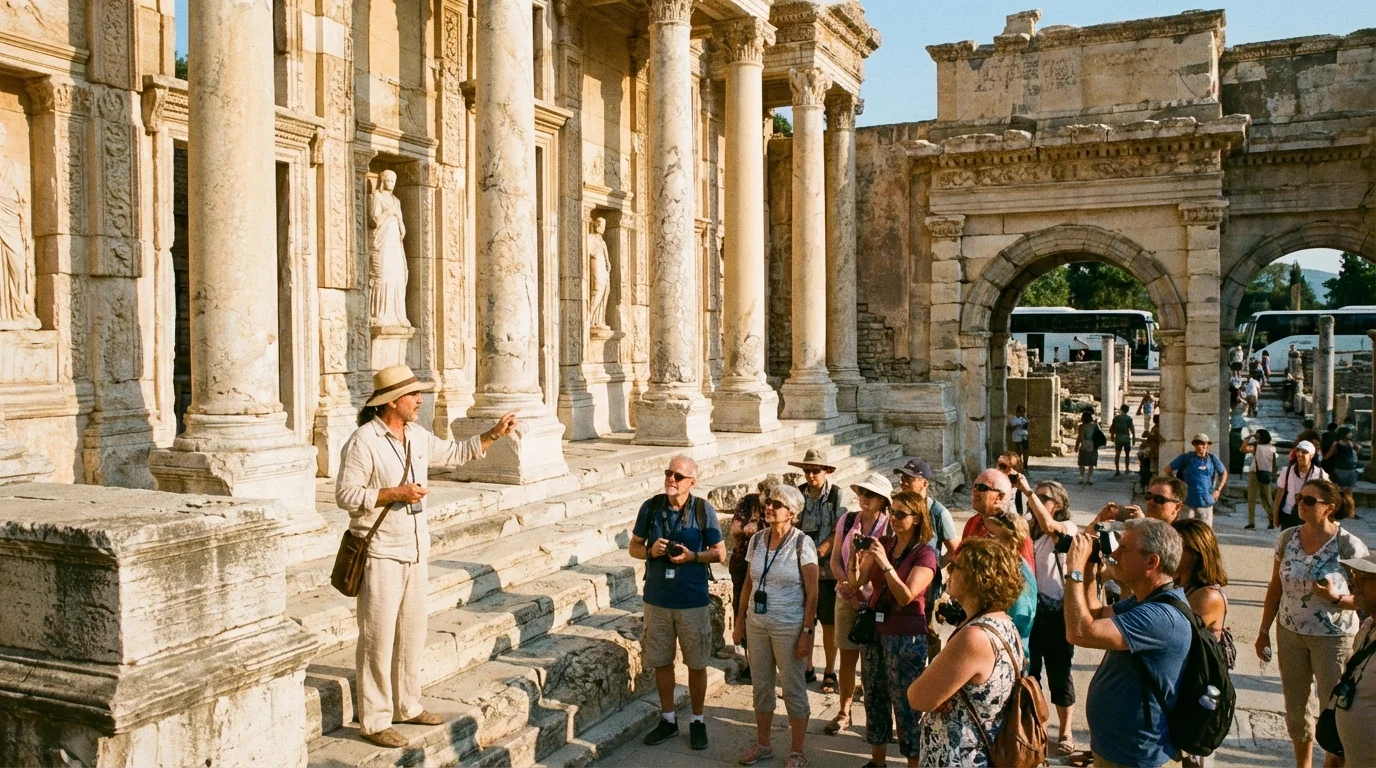
Why Turkey Works for Both Jewish and Christian Heritage Groups
Most heritage destinations serve one story well. Israel is the anchor for Jewish and Christian pilgrimage. Spain carries the weight of Sephardic history. Greece traces the early church.
Turkey does something rare: it holds both the Ottoman Jewish story and the early Christian story at equal depth, often within the same region. Istanbul has active Sephardic synagogues and Byzantine churches. The Aegean coast has Ephesus (where Paul preached) and Izmir (where Sephardic Jews shaped the city’s entire commercial life). Cappadocia holds some of Christianity’s earliest physical evidence.
If you are a rabbi, Turkey is where your community can stand inside the story of what happened after Spain’s expulsion. If you are a pastor, Turkey is where Paul’s letters become geography. And if your community includes both traditions, Turkey is one of the very few places that will hold the entire group’s attention from beginning to end.
This guide is built from the conversations I have with group leaders during their first planning call. It covers what to include, what to sequence carefully, and what questions to ask before you commit to any tour operator.
Choosing the Right Sites for Your Community’s Story
Turkey has more heritage sites than any single trip can cover. The first question is not “What are the famous sites?” but “What story does my community need to hear?”
For a Jewish congregation focused on Sephardic history, the core sites are Istanbul’s Balat neighborhood and Neve Shalom Synagogue, with possible additions of Edirne’s Great Synagogue and Izmir’s Kemeralt district. This itinerary follows the arc of the Ottoman welcome: where the exiled families arrived, where they settled, what they built.
For a Christian group, the anchors are Ephesus (Paul’s ministry and the early church), Cappadocia (rock-cut churches, underground cities, the physical evidence of faith under persecution), and possibly Tarsus (Paul’s birthplace) or Antioch (where believers were first called Christians).
For a mixed group or an interfaith journey, Istanbul itself becomes the centerpiece. The city holds layers of Jewish, Christian, and Islamic history within walking distance of each other, and a well-paced day in Istanbul can hold more spiritual weight than a week in many other cities.
Tell your tour operator what matters most to your community before they start building the itinerary. If they lead with their standard package instead of asking about your congregation, that tells you something.
Istanbul vs Ephesus vs Cappadocia: Sequencing the Experience
Turkey is logistically different from destinations where the key sites are clustered in one region. Istanbul, Cappadocia, and the Aegean coast (Ephesus, Izmir) are separated by significant distances. A group of 25 or 40 people cannot simply rent a van and improvise.
Here is how most successful heritage itineraries sequence these regions:
Istanbul first (3 to 4 days). The city is your group’s introduction to Turkey. The layers of history here set the context for everything that follows. Jewish groups explore Balat, Neve Shalom, and the city’s Ottoman heritage. Christian groups visit the Hagia Sophia, the Ecumenical Patriarchate, and the Chora Church (if accessible). Everyone walks the Grand Bazaar and the old city.
Cappadocia second (2 days). A short flight from Istanbul brings your group to one of the most visually striking landscapes in the world. The rock-cut churches of Goreme, carved by early Christians, still hold frescoes from the 10th and 11th centuries. The underground cities of Derinkuyu and Kaymakli are extraordinary. For Christian groups, this is sacred ground. For all groups, it is unlike anything they have seen.
Aegean coast last (1 to 2 days). Ephesus, Izmir, and the surrounding area bring the journey to a close. Christian groups anchor here in Ephesus. Jewish groups explore Izmir’s Sephardic quarter. The House of the Virgin Mary, above Ephesus, is a pilgrimage site for Christians and Muslims alike.
This sequence builds in intensity and gives your group a sense of moving through the story rather than bouncing between disconnected sites.
The Logistics Every Group Leader Should Understand
Turkey is a welcoming country for heritage groups, but there are practical realities a group leader should know before planning.
Internal flights. The distance between Istanbul and Cappadocia is roughly 450 miles. Most groups fly. The domestic flight takes about 90 minutes and is affordable when booked in advance. Heritage Tours handles internal flight coordination as part of the itinerary.
Site access. Active synagogues in Turkey (Neve Shalom, Ahrida, Edirne’s Great Synagogue) require advance coordination with local Jewish community organizations. This is not optional. Walk-in visits are generally not possible for groups. A good tour operator handles this well in advance.
Dietary needs. Kosher food is available in Istanbul through the Jewish community, and Heritage Tours can arrange kosher meals throughout the itinerary. Turkish cuisine is naturally accommodating to many dietary preferences, with abundant vegetarian options, fresh produce, and grilled meats. Specific requirements should be communicated early so arrangements are confirmed before your group arrives.
Group size. Heritage group tours to Turkey typically range from 15 to 45 participants. Larger groups can be accommodated but require additional planning, especially for site access and internal transportation.
How the Group Leader Free Travel Benefit Works
With 15 or more participants, the group leader travels free on Heritage Tours Turkey trips. This is straightforward and applies to the full itinerary, including flights, hotels, meals, and all site visits within the tour.
Here is why this matters beyond the obvious savings: it means the spiritual leader can focus entirely on the experience rather than the expense. A rabbi does not have to justify the personal cost to the synagogue board. A pastor does not have to weigh the trip against the church budget. The community covers the group rate, and the leader is included.
This benefit applies to all Heritage Tours group itineraries in Turkey, including custom programs that combine multiple regions. It is not conditional on booking a specific package or paying for upgrades.
What to Ask Before You Book Any Turkey Heritage Tour
Not every operator understands what a faith-based heritage group needs. Here are the questions I recommend asking before you commit:
“Will you build the itinerary around our community’s specific heritage, or are we joining a standard group?” The answer should be the former. A Jewish congregation exploring Sephardic history needs a fundamentally different itinerary than a church group tracing Paul’s journeys.
“How do you handle access to active synagogues and churches?” This requires advance coordination with local religious communities. An operator who has not done this before will not know what is involved.
“What happens with dietary requirements for a group of 25 or more?” Kosher meals, halal options, or specific dietary needs for a large group require real planning. Ask for specifics, not assurances.
“How do you sequence Istanbul, Cappadocia, and the Aegean coast?” The answer reveals whether the operator understands the story or just the geography. Sites should be sequenced for meaning, not convenience.
“Does the group leader travel free, and what exactly does that include?” Get the details in writing. At Heritage Tours, it means full inclusion in the itinerary with 15 or more participants. No exceptions, no fine print.
If Turkey is where your community’s next heritage journey leads, I would welcome the chance to walk through the planning with you. You can reach us through our Turkey destination page.
FAQ: Group Heritage Tours to Turkey
How many people do I need for a group heritage tour to Turkey? Heritage Tours group itineraries typically require a minimum of 10 participants. With 15 or more, the group leader travels free. Groups of 20 to 40 are the most common size for faith-based heritage tours, offering a good balance between community experience and manageable logistics.
Do group leaders travel free on Heritage Tours Turkey trips? Yes. With 15 or more participants, the group leader’s full itinerary is covered, including flights, hotels, meals, and all site visits. This applies to every Heritage Tours group program in Turkey, including custom itineraries.
Should a Turkey heritage tour include Istanbul, Ephesus, and Cappadocia? For most groups, yes. Istanbul provides the richest heritage density, Cappadocia holds early Christian sites and extraordinary landscapes, and the Aegean coast (Ephesus, Izmir) anchors either the Christian or Jewish story depending on your community. The key is sequencing them well, not trying to rush through all three.
How do you handle kosher food on a Turkey group heritage tour? Kosher meals are available in Istanbul through the local Jewish community, and Heritage Tours arranges kosher or dietary-specific meals throughout the full itinerary. We confirm these arrangements well before your group arrives. Turkish cuisine also offers abundant vegetarian and naturally accommodating options.
How far in advance should I book a group heritage tour to Turkey? Six to nine months is recommended, especially for spring departures (April and May are the most popular months for heritage groups). This allows time to coordinate synagogue and church access, secure group hotel rates, and arrange internal flights at favorable prices.