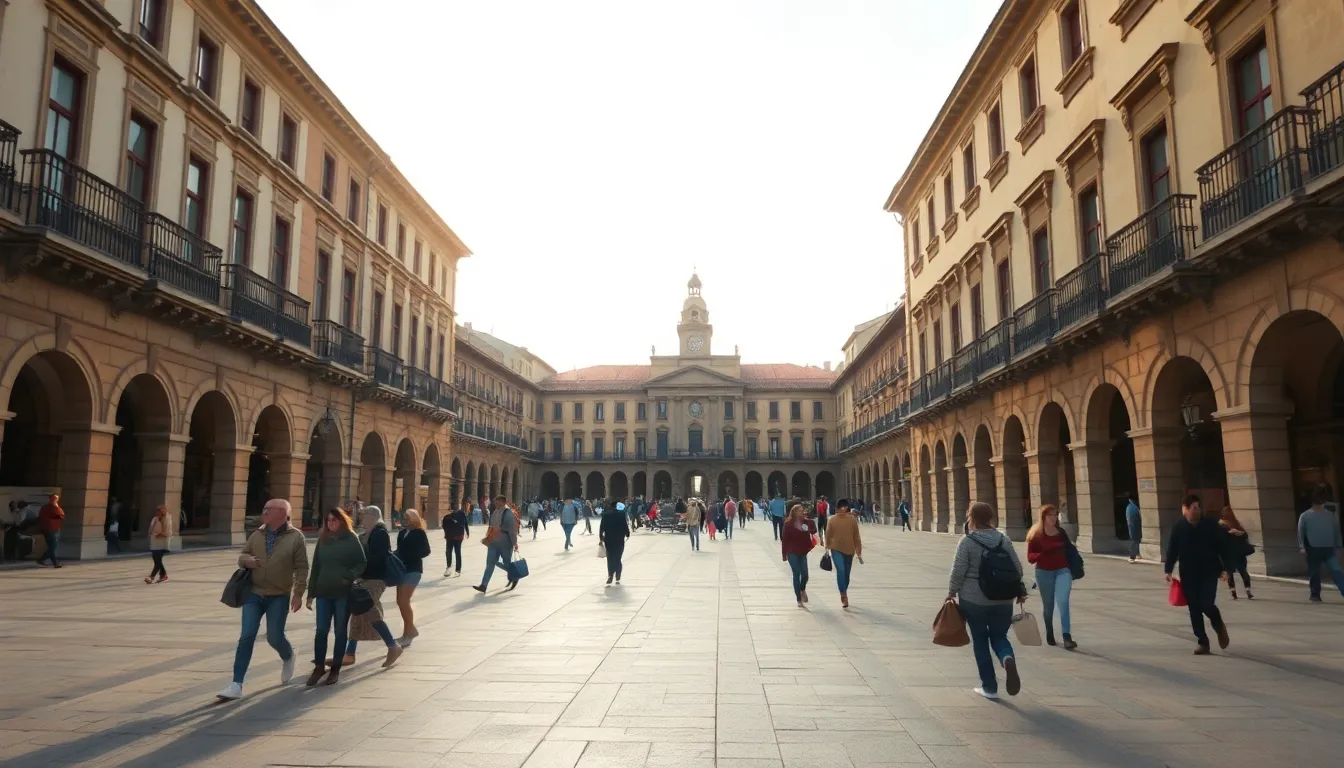
Once a group leader has decided on Spain and roughly mapped the route, the next question lands almost immediately: when do we go? And nine times out of ten, the real choice comes down to two windows. Spring or autumn. Those are the two seasons that make Spain comfortable, beautiful, and manageable for a mixed-age faith group, and the summer and winter edges fall away quickly once you start planning seriously.
I have run Spain itineraries in both windows for years, and I can tell you they are genuinely close. Both are good. But they are not identical, and the difference can matter for your specific community, your calendar, and your budget. Let me put them head to head.
Why It Comes Down to These Two Windows
First, a quick word on why the choice narrows to spring and autumn at all.
Spain’s heritage cities sit in the interior, and the interior runs hot. Andalusia in July and August is genuinely punishing, with Cordoba and Seville regularly pushing past 38 to 40°C (100 to 104°F). For a group with older members walking cathedral squares and Jewish quarters in the open sun, summer is hard on people. Winter swings the other way: December through February is cool, sometimes cold and damp on the central plateau, with shorter days that cut into your sightseeing hours.
That leaves spring, roughly April through early June, and autumn, roughly mid-September through early November. These are the windows where the weather cooperates and the trip stays comfortable. If you are still weighing how the heat affects a southern route specifically, it is worth reading how Andalusia and Castile compare, because the region you choose changes how much the season matters.
The Case for Spring
Spring is the more popular window, and for good reasons.
The Land Is Alive
Spring in Spain is green. After the winter rains, the countryside is lush, the plazas are full of blossom, and the cities feel fresh and awake. For a group spending days outdoors between heritage sites, that beauty lifts the whole experience. The light is soft and the gardens, including those at the Alhambra, are at their best.
Easter and the Christian Calendar
For Christian groups, spring carries liturgical weight. Holy Week, Semana Santa, is one of the most powerful religious observances in Spain, with extraordinary processions in Seville and across Andalusia. A group traveling around Easter encounters Spanish Christianity at its most vivid and public. That said, Holy Week also brings crowds and books up early, so it cuts both ways.
Comfortable, Building Warmth
Spring temperatures are forgiving, mild in April and warming pleasantly into May. The days lengthen as you go, giving you long, usable hours of daylight for sightseeing.
The Case for Autumn
Autumn is my quiet favorite, and it is the window I find myself recommending more often than people expect.
The Heat Has Broken, the Crowds Have Thinned
By late September the brutal summer heat is gone, but the warmth lingers, especially in the south, so Andalusia is comfortable rather than punishing. And critically, the peak tourist crowds of summer and the Easter surge have cleared. Your group moves through Toledo’s synagogues and Cordoba’s Mezquita with more room and shorter lines. For the experience of actually being present at a site rather than shuffling through it, autumn often wins.
The High Holidays Open a Natural Window
For Jewish groups, this matters. The High Holiday season, Rosh Hashanah through Sukkot, keeps congregations close to home through most of September. But once it lifts, usually in October, there is a natural opening. People are spiritually fed and ready to travel, and the calendar clears. Late October and early November are excellent times to move a Jewish group through Spain, and the weather is ideal for it.
Soft Light and Long Memory
There is a particular quality to autumn light in Spain, golden and low, that flatters the old stone and the river valleys. Groups traveling in October often come home with the most striking photographs and, I think, a slightly more reflective trip.
The Honest Trade-Offs
Let me be straight about where each window costs you something.
Spring’s main downside is crowds and price. It is peak season, and the Easter period in particular brings both the largest crowds and the highest prices of the year. If you want spring without the Holy Week surge, late April after Easter or May are calmer. Spring can also be unpredictable for rain in the early weeks, especially on the central plateau.
Autumn’s main downside is the back half. As you move into November, the days shorten noticeably and the central plateau, including Castile around Toledo and Segovia, starts to cool and can turn damp. Andalusia stays comfortable later into the season than the center does. So an autumn trip is best kept to late September through mid-November rather than pushed toward December.
How to Choose for Your Community
When a group leader asks me which window fits, I come back to a few questions.
What does your faith calendar say? Christian groups drawn to Holy Week processions lean spring. Jewish groups often find the post-High-Holiday opening in October ideal. Either way, the calendar usually points the way before the weather does.
Which region are you focusing on? An Andalusia-heavy itinerary does beautifully in autumn, when the south has cooled but stayed warm. A Castile-focused trip is better kept to spring or early autumn, before the central plateau turns cold.
How much do crowds and budget matter? If you want the lowest crowds and gentler pricing, autumn outside of Easter usually wins. If the spring blossom and the Easter atmosphere are worth the surge, spring earns it. And whichever window you choose, controlling the pace on the ground matters more than the season, which is one reason I steer groups toward a private itinerary they can shape.
Booking Lead Time and the Group Leader Benefit
Whichever window you choose, lead time matters. For a group of 15 or more, I like to see eight to twelve months of runway to secure hotel blocks and fill the group. For spring trips around Easter, start even earlier, because that window is competitive and books up first.
And one detail that shapes every planning conversation. With Heritage Tours, the group leader travels free with 15 or more participants, covering flights, hotels, meals, and admissions. The earlier you confirm your window and begin building the group, the easier that 15-person threshold is to reach, and the sooner the leader’s spot is locked in at no cost.
FAQ: Spring vs Autumn in Spain
What is the best season for a Spain heritage tour?
Spring (April to early June) and autumn (mid-September to early November) are the two best windows. Both offer comfortable weather and manageable conditions for a mixed-age group. Spring brings green landscapes and the Easter atmosphere; autumn brings thinner crowds, broken summer heat, and a natural travel opening after the Jewish High Holidays.
Is spring or autumn less crowded in Spain?
Autumn, generally. Spring is peak season, and the Easter period brings the largest crowds and highest prices of the year. Traveling in late September or October, outside the Easter surge, usually means shorter lines at major sites and gentler pricing.
When should a Jewish group travel to Spain?
Late October through early November is often ideal. The High Holidays keep congregations home through most of September, then the calendar clears and people are ready to travel. The weather in autumn is excellent and the crowds have thinned, making it a strong window for a Sephardic heritage itinerary.
Is Andalusia comfortable in autumn?
Yes. The south cools from its summer extreme but holds its warmth later into the season than central Spain does, so Andalusia is comfortable well into autumn. This makes a southern, Andalusia-focused itinerary especially well suited to a late-September or October trip.
Does the group leader travel free in either season?
Yes. With Heritage Tours, the group leader travels free with 15 or more participants regardless of season. Booking early, especially for competitive spring windows, makes it easier to fill the group and lock in the leader’s free spot.
If you have your route in mind and now you are weighing the timing, that is exactly the conversation I like to have next. The right window depends on your faith calendar, your region, and your community. Explore our Spain heritage destination and our group heritage tours, then contact us and we will help you pick the season that fits your people.