One of the first questions a pastor or rabbi asks me is rarely about Spain at all. It is about people. “How many do I need to make this work? How many is too many? What if I can only get a dozen committed?” Group size is the quiet variable that shapes almost everything else, the cost per person, the feel of the trip, how deep the conversations go, whether you as the leader travel free. It deserves a straight answer, so let me give you one.
There is no single perfect number, but there is a range that works for most heritage groups, and there are thresholds that change the math in real ways. This article walks through both the economics and the experience, so you can decide what size fits your community. For the wider planning picture, our practical tips for Spain heritage travel guide covers the rest. This one is about how many people to bring.
The Free-Leader Threshold: Why Fifteen Matters
Let me start with the number that changes the conversation, because it usually does.
Group leaders travel free with fifteen or more participants. That is the threshold, and it matters for two reasons. The obvious one is cost: as the pastor, rabbi, or educator organizing the trip, your own travel is covered once you reach fifteen, which removes a real barrier to leading. The less obvious reason is that fifteen is also roughly where the group economics start working in everyone’s favor. Below it, the fixed costs of a trip, the guide, the coach, the coordination, get spread across fewer people, so each person pays more. At and above fifteen, those same fixed costs spread across enough travelers to bring the per-person price into a comfortable range.
So fifteen is not an arbitrary marketing number. It is close to the point where a heritage tour becomes both affordable per person and free for the leader. If you are deciding whether to commit to organizing a trip, getting to fifteen is the goal that unlocks the rest.
The Economics of Group Size
The cost structure of a heritage tour is mostly fixed costs divided by people, and understanding that explains everything about why size matters.
A guide costs the same whether they are leading twelve people or thirty. A coach for the day costs roughly the same whether it is half full or full. Many site bookings and coordination costs do not scale much with headcount. All of these are fixed. The more travelers you spread them across, the lower each person pays. This is why a group of twelve often feels expensive per head, and a group of twenty-five feels reasonable: the same costs, more shoulders to carry them.
There is a ceiling, though, and it is not really about money. Past a certain size, you start needing a second coach, additional guides, and split logistics, which adds cost back in and changes the character of the trip. So the per-person savings flatten out and then the experience starts to suffer, which brings us to the other half of the question.
The Experience of Group Size
Money is only half the story. The other half is what the trip actually feels like, and here bigger is not better.
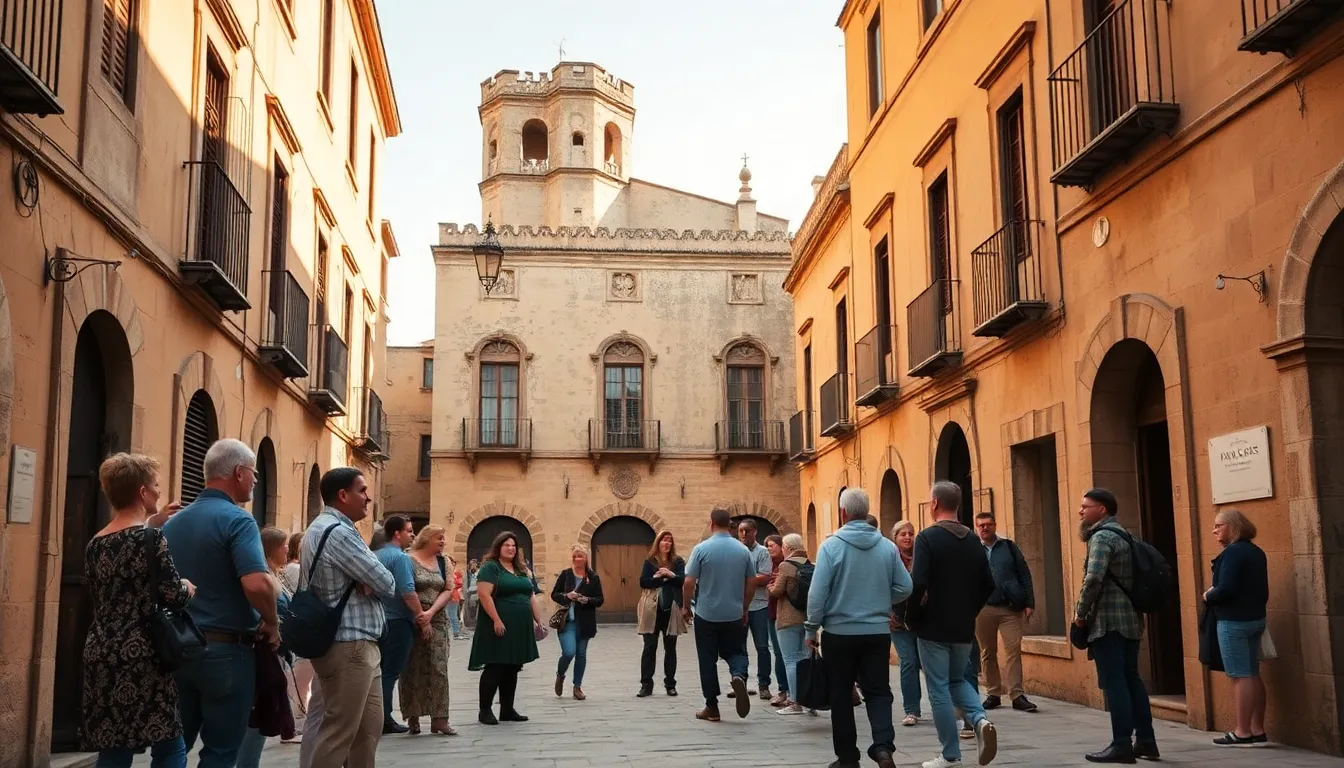
A heritage tour is not a sightseeing vacation. It is a shared encounter with history and faith, and that encounter depends on the group being able to gather, hear, and reflect together. A guide can hold the attention of twenty to twenty-five people in a synagogue or a cathedral. Stretch that to forty and people at the back cannot hear, the group spreads out, and the intimacy that makes these moments land starts to dissolve. Discussions get harder. Reflection gets shallower. The trip becomes a tour instead of a journey.
Smaller has its own character. A group of fifteen to twenty moves nimbly, fits comfortably in most spaces, and builds the kind of bond over two weeks that congregations remember for years. People who arrived as acquaintances leave as something closer. That cohesion is hard to manufacture in a large crowd.
The Sweet Spot Most Groups Land On
Putting the economics and the experience together, here is where most heritage groups settle.
The range that works best is roughly twenty to thirty participants. At twenty, the per-person costs are reasonable, the leader travels free, and the group is small enough to stay intimate and move easily. At thirty, the economics are at their most favorable per head while the group is still cohesive enough to gather and reflect together with one guide and one coach. Inside that band, you get the best of both halves of the question.
Below twenty, the trip still works and can be wonderful, but expect a higher per-person cost. A group of fifteen to nineteen is entirely viable, the leader still travels free, and the intimacy is real; it simply costs a bit more per traveler. Above thirty, you move into multi-coach territory, where the savings flatten and the shared-experience quality starts to thin unless the trip is deliberately structured for a larger group.
How to Think About Your Own Group
Here is the practical advice I give a leader weighing this.
Aim for fifteen as your floor. That unlocks the free-leader benefit and brings the per-person price into a comfortable range. Then build toward the twenty to thirty sweet spot if your community can fill it, because that band gives you the best combination of cost and experience. Do not chase a number past your community’s natural size just to save a little per head; a cohesive group of eighteen people who know each other will have a better trip than a sprawling forty who do not.
And start early. The single biggest factor in reaching a healthy group size is lead time. A trip confirmed eight or nine months out gives you the runway to present it to your congregation, answer questions, and build real commitment to that fifteen-plus threshold. Trips that start late often struggle to fill, not because the interest is not there, but because the time to gather people was not.
You can see how we structure these journeys, and how the group leader experience works, on our Spain destination page and our group heritage tours page.
FAQ: Spain Heritage Group Size
How many people do I need for a Spain heritage tour?
Aim for fifteen as your floor. That is the threshold where the group leader travels free and where the per-person economics start working, since the fixed costs of a guide, coach, and coordination spread across enough travelers to bring each person’s price into a comfortable range. A group of fifteen to nineteen is fully viable; it simply costs a bit more per head than a larger one.
What is the ideal size for a heritage group?
Roughly twenty to thirty participants. In that band, the per-person costs are favorable, the leader travels free, and the group is still small enough to gather, hear the guide, and reflect together as one cohesive community. It is the best balance of economics and experience.
Can the group leader really travel free?
Yes. Group leaders travel free with fifteen or more participants. That covers your own travel as the organizing pastor, rabbi, or educator, and it is one of the reasons fifteen is the number to build toward when you are deciding whether to lead a trip.
Is a larger group cheaper per person?
Up to a point. Because most trip costs are fixed, spreading them across more travelers lowers the per-person price, so a group of twenty-five feels more reasonable per head than a group of twelve. But past about thirty you need a second coach and additional guides, which adds cost back and changes the character of the trip, so the savings flatten out.
Can a small group still have a good trip?
Absolutely. A group of fifteen to twenty has a real advantage in intimacy: it moves easily, fits comfortably in most heritage spaces, and builds a bond over two weeks that people remember for years. The only tradeoff is a somewhat higher per-person cost than a larger group. A cohesive smaller group often has a better trip than a sprawling large one.
The right group size is the one that fits your community, and the math is easier to talk through than it looks on paper. Tell me roughly how many travelers you think you can gather, and I will show you what the trip looks like at that size. Contact us and we will work it out together.