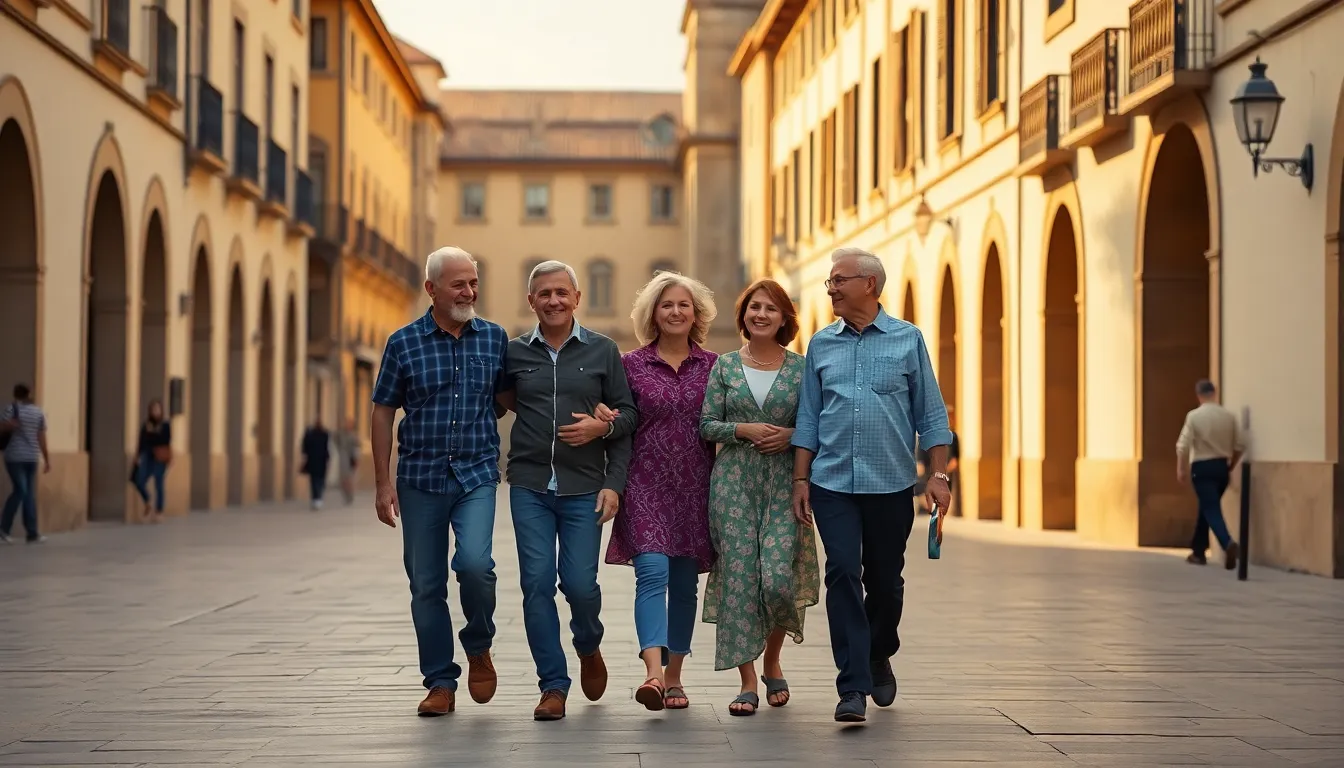
The hardest trip to plan is not the longest one. It is the one where the youngest traveler is eight and the oldest is eighty-two. A multigenerational congregation trip has a grandmother who uses a cane, a couple of teenagers who get bored in their third cathedral, and parents in the middle trying to keep everyone happy. I have led many of these, and they can be the most meaningful trips of all, because the heritage lands differently when three generations stand in the same room. But they only work if the pacing and the access are designed for the slowest and youngest members from the start.
This itinerary is built around that reality. It is nine days, deliberately not packed, with shorter site visits, more rest, ground-floor access prioritized, and moments built in for the kids that are not one more old building. It covers the heart of Spain’s heritage without the grueling pace that breaks a mixed-age group.
This is the family-friendly adaptation of our standard 10-day Spain heritage itinerary. If your group is all adults and wants a faster pace, start there. If you are bringing the whole congregation, grandparents and grandchildren together, stay here.
Days 1-2: Madrid, Easing In
Your group lands in Madrid and we handle the transfer and hotel. With a multigenerational group, the arrival day matters even more. Young children and older travelers both need a full reset before anything begins.
Day two eases in. Rather than a long museum morning, we do a shorter, focused visit to the Prado, the highlights only, with the works that show medieval Spain, then an afternoon in Retiro Park where the kids can run and the grandparents can sit. The park, with its boating lake and open space, is the kind of thing that keeps the youngest members glad they came.
Group leader note: With children and older travelers together, a half-day site and a half-day of free movement is the rhythm that works. The park is not filler. It is what makes the museum tolerable for the eight-year-old and restful for the grandmother.
Days 3-4: Toledo, the Heart of the Trip
We drive south to Toledo and give it two unhurried days. Toledo holds two of the three medieval synagogues still standing in Spain, El Transito with its Hebrew inscriptions and Santa Maria la Blanca with its white horseshoe arches, plus a great cathedral, all within a short walk. For three generations standing in El Transito together, the room going quiet, this is the heart of the trip.
Two days means we do not have to rush. We see one or two sites in the morning, break for a long lunch, and let the afternoon be slow. Toledo also has a marzipan tradition the kids love and small workshops where they can watch it made, which gives the youngest a memory that is theirs.
Group leader note: Toledo’s old city is built on a steep hill with cobblestoned, uneven streets. This is the access challenge of the whole trip. For travelers with mobility concerns, we plan routes that minimize the steepest climbs and arrange drop-offs as close to each site as the old city allows. Move slowly, build in seated breaks, and visit in the morning before the heat.
Day 5: Cordoba, Short and Cool
We drive south to Cordoba, and here I keep the visits short and cool by design. The synagogue is small, one of only three medieval synagogues left in Spain, and a small space is actually easier for a mixed-age group; nobody walks far. The Mezquita next door is large, cool, and flat underfoot, which makes it one of the most accessible major sites in all of Spain. The forest of arches genuinely captivates children, who often find it the most memorable building of the trip.
Group leader note: Cordoba gets brutally hot in summer, past 40 degrees Celsius. With young children and older travelers, heat is a real risk, not just a discomfort. Schedule everything for the morning, keep water on hand, and use the cool interior of the Mezquita as the midday refuge. Cut a visit short before anyone overheats.
Day 6: Rest and Pool Day
Day six is a full rest day, and on a multigenerational trip it is not optional. We base the group at a hotel with a pool, and the day is unstructured. The kids swim, the grandparents rest, the parents finally relax. No site, no coach, no schedule.
This is the day that makes the trip sustainable. It is also, surprisingly, one of the days families remember most, because it is the day they are simply together without an agenda.
Group leader note: Sell the rest day to your group in advance as a feature, not a gap. Some adults will feel restless. Frame it clearly: this is the day that keeps the eighty-year-old and the eight-year-old both in good spirits for the rest of the trip. It earns its place.
Day 7: Seville, at a Gentle Pace
We travel to Seville and take it gently. The old Jewish quarter of Santa Cruz is a maze of narrow, shaded streets, pleasant to wander slowly, and the orange trees and small plazas give the kids and the grandparents both somewhere to pause. We see the cathedral exterior and the quarter without forcing a long indoor tour on anyone who is fading.
A horse-and-carriage ride through the old center, which Seville is known for, gives older travelers a way to see the city without walking it and delights the children at the same time.
Group leader note: The carriage ride solves two problems at once. It rests the legs of those who need it and entertains the youngest. On a multigenerational trip, look for these double-duty options; they are worth more than any single monument.
Day 8: Barcelona, Big City With Variety
We fly north to Barcelona, a city with enough variety to hold every age. The Gothic Quarter holds El Call, the medieval Jewish quarter, for the heritage. But Barcelona also has the whimsical, almost playful architecture of Gaudi, the Sagrada Familia and Park Guell, which children respond to in a way they never respond to another Gothic interior. The waterfront and the beach are there too for an afternoon of rest.
Group leader note: Barcelona has real pickpocketing near the Ramblas and the Gothic Quarter, and with children in the group this needs a clear, calm briefing. Assign each child a buddy adult, keep bags closed and close, and stay together in the crowds. The Gaudi sites and the beach are the rewards that keep the youngest engaged.
Day 9: Departure from Barcelona
The final day is departure, timed around the group’s flights. If departures are late, a final easy morning, perhaps a last walk by the water or a closing gathering at the hotel, lets three generations mark the end of the trip together.
Group leader note: On a multigenerational trip, the closing matters. Ask each generation to say one thing they will remember. The grandparents, the parents, the children: hearing all three reflect on the same trip is often the moment the whole journey comes together.
FAQ: Spain Heritage Itinerary for Multigenerational Groups
How do you pace a heritage trip for a group with children and older travelers?
By doing less, and doing it slower. This itinerary uses shorter site visits, half-day schedules paired with free time, a full rest day, and overnight stays that avoid long same-day returns. We prioritize morning visits to beat the heat and we build in moments designed for children, like parks, the beach, and a carriage ride, so the youngest stay engaged. The pace is set by the slowest and youngest members, not the most energetic.
How accessible are Spain’s heritage sites for travelers with mobility concerns?
It varies, and we plan around it. Toledo’s hilltop old city is the hardest, with steep cobblestoned streets, so we minimize the worst climbs and arrange drop-offs as close as the old city allows. Cordoba’s Mezquita is large, cool, and flat, one of the most accessible major sites in Spain. We map each day around the access needs of your specific group and tell you honestly where the challenges are before you book.
Will teenagers and young children be bored on a heritage trip?
Not if the trip is built for them, which this one is. We pair the heritage sites with things that engage younger travelers: the marzipan workshops in Toledo, the Gaudi architecture and beach in Barcelona, the carriage ride in Seville, the pool on the rest day. The heritage still anchors the trip, but it is not one cathedral after another. Mixing the depth of the sites with genuine breaks is what keeps every age glad they came.
Is nine days the right length for a multigenerational group?
For most mixed-age congregations, yes. Nine days, deliberately not packed, gives real depth at Toledo, Cordoba, Seville, and Barcelona while leaving room for the rest day and the slower pace that the youngest and oldest members need. A longer trip risks wearing them out. If your group is all adults and wants more cities, the 10-day itinerary or the 12-day complete sweep cover more ground at a faster pace.
Can Heritage Tours customize this itinerary for my congregation?
Every itinerary we build is customized, and multigenerational trips especially. If you have a specific accessibility need, a particular age mix, or want to add or remove a day, we reshape it around your group. You can read more on our Spain destination page and our group heritage tours page, where group leaders travel free with fifteen or more participants.
If you are bringing your whole congregation to Spain, grandparents and grandchildren and everyone in between, I would love to help you build a trip that works for all of them. Tell me about your group, the ages, and any access needs, and we will shape the pacing together. Contact us whenever you are ready to start.