What First-Timers Are Usually Surprised By
After twenty years of bringing groups to Spain, I can tell you what happens almost every time. The group leader arrives with a detailed itinerary, a well-prepared congregation, and a general idea of what to expect. Then they walk into El Transito synagogue in Toledo, and something shifts.
The 14th-century Hebrew inscriptions along the upper walls are still legible. The synagogue survived the expulsion of 1492. It survived being used as a church, a barracks, and a storage building. And there it stands. For groups tracing Sephardic heritage, this is often the moment when the trip stops being educational and becomes personal.
Christian groups have their own version. It usually happens at Santiago de Compostela, standing among pilgrims who have walked for weeks to reach the Cathedral, or at Montserrat, where a monastery has clung to a mountainside for a thousand years.
The surprise is the emotional weight. Spain’s heritage sites are not ruins. They are living places with living histories, and they affect people more deeply than most first-time visitors anticipate. The best thing you can do as a group leader is prepare your congregation for that possibility.
The Most Important Heritage Sites to Prioritize
If this is your group’s first trip to Spain, don’t try to see everything. Here are the sites that matter most, the ones that consistently produce the deepest impact for faith groups.
Toledo is non-negotiable. El Transito and Santa Maria la Blanca are two of only three medieval synagogues surviving in all of Spain. The Toledo Cathedral is one of Europe’s great Gothic churches. Together, these three buildings, within walking distance of each other, tell the story of a city where three faiths lived side by side for centuries. Give Toledo two days.
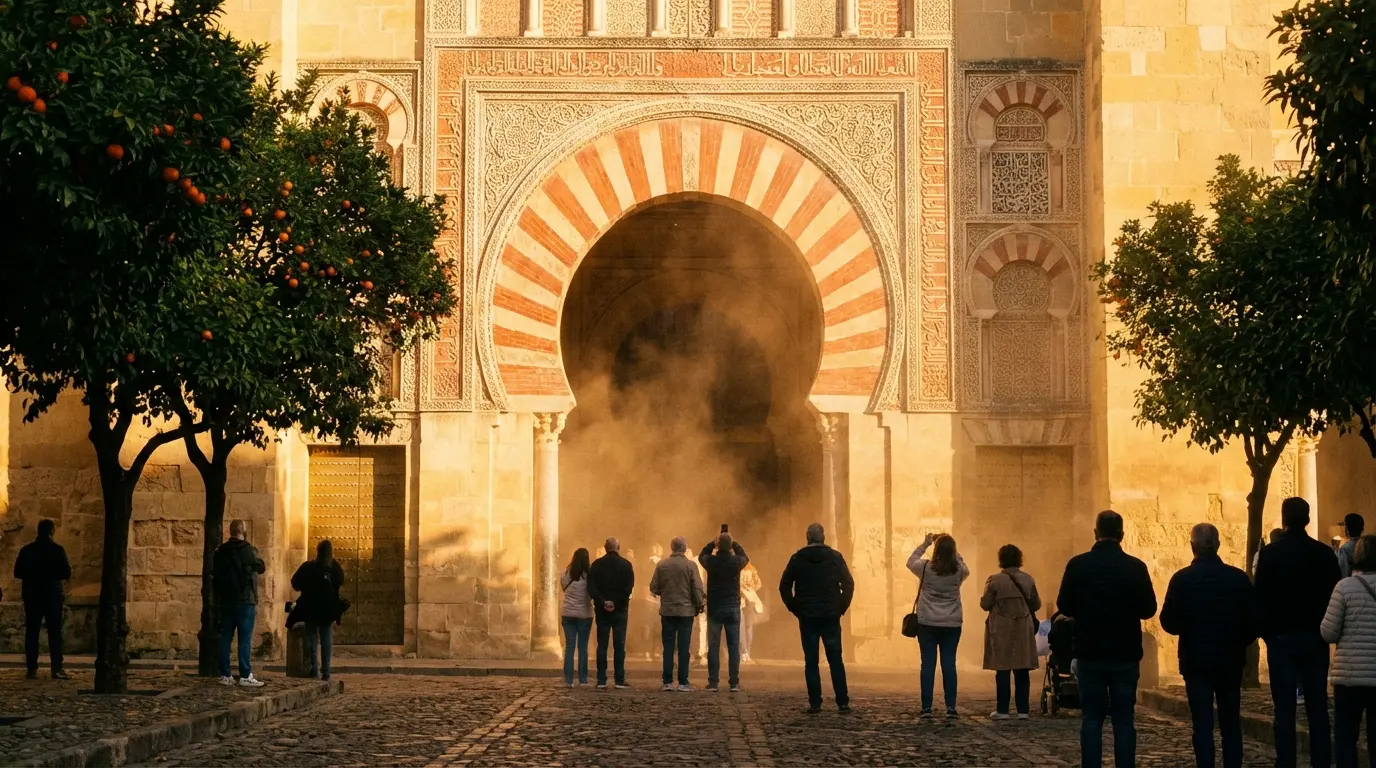
Cordoba’s synagogue is small and easy to rush through. Don’t rush. It is one of three, and the stucco work and Hebrew inscriptions inside deserve time. The Mezquita, Cordoba’s mosque-cathedral, is a short walk away and is unlike any other building in Europe.
The Alhambra in Granada is famous for its architecture, but the Jewish chapter of its history is what makes it matter for heritage groups. Jewish viziers and scholars shaped the Nasrid court that built it.
Santiago de Compostela is essential for Christian groups. The Cathedral and the Pilgrim’s Mass connect your congregation to 1,200 years of Christian pilgrimage.
Barcelona and Girona hold the remnants of El Call, the medieval Jewish quarters. Girona’s is among the best-preserved in Europe.
For a first trip, this core circuit is enough. You can always return for the second, deeper trip. Many groups do.
What to Prepare Your Group For (Emotionally and Practically)
The emotional preparation matters as much as the practical. For Jewish groups, especially those with Sephardic ancestry, Spain is where the story of exile began. The sites are beautiful, but they also carry grief. Standing in a synagogue that survived when the community that built it did not is a complicated experience. Your group will process it differently. Some people will be quiet. Others will want to talk. Build space for both.
For Christian groups, the Camino de Santiago and Santiago de Compostela carry a different kind of weight. Pilgrimage has deep roots in your tradition, and walking even a small portion of the Camino touches something that is hard to describe until you’ve done it.
On the practical side, tell your group three things before departure.
First, Spain’s heritage sites involve walking. Toledo’s old city is steep and cobblestoned. The Alhambra covers a large hilltop complex. Comfortable shoes with good grip are not optional. Anyone with mobility concerns needs to plan ahead, and you should know about those concerns before the trip, not on the first morning in Toledo.
Second, meal timing in Spain is different from what your group is used to. Lunch is typically at 2:00 PM, dinner at 9:00 PM or later. Heritage Tours plans meals around group needs rather than local custom, but your congregants should know that restaurants outside the hotel may not be open when they expect them to be.
Third, the weather varies more than people assume. Andalusia in summer can reach 45 degrees Celsius. Barcelona in spring can be cool and rainy. The best months for heritage travel are April, May, September, and October, when the temperatures are moderate and the sites are less crowded.
Navigating Spain as a Group: What Actually Works
Groups of 20 to 40 people move differently than individual travelers. Here’s what works in Spain.
A private coach with a dedicated driver is essential. Spain’s heritage cities are spread across the country, and trains or rental cars don’t work for groups. The coach handles the long transfers, and hotel pickup and dropoff means nobody is standing on a street corner with luggage trying to find the bus.
A guide who knows the heritage sites, not just the tourist highlights, transforms the trip. The difference between a general guide and one who can explain the Hebrew inscriptions in El Transito or the significance of the Botafumeiro in Santiago is the difference between sightseeing and understanding.
Rest days, or at least rest half-days, are not a luxury. They’re how you keep a group engaged for ten days. After three or four intense days of heritage sites, an afternoon with nothing scheduled lets people absorb what they’ve seen. Groups that try to fill every hour end up exhausted by day six.
Morning visits work best at most sites. The light is better, the crowds are thinner, and your group has more energy. Save afternoons for lighter activities, meals, or free time.
What Not to Try on a First Trip
Don’t try to visit every heritage city in Spain in one trip. The temptation is understandable. Spain is full of meaningful places, and you want your group to see as much as possible. But ten cities in ten days means your group spends more time on the bus than at the sites. Five or six cities, with real time in each, is the right pace for a first visit.
Don’t skip the pre-trip briefing with your congregation. The groups that have the best experience are the ones whose leader spent thirty minutes before departure explaining what they’ll see and why it matters. People who arrive knowing the story of El Transito engage with it immediately. People who arrive cold need time to catch up while the rest of the group has moved on.
Don’t schedule the Alhambra on the same day as a long transfer. The Alhambra is a half-day visit at minimum, and it requires timed entry tickets booked well in advance. Trying to squeeze it between a morning departure from Cordoba and an evening arrival in another city means your group won’t have the time or energy to take it in properly.
Don’t assume everyone in your group walks at the same pace. You will have members who move quickly and members who need more time. Your guide should know this before Day 1, and the schedule should have enough flexibility to accommodate both without making anyone feel like they’re holding the group up or being left behind.
How Heritage Tours Handles First-Timer Groups
We’ve guided first-time groups to Spain for over two decades. The approach is simple. We build the itinerary around what matters to your specific community, handle every transfer and hotel stay so the group leader isn’t coordinating buses and rooms, and pair your group with a guide who knows not just the sites but the stories behind them.
For first-time group leaders, we also walk through the itinerary in detail before departure. You’ll know what each day looks like, where the physical challenges are, and what your group will need at each stop. There should be no surprises that a conversation could have prevented.
Group leaders travel free with 15 or more participants. For a first trip, this matters. The person doing the most work to bring the community together shouldn’t also be carrying the financial burden.
FAQ: Spain Heritage Travel for First-Timers
Is Spain a good first destination for a faith group heritage tour?
Spain is an excellent first destination. The infrastructure for group travel is well-developed, the heritage sites are concentrated enough to visit without exhausting transfers, and the emotional impact of the sites is immediate. For Jewish groups, the Sephardic connection makes Spain uniquely personal. For Christian groups, the Camino de Santiago and the great cathedrals offer pilgrimage experiences that have drawn faith travelers for over a thousand years.
What should a first-time group leader know about Spain travel?
Three things above all. First, the heritage sites are physically demanding. Toledo is steep, the Alhambra covers a large area, and most old cities have uneven surfaces. Second, Spain’s meal timing is later than what most groups are used to. Third, the emotional impact of the sites is stronger than people expect. Preparing your congregation for all three makes the trip smoother and more meaningful.
How do you prepare a congregation for a heritage trip to Spain?
Hold a pre-trip gathering. Show your group where they’ll be going and explain the historical significance of the key sites. For Jewish groups, the story of Sephardic Spain and the expulsion of 1492 is essential context. For Christian groups, the history of the Camino and the meaning of pilgrimage are good starting points. The groups that arrive with some understanding of what they’re about to see consistently get more out of the experience.
What is the most common mistake first-time group leaders make in Spain?
Overpacking the itinerary. The instinct is to see as much as possible, especially on a first trip. But heritage sites demand time and emotional energy. A group that visits three major sites in a day will remember none of them clearly. A group that visits one site with time for reflection will carry that experience home. Build rest into the schedule and resist the urge to add one more stop.
How long should a first-time heritage trip to Spain be?
Ten days is the right length. It allows your group to visit the essential cities (Toledo, Cordoba, Granada, Barcelona, and either Girona or Santiago de Compostela) without rushing. Shorter trips mean cutting sites that deserve full visits. Longer trips risk fatigue. Ten days gives you enough time to go deep in the places that matter most.
If this will be your first time bringing a group to Spain and you’d like to talk through what a heritage itinerary could look like for your congregation, we’d welcome that conversation. You can reach us here.