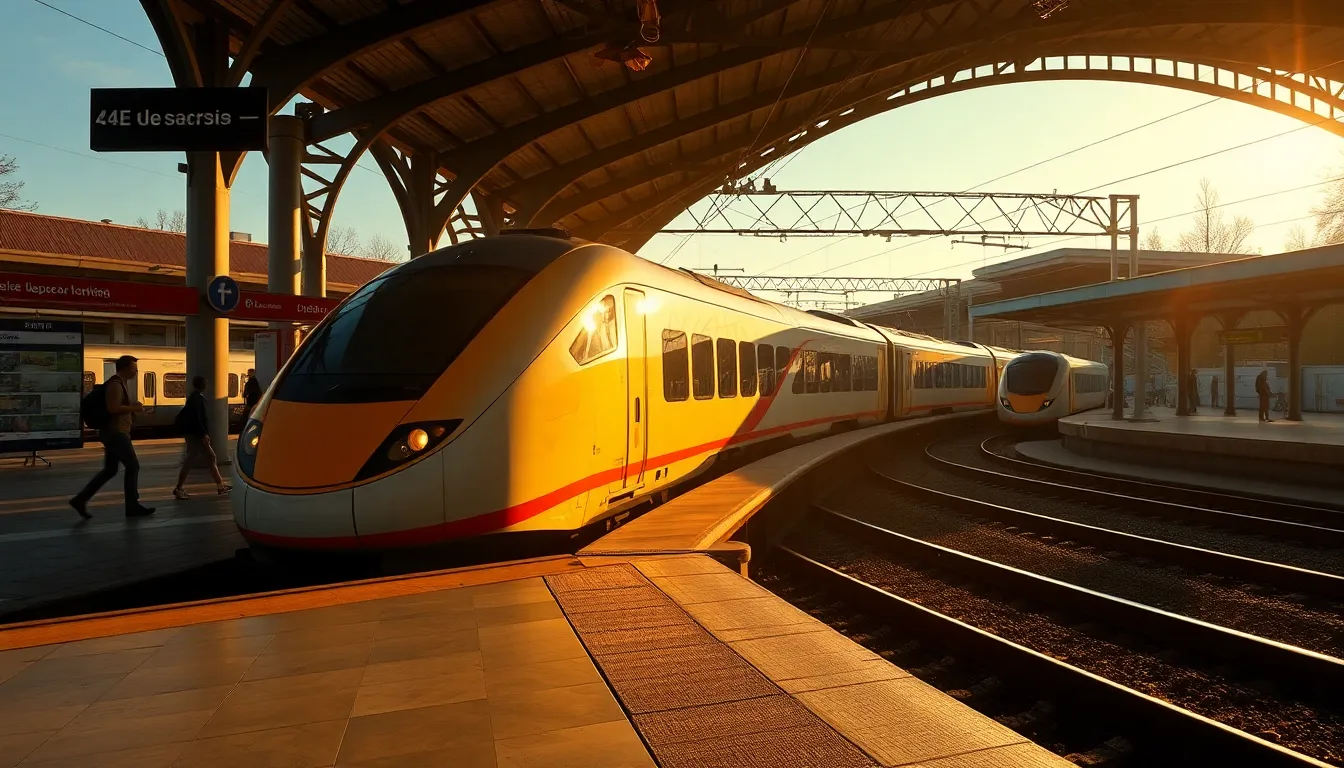
People are often surprised by how easy Spain is to move through. After years of running groups across Egypt, Israel, and Spain, I can tell you Spain has one of the best transport networks for heritage travel anywhere, and the high-speed trains are a genuine pleasure. But “easy” for an individual with a backpack is not the same as “easy” for a group of thirty with luggage, a fixed itinerary, and a few members who cannot sprint across a platform. Moving a group well takes a plan. The good news is that the plan, once built, runs smoothly.
This article breaks down the three ways your group will actually get around Spain, the AVE high-speed trains, the private coach, and the transfers that connect them, and tells you when each one is the right call. For the wider planning picture, our practical tips for Spain heritage travel guide covers the rest. This one is about transport.
The AVE: Spain’s High-Speed Trains
Spain’s high-speed rail network, the AVE, is the backbone of efficient travel between the major heritage cities, and it is one of the things that makes a Spain itinerary so manageable.
The numbers tell the story. Madrid to Cordoba runs in under two hours. Madrid to Seville in around two and a half. Madrid to Toledo in roughly thirty minutes. Madrid to Barcelona in about two and a half to three hours. These are trips that would take a full, tiring day by coach, covered in a comfortable morning by train, with your group resting, talking, or watching the landscape instead of sitting in traffic.
For a heritage group, the AVE has real advantages. It is fast, it is comfortable, the seats are spacious, and it deposits you in city centers rather than far-flung airports. It removes the fatigue of long road days, which matters enormously for older travelers. And it is reliable; Spanish high-speed trains run close to on time as a rule.
There are things to know. AVE seats are reserved, so a group needs to book a block together well ahead, especially in spring and autumn when trains fill. Luggage goes on overhead and end-of-car racks, with no checked baggage system, so a group with large suitcases needs a plan and a few strong hands. Stations have airport-style security screening, so you arrive with time to spare, not at the last minute. And boarding windows are tight, which is why a group needs a guide counting heads and keeping everyone together on the platform.
The Private Coach: Door to Door
For everything the train does not cover, the private coach is the workhorse of a heritage tour.
Trains connect the big cities beautifully, but many of the most meaningful heritage stops are not on a rail line, or sit a distance from the station. The monasteries, the smaller fortress towns, a Jewish quarter reached down a country road, the door of a specific hotel: these are coach territory. A private coach goes exactly where the itinerary needs it, carries all the luggage in the hold, and keeps the group together as a single unit from morning to night.
The coach is also where the group experience lives between sites. A good guide uses coach time to set up the next stop, tell the story, and let people decompress. For a heritage tour, that narration time is not dead time; it is part of the journey.
The honest tradeoff is road time. Long coach legs across Spain are tiring, and Spanish summer heat makes a long bus day genuinely draining. This is exactly why the smart itinerary uses the AVE for the long city-to-city hops and saves the coach for the shorter, door-to-door legs and the off-rail sites. Used that way, the coach is a strength. Overused for distances the train could cover, it becomes the thing that wears a group out.
Transfers: The Glue That Holds the Day Together
Transfers are the small movements that connect everything: airport to hotel on arrival, hotel to station, station to the next hotel, the short hops within a city. They are easy to overlook in planning and they are exactly where group trips go wrong when no one has thought them through.
The arrival transfer matters most. A group landing after a long international flight, jet-lagged and with luggage, does not want to figure out taxis or a public bus. A pre-arranged coach or van waiting at the airport, with a name board and someone who knows where to go, sets the tone for the whole trip. The same is true in reverse for the departure.
Between trains and coaches, the handoffs need to be deliberate. Getting thirty people and their luggage from a hotel lobby to an AVE platform, through security, and onto the right car in the boarding window takes a guide who has timed it. None of this is hard. It just has to be planned rather than improvised, and that is the difference a group operation makes over individuals winging it.
How the Pieces Fit Together
Here is the shape of a well-built Spain transport plan, in practice.
Use the AVE for the long hauls between major cities, Madrid to Seville, Madrid to Cordoba, Madrid to Barcelona, so your group covers distance in comfort and arrives rested. Use the private coach for the off-rail heritage sites, the door-to-door hotel runs, and the shorter regional legs where a train adds no real time savings. Use planned transfers to connect all of it, with the arrival and departure handled by a waiting vehicle and a guide.
Built this way, an itinerary moves a group of thirty across the country with very little friction. People remember the sites, not the logistics, which is the whole point.
There is also a group economics angle worth naming. A private coach and coordinated rail blocks are far easier and more cost-effective to arrange for a group than for individuals, and group leaders travel free with fifteen or more participants. The transport plan is part of what that structure pays for. You can see how we put these journeys together on our Spain destination page and our group heritage tours page.
FAQ: Getting Around Spain for Heritage Groups
Is it better to travel Spain by train or coach for a group?
Both, used for the right legs. The AVE high-speed train is best for long city-to-city hops like Madrid to Seville or Madrid to Cordoba, where it saves hours and arrives rested. The private coach is best for off-rail heritage sites, door-to-door hotel runs, and shorter regional legs. The strongest itineraries combine them rather than relying on one.
How fast are Spain’s high-speed trains between heritage cities?
Very fast. Madrid to Cordoba runs in under two hours, Madrid to Seville in around two and a half, Madrid to Toledo in about thirty minutes, and Madrid to Barcelona in roughly two and a half to three hours. These replace what would be long, tiring coach days with comfortable morning trips.
Can a large group book the AVE together?
Yes, but it requires advance booking. AVE seats are reserved, so a group needs to secure a block together, ideally well ahead in spring and autumn when trains fill. There is no checked baggage, so large suitcases go on overhead and end-of-car racks, which means a group needs a plan and a few strong hands at boarding.
How do airport transfers work for a heritage group?
The best practice is a pre-arranged coach or van waiting at the airport on arrival, with someone holding a name board who knows the route to the hotel. After a long international flight, this removes the stress of taxis or public transport. The same is arranged in reverse for departure. We handle these as standard for groups.
Why not just use a coach for the whole trip?
Because long coach legs across Spain are tiring, especially in summer heat, and they eat into the energy your group needs for the sites. Using the AVE for the long hauls and saving the coach for off-rail sites and short legs keeps the group rested and the days focused on the heritage rather than the road.
The transport plan is one of those things that is invisible when it is done well and exhausting when it is not. If you tell me your cities and your group’s pace, I can show you how the trains and coaches fit together for your specific route. Contact us and we will map it out.