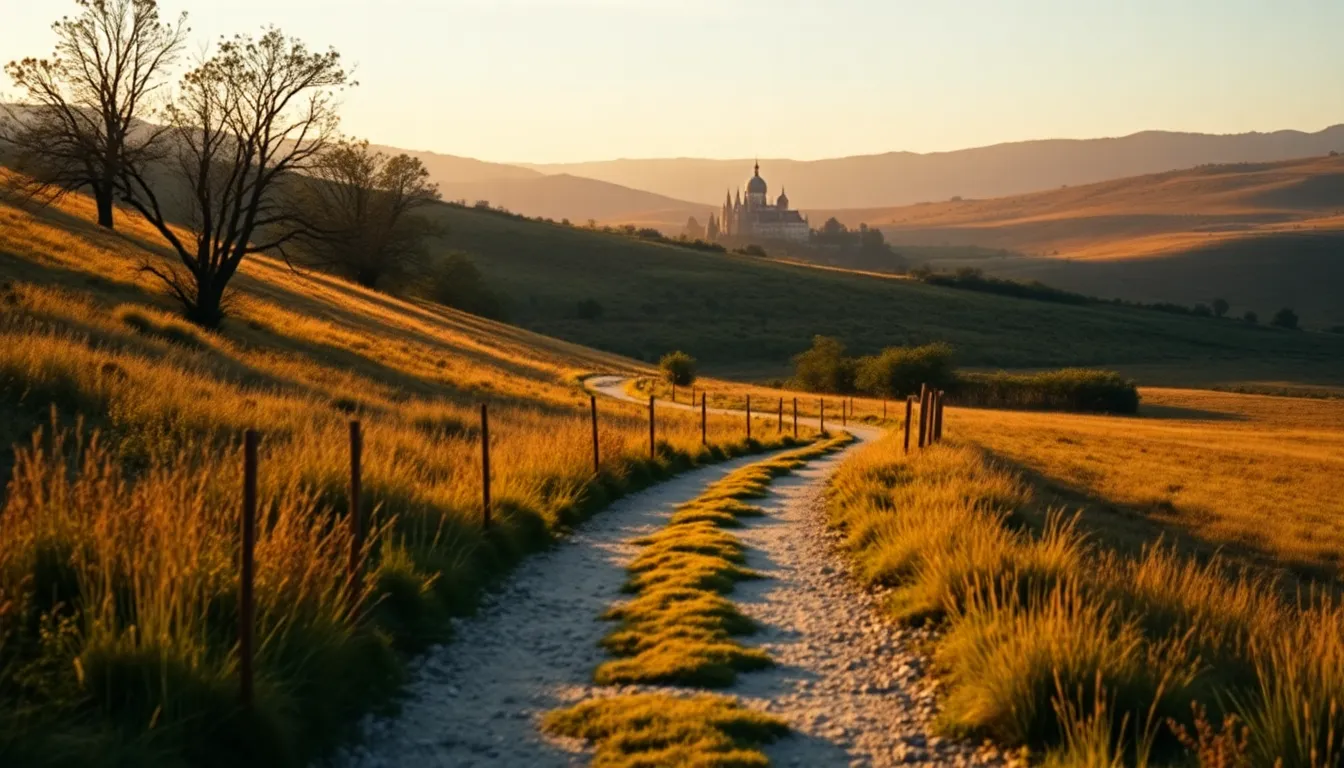
There are two ways to do Spain as a heritage trip, and they could not be more different in feeling. One is the Camino de Santiago, a walking pilgrimage that ends at a cathedral. The other is the Sephardic route, a journey through the synagogues and Jewish quarters of the Golden Age. Both are profound. Both belong to Spain. And group leaders ask me all the time which one to do first.
I have led communities on both, and I have learned not to answer too quickly. These are not interchangeable trips with a different theme bolted on. They ask different things of your people, they move at different rhythms, and they suit different communities. Let me lay them side by side so you can see which one your group is actually ready for.
What Each Journey Actually Is
Before comparing, it helps to be clear about what each one is, because both names get used loosely.
The Camino de Santiago is a pilgrimage route, or really a network of routes, that converge on the cathedral in Santiago de Compostela, the traditional burial place of the apostle James. For centuries pilgrims have walked it. A heritage group does not have to walk all 500 miles. Most groups walk meaningful stretches and travel the rest, arriving in Santiago for the Pilgrim’s Mass. It is primarily a Christian pilgrimage, though its appeal has broadened.
The Sephardic route is not a single path but a circuit through the cities of medieval Spanish Jewry: Toledo, Girona, Cordoba, Seville, Granada, and others. It traces the rise and rupture of Sephardic life, from the Golden Age to the 1492 expulsion. It is primarily a Jewish heritage journey, though Christian groups interested in the shared history find it moving too.
The Case for the Camino First
For the right community, the Camino is an unforgettable opener.
The Journey Is the Point
What makes the Camino distinct is that the travel itself is the experience. You are not visiting sites between bus rides. You are walking, and the walking does something. Conversations deepen on the trail. The shared physical effort bonds a group in a way that sightseeing rarely does. For a congregation that wants its first trip to forge real community, the Camino delivers that almost automatically.
A Clear Spiritual Arc
The Camino has a built-in narrative: you set out, you walk, you arrive. The Pilgrim’s Mass in Santiago de Compostela gives the trip a genuine climax. For a pastor wanting a journey with a clear beginning, middle, and end, the structure does a lot of the spiritual work for you.
Flexible Intensity
You can scale the Camino to your group. A fit, younger congregation can walk long daily stages. A mixed-age community can walk shorter, gentler segments and travel between them. That flexibility makes it more accessible than people assume.
The Case for Sephardic Spain First
For a community with Jewish heritage, or a strong pull toward the 1492 story, the Sephardic route is the more direct call.
It Goes Straight to Your Roots
If your community is Jewish, the Sephardic route is not a themed tour. It is a return. Standing in Toledo’s El Transito synagogue or Cordoba’s small medieval synagogue near Maimonides’ statue is contact with your own history. For a first trip, going straight to your community’s particular roots carries a weight the Camino cannot match for a synagogue group.
Richer in Sites and History
The Sephardic route is dense with things to see and stories to tell. Each city adds a layer: Toledo’s three faiths, Girona’s preserved Call, Cordoba’s golden age of scholarship, Granada’s heartbreak in 1492. For a group that loves history and wants a guide who can unfold it, this route rewards them. If you are weighing where to concentrate that time, it is worth seeing how Andalusia and Castile compare before you build the circuit.
Easier on Travelers Who Do Not Want to Walk
The Sephardic route is a touring itinerary, not a walking one. For communities with members who cannot manage long daily walks, it removes the physical demand entirely while keeping the depth. The intensity here is intellectual and emotional, not physical.
The Honest Differences
Let me name the trade-offs plainly.
The Camino asks for physical effort. That is its gift and its cost. A group that is not prepared for walking, or that includes members who genuinely cannot, will struggle with a Camino-centered trip. The Sephardic route asks for none of that, but it also does not produce the trail-forged bonding that the walking creates.
The Camino has a single, clear destination. The Sephardic route is a circuit with many stops, which means more transfers and a less linear emotional arc, though a skilled guide shapes it into a coherent story. Either way, controlling the pace matters, which is one reason I usually steer groups toward a private group itinerary they can shape rather than a fixed shared tour.
The Camino is primarily Christian; the Sephardic route is primarily Jewish. For a mixed-faith community, that is the first thing to weigh.
Can You Combine Them
Sometimes, yes. A longer itinerary can include the Sephardic cities of the center and south and then move north to walk a stretch of the Camino, ending in Santiago. It is ambitious, and it works best for communities with the time and a genuine interest in both traditions. For most groups, though, I recommend choosing one theme and doing it fully rather than diluting both. A two-theme trip can feel like two half-trips if you are not careful.
The Group Leader Benefit on Either Route
One constant across both journeys. With Heritage Tours, the group leader travels free with 15 or more participants, covering flights, hotels, meals, and admissions.
On the Camino, where the leader is also setting the tone on the trail every day, having their costs covered matters. On the Sephardic route, where the leader is often the spiritual anchor unfolding the meaning of each city, it matters just as much. The person carrying the group travels free, on whichever route you choose.
FAQ: Camino vs Sephardic Spain
Should a faith group do the Camino de Santiago or the Sephardic route first?
It depends on your community. For Christian groups drawn to pilgrimage and willing to walk, the Camino is an unforgettable first trip with a built-in spiritual arc. For Jewish communities, the Sephardic route goes straight to your roots and asks no physical demand. We help groups match the journey to their faith tradition and their travelers.
Do you have to walk the entire Camino de Santiago?
No. Most heritage groups walk meaningful stretches and travel the rest, arriving in Santiago de Compostela for the Pilgrim’s Mass. The walking can be scaled to your group, from longer daily stages for a fit congregation to shorter, gentler segments for a mixed-age community.
Is the Sephardic route physically demanding?
No. It is a touring itinerary through the Jewish quarters and synagogues of cities like Toledo, Girona, Cordoba, and Granada. The intensity is historical and emotional rather than physical, which makes it well suited to communities that cannot manage long daily walks.
Can a group combine the Camino and the Sephardic route?
It is possible on a longer itinerary, moving from the Sephardic cities to a stretch of the Camino. It works best for communities with the time and a real interest in both traditions. For most groups, choosing one theme and doing it fully produces a stronger trip than splitting the focus.
Does the group leader travel free on both routes?
Yes. With Heritage Tours, the group leader travels free with 15 or more participants on either the Camino or the Sephardic route. The benefit covers the full trip.
If you are trying to decide which Spain your community should experience first, I would love to help you weigh it. The two journeys are both worth doing, but they are not the same trip, and the order matters. Explore our Spain heritage destination and our group heritage tours, then reach out and we will find the route that fits your people.