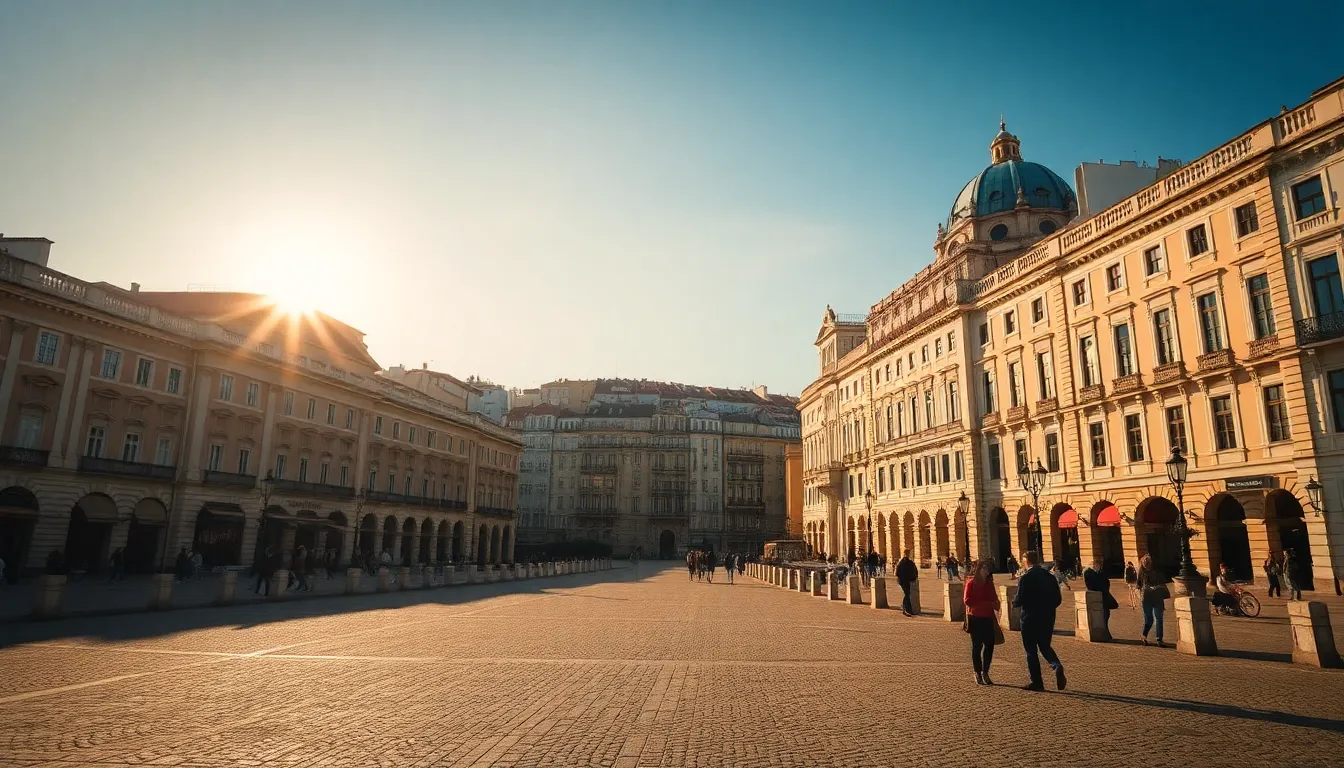
Not every group has nine days. Sometimes a pastor calls me with a long weekend, a Thursday-to-Sunday window, and a congregation that cannot take a full week off work. Sometimes a group is already in Europe for another reason and wants to add Lisbon onto the end. And sometimes a leader wants to test the waters with a short trip before committing the whole community to a longer journey.
For all of them, I build the same answer. A focused three-day Lisbon heritage weekend. It will not show you the interior, and it will not reach Belmonte or Fatima. I am honest about that with every group. But Lisbon itself holds enough heritage to fill three rich days, and a well-built weekend here can be deeply moving on its own terms. It can also be the spark that brings a group back for our 9-day route the following year.
Here is how I make three days in Lisbon count.
Day 1: The Alfama and the Memory of the Expulsion
Lisbon is a city of hills, and the Alfama is its oldest and steepest neighborhood. This is where I start, because this is where the Jewish story of Lisbon lived.
Before the forced conversions of 1497, the Alfama and the streets around it held one of the most important Jewish communities in the Iberian world. When King Manuel I ordered all Jews to convert or leave, the community was shattered, and the memory of it is now carried in fragments through these streets. I walk the group slowly, because the Alfama is not a place to rush, and the slow pace lets the age of the place settle on people.
The anchor of the day is the memorial at the site of the 1506 Lisbon massacre, near the Sao Domingos church. Over three days in April 1506, a mob killed thousands of New Christians, Jews who had been forced to convert, in one of the darkest episodes in Portuguese history. The memorial is small and easy to walk past. I gather the group around it and read the inscription aloud, in several languages carved into the stone, including the line from Job. Standing there reframes the whole weekend. Whatever else the group sees in Lisbon, they will see it knowing what happened on this spot.
In the afternoon I keep things gentler. We ride the famous Tram 28 as it grinds up through the old hills, stop at a viewpoint over the terracotta rooftops and the river, and give the group time to sit with what they saw at the memorial. I often use this first evening for the conversation that anchors the whole weekend. Who were the New Christians? What does it mean to be forced to convert and then murdered anyway, for a faith you were no longer even permitted to hold? Those questions sit at the center of the Portuguese Jewish story, and Lisbon is the right place to ask them. The first day sets the emotional foundation, and everything the group sees afterward is read through it.
I also use the first day to set expectations honestly. A weekend in Lisbon is a real heritage experience, but it is a window, not the whole house. I want the group to know from the start that they are seeing the beginning of a story whose deepest chapters, Belmonte and the crypto-Jewish survival of the interior, live a few hours away and wait for a longer trip.
Day 2: Belem, Exploration, Faith, and Empire
The second day moves to Belem, on the riverfront a short ride west of the center, and it is a complete change of scale and mood. Where the Alfama is tight and dark, Belem is wide, bright, and open.
The Jeronimos Monastery is the centerpiece. Built in the early sixteenth century in the dense, carved Manueline style, funded by the wealth of the Age of Exploration, it is one of the great churches of Europe. Vasco da Gama is entombed inside. I use Jeronimos to open the conversation that Belem always raises, the way faith, ambition, and empire were braided together in Portugal’s golden age. The same voyages that the monastery celebrates carried both the cross and the colonial project across the world. A faith group is well placed to sit with that complexity rather than look away from it.
Nearby, the Tower of Belem guarded the harbor mouth, and the Monument to the Discoveries lines the riverbank with the figures of the age. Belem is flat and easy on the legs, so it is a good second day after the climbs of the Alfama. And the original custard tarts from the famous bakery here are, I will admit, part of the itinerary.
If the group has energy and interest, the afternoon of the second day is also a good moment to walk the streets of the old Jewish quarter near the cathedral, where fragments of Lisbon’s medieval Jewish presence survive in street names and stones. It is quiet and easy to miss, but for a group that spent the first day at the 1506 memorial, walking these streets closes a loop. The community that was destroyed lived here, in these lanes, before 1497 scattered it. Standing in that quarter on the second day, the group sees both the loss and the place it happened.
Day 3: Sintra, Beauty, and a Lighter Close
For the final day I take the group out of the city to Sintra, about forty minutes west, because a weekend trip benefits from ending on beauty rather than weight.
Sintra sits in a green, misty range of hills, and it feels like another century. The Pena Palace rises above the town in a riot of color, and the Moorish Castle runs its ancient walls along the ridge above. The town carried its own Jewish community before the expulsion, so the heritage thread does not vanish entirely, but Sintra is mostly here to lift the group. After two days holding the expulsion and the massacre and the complexity of empire, a morning in Sintra’s gardens and palaces lets people breathe out.
Sintra also gives a group leader a quiet teaching moment if they want one. This corner of Portugal, with its romantic palaces and misty hills, was where the wealthy of Lisbon retreated for centuries, including converted families who had risen in society while carrying a hidden past. The beauty here was never separate from the history. A leader can hold both at once, the loveliness of the gardens and the weight of what brought some of these families to safety and status.
If the group’s flight allows, we return to Lisbon in the afternoon for a final meal together and a last walk before departure. Three days is short, but a group that has stood at the 1506 memorial, walked the cloister at Jeronimos, and looked out from the walls at Sintra has had a real encounter with this country, not a postcard glance at it.
When a Weekend Is the Right Choice
I tell every group leader the same thing. A Lisbon weekend is the right call when time or budget genuinely will not stretch to a full trip, when you are adding Lisbon to another journey, or when you want a shorter first experience before bringing your community back for more. It is not a replacement for the full Portugal heritage route, and I will never pretend it is. But on its own terms, three focused days in Lisbon can move a group deeply.
If your group does have more time, our multigenerational itinerary and our full 12-day complete route reach the interior, Belmonte, and Fatima, where the deepest stories live. You can see the broader destination on our Portugal page, and our group tours page explains how the group experience works.
Even on a short trip, with 15 or more participants the group leader travels free. That can make a weekend reachable for a congregation that could not otherwise justify the cost.
FAQ: Weekend Lisbon Heritage Travel
Can you do a meaningful heritage trip in Lisbon in just a weekend?
Yes, within limits. Three days in Lisbon can cover the Alfama and the expulsion story, Belem and the Age of Exploration, and a Sintra day trip, which is a real and moving heritage experience. What a weekend cannot do is reach the interior, Belmonte, or Fatima, so it is a focused taste rather than the full Portugal story.
What is the most important heritage site in Lisbon for a faith group?
The memorial at the site of the 1506 Lisbon massacre, near the Sao Domingos church, is the most important single stop for understanding Lisbon’s Jewish history. The Jeronimos Monastery in Belem is the essential Christian heritage site, tying faith to Portugal’s Age of Exploration.
Is Lisbon walkable for a group?
Mostly, though the Alfama is steep. Belem and Sintra are far gentler on the legs. We pace the weekend so the climbing happens on the first day when everyone is fresh, and keep the later days flatter. Trams and short transfers help cover the hillier stretches.
Should we add days to a Lisbon weekend if we can?
If your schedule allows, yes. Even one or two extra days lets you add Tomar and the oldest synagogue in Portugal, or push toward Fatima and the interior. The deepest heritage stories in Portugal live outside Lisbon, so more time changes the trip significantly.
Is a weekend trip a good way to test interest before a longer trip?
It can be an excellent first step. A short, well-led Lisbon weekend often builds the appetite within a congregation for a full heritage journey the following year. Many of the groups I take on longer trips started with a weekend that left them wanting more.
If a focused Lisbon weekend fits your group right now, I would be glad to help you build it well. Contact us whenever you are ready.