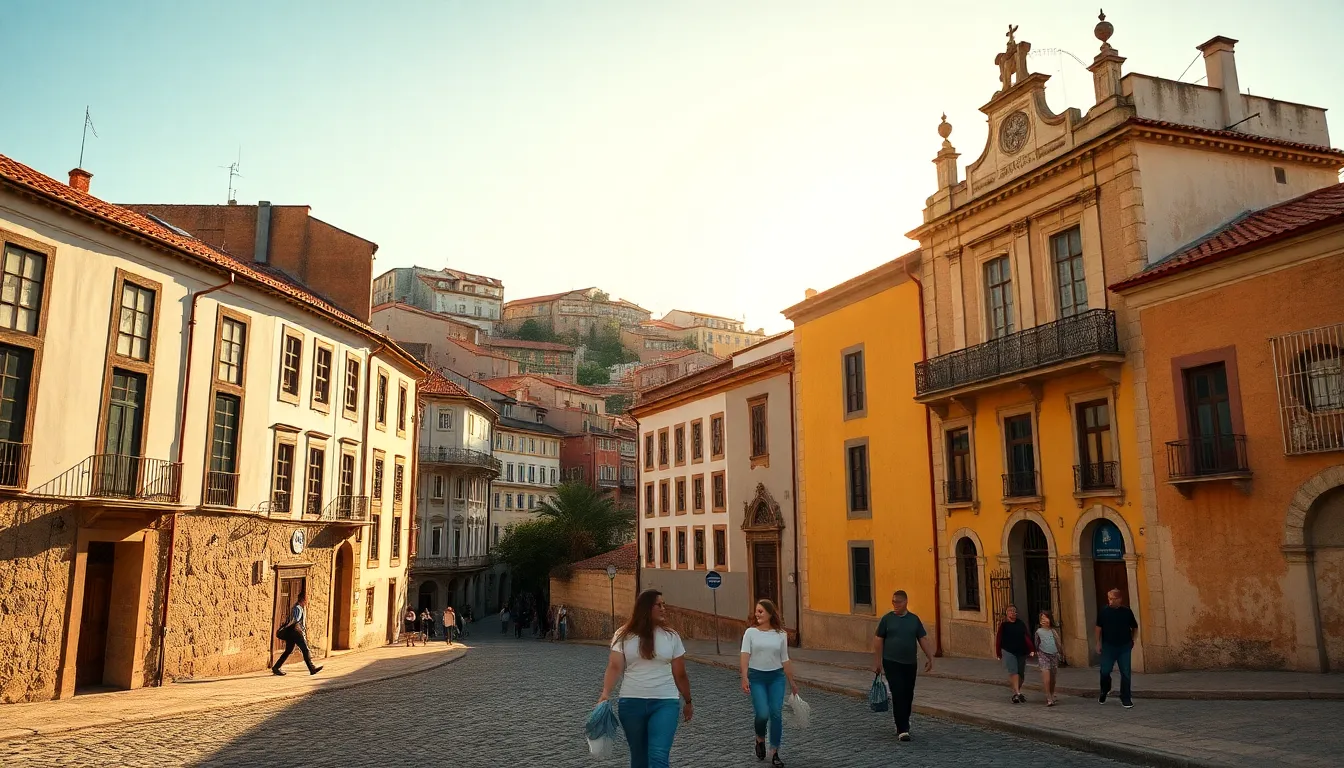
The most beautiful groups I lead are the ones where three generations travel together. A grandmother who remembers stories her own grandmother told her. Her son, somewhere in the middle, carrying the logistics and the worry. A teenager who came reluctantly and ends up standing in the Belmonte synagogue with tears she did not expect. When a congregation travels as a family across ages, Portugal does something to them that a single-generation trip never quite reaches.
But a multigenerational trip has to be built differently. The grandmother cannot do the same cobblestone climb as the teenager, and the teenager cannot sit through the same long pauses as the grandmother without getting restless. The art is pacing the days so that everyone, from the eight-year-old to the eighty-year-old, finds the trip both reachable and meaningful.
This is the itinerary I use for mixed-age congregations. It covers the heart of Portugal’s heritage without exhausting anyone, and it leaves room for the small moments where the generations actually connect.
How I Pace a Multigenerational Trip
Before the days, the philosophy. Three rules shape everything below.
First, one major site per day, not three. Older travelers tire, younger ones lose focus, and a packed schedule turns a pilgrimage into a forced march. One anchor site each day, done well, beats three done in a hurry.
Second, afternoons are softer than mornings. I schedule the demanding walking and the emotional weight in the morning when everyone is fresh, and I keep afternoons lighter, with rest, a meal, or a gentle stroll.
Third, the bus is a feature, not a problem. On a mixed-age trip the coach is where the generations talk. I build comfortable drive legs into the rhythm and treat them as part of the experience, not time to be minimized.
Days 1 and 2: Lisbon at an Easy Pace
Lisbon is where most groups arrive, and a multigenerational group needs two days here to recover from travel before the trip really begins.
The first day is gentle on purpose. Let the older travelers nap after the flight while the teenagers explore near the hotel. In the late afternoon, a slow walk through part of the Alfama, the oldest neighborhood, where the Jewish quarter stood before the forced conversions of 1497. The streets are steep, so I keep the route short and find a cafe with a view where the group can sit together as the light goes down.
The second day visits Belem, which is far kinder on the legs. The Jeronimos Monastery and the Tower of Belem are extraordinary Manueline buildings from Portugal’s Age of Exploration, and the area around them is flat and open. Grandparents can rest on a bench while children run the wide plazas. The custard tarts at the famous bakery nearby are, I promise you, a multigenerational unifier.
Day 3: Tomar, Where Every Generation Finds Something
The drive from Lisbon to Tomar takes about ninety minutes, an easy first travel day. Tomar works beautifully for mixed ages because it holds two very different attractions side by side.
The teenagers and the able walkers can climb through the Convent of Christ, the vast former headquarters of the Knights Templar, with its castles and cloisters and the famous round church. The history of warrior monks tends to grab younger travelers in a way that quieter sites do not.
For everyone, the anchor is the Synagogue of Tomar in the old town, the oldest surviving synagogue in Portugal, built in the mid-fifteenth century. It is small, it is on flat ground, and it is reachable for the least mobile member of your group. Standing inside it, the grandmother and the grandchild are looking at the same five centuries of survival. That shared sightline is exactly what a multigenerational trip is for.
Days 4 and 5: Belmonte, the Heart of the Trip
I give Belmonte two days on every itinerary, and on a multigenerational trip those two days do double work. They hold the emotional center of the journey and they build in the rest that mixed-age groups need.
Belmonte is a hilltop town with the most remarkable story of Jewish survival in Europe. When the Jews of Portugal were ordered to convert or leave in 1497, many converted officially but kept practicing in secret. In most places that faded within generations. In Belmonte it did not. Families passed down prayers, Shabbat, and dietary traditions in complete secrecy for roughly five hundred years, until the community was rediscovered in the twentieth century. In 1996 they built a synagogue, an active house of worship for the descendants of those families.
This story lands across every age. The grandparents understand viscerally what it costs to keep faith in secret. The children understand the simpler, powerful version: a family kept a secret for five hundred years and never got caught. Both are true, and both are moving.
The town is hilly, so I plan carefully. The synagogue and the Jewish Museum are the priorities, and I arrange transport close to the sites rather than asking older travelers to walk the steep streets. The second day is deliberately soft, with time to rest and absorb. Visits here are coordinated with the community in advance, because this is a living community and not a tourist attraction.
Day 6: Fatima, Built for Mixed Mobility
From Belmonte the drive to Fatima takes about two and a half hours. Of all the major heritage sites in Portugal, Fatima may be the most accessible for a multigenerational group, and that is not an accident. It is one of the world’s great pilgrimage sites and it is designed to receive enormous numbers of people of every age and ability.
Fatima is where, in 1917, three shepherd children reported apparitions of the Virgin Mary. The final apparition, on October 13, 1917, was witnessed by an estimated 70,000 people. The sanctuary is wide, flat, and paved, with the Capelinha das Aparicoes at its center and the Basilica of Our Lady of the Rosary holding the tombs of the shepherd children. The newer Church of the Holy Trinity seats over 8,000 and is fully accessible.
For Christian groups this is often the spiritual high point. For everyone, it is a day where the least mobile traveler and the most energetic one can share the same experience without compromise. Attend Mass together, walk the plaza in the early morning, and let the day be unhurried.
Day 7: Porto and a Gentle Close
The route ends in Porto, about a two-and-a-half-hour drive from Fatima. Porto is a fine city to end on with a mixed-age group because the heritage and the rest sit close together.
The anchor is the Kadoorie Mekor Haim Synagogue, the largest on the Iberian Peninsula, built in the 1930s and a refuge for Jewish refugees during World War II. Nearby, the story of Aristides de Sousa Mendes, the consul who defied his government and signed an estimated 30,000 visas to save refugees in 1940, gives older and younger travelers alike a model of moral courage worth carrying home.
The afternoon is for the riverfront Ribeira district and, for those who want it, the port wine cellars across the river. Grandparents can sit by the Douro while the younger ones explore. It is a soft landing after a week of depth, and a good place for the group to gather one last time before the trip ends.
Practical Notes for Mixed-Age Groups
A few things I always arrange for multigenerational trips. Coaches with low steps and reliable air conditioning. Hotels with elevators, confirmed in advance, not assumed. Site visits scheduled for the cooler parts of the day. A pace that assumes the slowest walker, not the fastest. And honest conversation with the group leader before the trip about who is traveling, so I can adjust the route to the real people coming.
Our broader 9-day route covers more ground at a faster pace, and our accessible itinerary goes further still for groups with limited walkers. This multigenerational version sits between them, built for a congregation that spans the whole range of ages and abilities in one bus.
You can see the full picture on our Portugal destination page, and our group tours page explains how the group experience works. With 15 or more participants, the group leader travels free, which matters when you are trying to make a trip reachable for an entire congregation.
FAQ: Multigenerational Portugal Heritage Travel
Is Portugal good for a multigenerational faith group?
Yes. Portugal combines deep heritage with manageable distances and a relaxed pace of life, which suits mixed-age groups well. Sites like Fatima and Belem are largely flat and accessible, and the interior stories at Belmonte and Tomar land across every generation.
How do you pace a trip for grandparents and grandchildren together?
One major site per day, demanding walking scheduled for the morning, softer afternoons with rest built in, and comfortable drive legs treated as part of the experience. The schedule is paced to the slowest walker so nobody feels left behind or rushed.
Which Portugal heritage sites are easiest for older travelers?
Fatima is the most accessible, with wide, flat, paved spaces and full step-free access in the newer basilica. Belem in Lisbon and the synagogue in Tomar are also on flat ground. We arrange transport close to the hillier sites like Belmonte so older travelers are not asked to climb steep streets.
Will teenagers be bored on a heritage trip?
Not if the trip is built right. The Templar convent in Tomar, the five-hundred-year secret of Belmonte, and the moral drama of Sousa Mendes in Porto all grab younger travelers. The key is variety and pace, with active sites balanced against quieter ones.
Can you adjust the route for our specific group?
Always. Before every multigenerational trip we talk through who is actually traveling, their ages, and their mobility, then adjust the route, the hotels, and the pace to fit the real group rather than a generic plan.
If your congregation is planning to travel across the generations, I would love to help you build it. Contact us whenever you are ready.