The Sephardic story does not stop at the Portuguese border, and neither should the group that really wants to understand it. Sepharad means Iberia, the whole peninsula, and the Jewish civilization that flourished here for centuries spanned both countries before the expulsions tore it apart, Spain in 1492, Portugal in 1497. When a rabbi or educator wants the full arc, I build a two-week journey that crosses both countries and follows the Sephardic thread from end to end.
This is a long, rich trip, and it earns every day. It moves from the Portuguese interior, where crypto-Judaism survived in secret, into the great Jewish centers of medieval Spain, Toledo, Cordoba, Girona, where the golden age of Sepharad reached its height before it ended. Here is the route I trust for two weeks across Iberia.
Days 1 and 2: Lisbon and the Portuguese Expulsion
Begin in Lisbon, where Portugal’s chapter of the story turned in 1497. Walk the Alfama, the old Jewish judiaria, and stop at the memorial near Largo de Sao Domingos to the 1506 massacre of New Christians. The forced conversions here drove a whole community underground, setting up the crypto-Jewish story your group will encounter in the days ahead. Day two takes in Belem and the Manueline monuments built on the wealth of empire, the same decades that saw the expulsion. The 9-day heritage itinerary covers Lisbon in fuller detail.
Day 3: Tomar, the Oldest Synagogue in Portugal
Drive ninety minutes north to Tomar. See the Convent of Christ, the former Templar stronghold, and then the Synagogue of Tomar in the old town, the oldest surviving synagogue building in the country, built in the mid-fifteenth century and restored as a small museum after centuries of other uses. It is the first physical link in the chain your group is following.
Days 4 and 5: Belmonte, the Living Crypto-Jewish Community
From Tomar it is about two and a half hours to Belmonte, and I give it two days. Belmonte is the most extraordinary Jewish survival story in Europe: families who kept Judaism in secret for roughly five hundred years after 1497, until the community was documented in the twentieth century and built its active synagogue in 1996. The Jewish Museum, the synagogue, and time on the old streets give your group the Portuguese heart of the trip. Because this is a living community, Heritage Tours arranges the visit in advance. The full Marrano thread is traced in the crypto-Jewish itinerary.
Day 6: Into Spain, Crossing to Salamanca
Today the trip crosses the border. The drive from Belmonte to Salamanca in Spain is about two and a half hours. Salamanca is a golden-stone university city with a documented medieval Jewish quarter and a complicated New Christian history of its own. It makes a fitting threshold between the two countries, and a comfortable place to spend a night before pressing on. The crossing itself matters: your group is moving from the country of secret survival into the country of the great Sephardic centers.
Days 7 and 8: Toledo, the City of Three Cultures
Two and a half hours south brings you to Toledo, and I give it two days. Toledo was the beating heart of Sephardic Spain, a city where Jews, Christians, and Muslims lived and worked alongside one another for centuries. The Jewish quarter is one of the best preserved in Europe.
Two synagogues survive. The Synagogue of Santa Maria la Blanca, built in the twelfth century, has rows of horseshoe arches and white columns that look more like a mosque than anything else, a stone record of the cultural blending of medieval Iberia. The Synagogue of El Transito, built in the fourteenth century by Samuel ha-Levi, treasurer to the king, has astonishing stucco work and Hebrew inscriptions across its walls, and now houses the Sephardic Museum, one of the best in the world for understanding this civilization. Toledo is where your group sees what Sepharad was at its height, before 1492 ended it.
Day 9: Cordoba and the Golden Age
Drive south to Cordoba, about three and a half hours, the city of the Sephardic golden age. At its medieval peak Cordoba was one of the great centers of learning in the world, and its Jewish community produced its most famous son, Moses Maimonides, the Rambam, born here in 1138. A statue of him stands in the old Jewish quarter, the Juderia, a maze of whitewashed lanes and flower-filled courtyards.
Cordoba holds one of only three surviving medieval synagogues in all of Spain, a small fourteenth-century building with delicate Hebrew inscriptions. Nearby, the great Mezquita, the mosque-cathedral, is one of the most remarkable buildings on earth and a reminder of the multireligious world in which Sephardic culture flourished. Cordoba is where your group feels the intellectual height of the golden age.
Day 10: Seville and the Road North
Seville is under two hours from Cordoba. Its old Jewish quarter, the Santa Cruz neighborhood, is now a warren of charming lanes, but it carries a dark anniversary: the 1391 massacre of Seville’s Jews, which began a wave of violence and forced conversion across Spain that foreshadowed the expulsion a century later. Walking Santa Cruz, your group sees both the beauty of the quarter and the memory of how the golden age started to end. Seville is a fitting place to mark that turn before the journey heads back north.
Days 11 and 12: Barcelona and Girona, Catalan Sepharad
A flight or fast train moves the group north to Catalonia. Barcelona had a significant medieval Jewish quarter, El Call, near the cathedral, where a small ancient synagogue space survives and the street plan still traces the old community. Spend a day here.
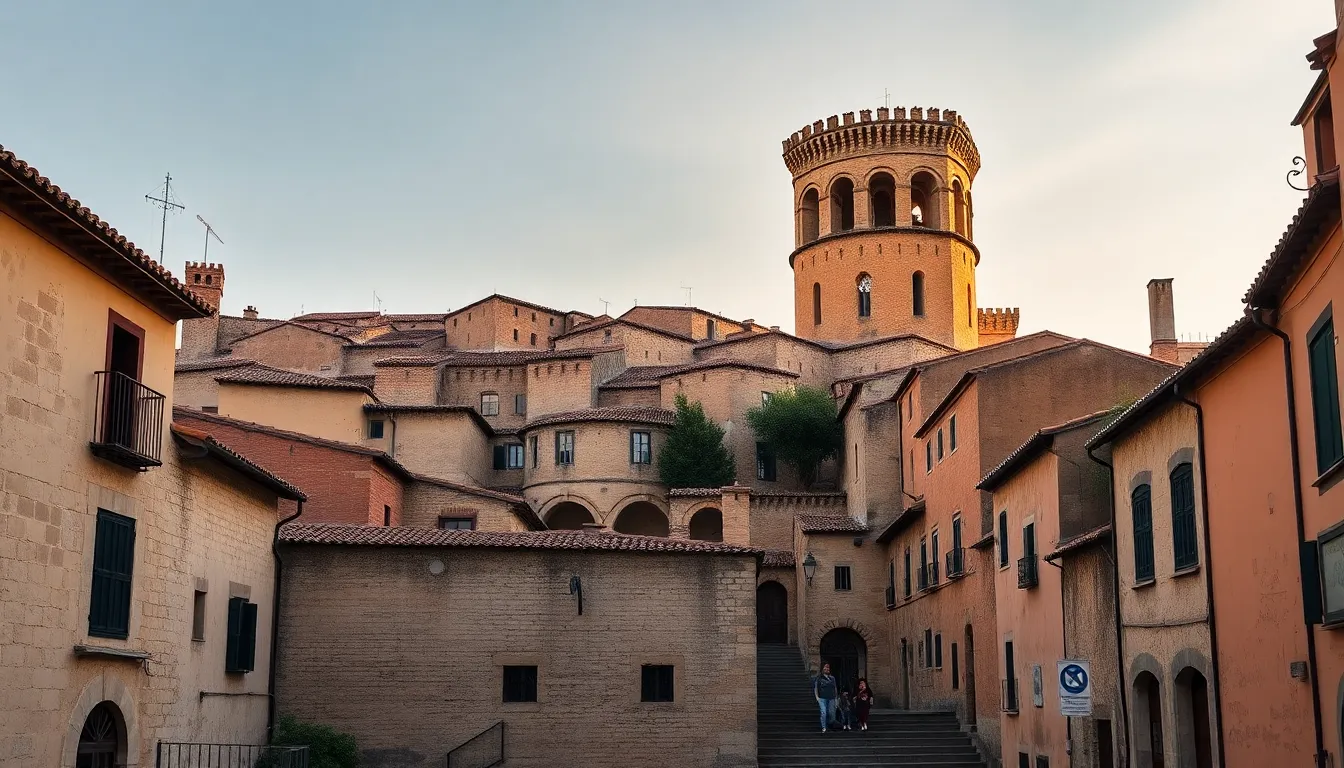
Then drive an hour north to Girona, which I consider one of the most moving stops of the whole trip. Girona’s Call is among the best-preserved medieval Jewish quarters in Europe, a steep maze of stone stairways and shadowed lanes. The city was a center of Kabbalah, the home of the great mystic Nachmanides, the Ramban, in the thirteenth century. The Museum of Jewish History there tells the Catalan Sephardic story with unusual care. Walking Girona’s Call at dusk, your group feels the presence of a community that is gone but not erased.
Day 13: Besalu and the Mikveh
A short drive from Girona, the medieval village of Besalu holds a rare treasure: a restored mikveh, a Jewish ritual bath, from the twelfth century, one of the few surviving in Europe. Reached by a stone stairway down toward the river, it is a quiet, powerful place. For a group that has spent two weeks tracing this civilization across two countries, standing in a medieval mikveh is a fitting near-final moment, a reminder that Sephardic life was lived in the smallest daily acts as well as the great synagogues.
Day 14: Departure
The trip ends in Barcelona or Girona for the flight home. After two weeks, the conversation among your group will have changed entirely from the first day in Lisbon. They will have crossed the whole peninsula, from the secret faith of Belmonte to the golden age of Toledo and Cordoba to the mystics of Girona. They will understand Sepharad not as a word but as a place they walked. Groups planning this trip often start with our Portugal destination page and the 7-day Jewish heritage itinerary for the Portuguese leg.
Shaping the Journey for Your Group
Two weeks across two countries is a serious undertaking, and the route flexes. If your group wants more time in the Portuguese interior, we weight the first week. If the Spanish golden-age cities are the draw, we expand Toledo and Cordoba and trim the north. Some groups add Madrid; others prefer the slower pace of staying with the smaller Jewish quarters. We build the balance around what your community most wants to encounter.
With 15 or more participants, the group leader travels free, which matters even more on a trip of this length and frees the rabbi or educator to lead through what is a genuinely rich and emotional two weeks. Our group heritage tours page explains how the leader role works.
FAQ: A Two-Week Iberian Sephardic Journey
Why combine Portugal and Spain into one Sephardic trip?
Because Sepharad was the whole Iberian Peninsula, not one country. The Jewish civilization that flourished here spanned both lands before the expulsions of 1492 and 1497 ended it. Combining the two lets your group trace the full arc: the golden age in Spain’s great cities and the secret survival in Portugal’s interior. Doing only one country tells half the story.
Is two weeks too long for a group trip?
For the full Iberian Sephardic arc, two weeks is right, not excessive. There is genuinely that much to see, and the pacing across both countries needs the time to avoid a rushed blur of synagogues. That said, we can build a ten or eleven day version that focuses on the highlights of each country if two weeks is more than your group can manage.
What are the most important Sephardic sites in Spain?
Toledo, with its two surviving medieval synagogues and the Sephardic Museum, and Cordoba, the city of Maimonides with one of only three medieval synagogues left in Spain, are the essential pair. Girona’s beautifully preserved Jewish quarter and the medieval mikveh at Besalu in Catalonia are the other standouts. Seville and Barcelona add important context to the story.
How much time is spent driving on this itinerary?
There are several real driving days, since the great Sephardic cities are spread across the peninsula. The longest legs are crossing from Portugal into Spain and the run south to Cordoba and Seville. We use a train or short flight to move north to Catalonia rather than driving the whole way, which keeps the pace humane. We plan the days so no single drive overwhelms the group.
How far in advance should we book a two-week Iberian trip?
For a group of fifteen or more, ten to fourteen months is sensible. A two-country, two-week trip involves more hotel blocks, more coordination, and the Belmonte community visit to arrange in advance, so the earlier you confirm, the smoother it goes and the more time you have to build your group to the threshold that makes the economics work.
If your community wants the full Sephardic story across both Portugal and Spain, I would be glad to help you build it with the depth and the care a journey like this deserves. Contact us whenever you are ready to begin.