When a rabbi calls me and says they have one week, not ten days, not two weeks, but seven days, and they want it to be about the Sephardic story and nothing else, this is the itinerary I build. It is tight. It does not try to cover all of Portugal. It traces a single thread from the 1497 expulsion in Lisbon to the living community in Belmonte and the rescue history in Porto, and it lets that thread carry the whole week.
I have led this exact route more times than I can count. Seven days is enough if you spend them on the right things and skip the rest. What follows is the version I trust, with the pace and the order that I have found works best for a Jewish group that wants depth over breadth.
Days 1 and 2: Lisbon and the Weight of 1497
Most groups land in Lisbon, and I give the city two days because the Sephardic story starts here. King Manuel I issued the expulsion order in 1496, and by 1497 the forced conversions had begun. Everything your group will see in the interior is downstream of what happened in this city.
Start in the Alfama, the oldest quarter, where the medieval Jewish judiaria once stood. The streets are narrow and steep, and I ask groups to walk them slowly. There is a memorial near Largo de Sao Domingos marking the 1506 Lisbon massacre, when a mob killed thousands of New Christians over three days. It is small. People walk past it without noticing. When you stop your group there and read the inscription aloud, the rest of the week lands differently.
On day two, I take groups to the Tirana neighborhood and then to Belem for the Manueline architecture at the Jeronimos Monastery and the Tower of Belem. The wealth that built those monuments came from the spice trade, the same Age of Exploration that ran parallel to the expulsion. The juxtaposition is worth sitting with over dinner. For deeper context on how Lisbon fits a longer trip, the 9-day heritage itinerary gives the city more room.
Day 3: Tomar and the Oldest Synagogue in Portugal
The drive north to Tomar takes about ninety minutes. Tomar is known for the Convent of Christ, the former Templar stronghold, and your group can spend a couple of hours there. But the reason it belongs on a Jewish heritage route sits on a quiet side street in the old town.
The Synagogue of Tomar was built in the mid-fifteenth century and is the oldest surviving synagogue building in the country. After the expulsion it was used as a prison, a hay barn, and a warehouse. Today it has been restored and runs as a small museum, the Museu Luso-Hebraico Abraham Zacuto. The building is plain. What moves people is that it survived at all, that it spent five centuries being anything other than a synagogue and is one again.
Days 4 and 5: Belmonte and Five Hundred Years of Secret Faith
This is the heart of the week, and I give it two days every time. The drive from Tomar to Belmonte runs about two and a half hours through the Beira Interior, country that most tourists never see.
Belmonte is the most remarkable Jewish survival story in Europe. When the 1497 decree forced conversion, many families converted in name only and kept Judaism in secret. In most of the country that practice faded within a few generations. In Belmonte it did not. Families passed down prayers, Shabbat candle lighting done behind closed shutters, and dietary customs in complete secrecy for roughly five hundred years, until the community was formally rediscovered in the twentieth century.
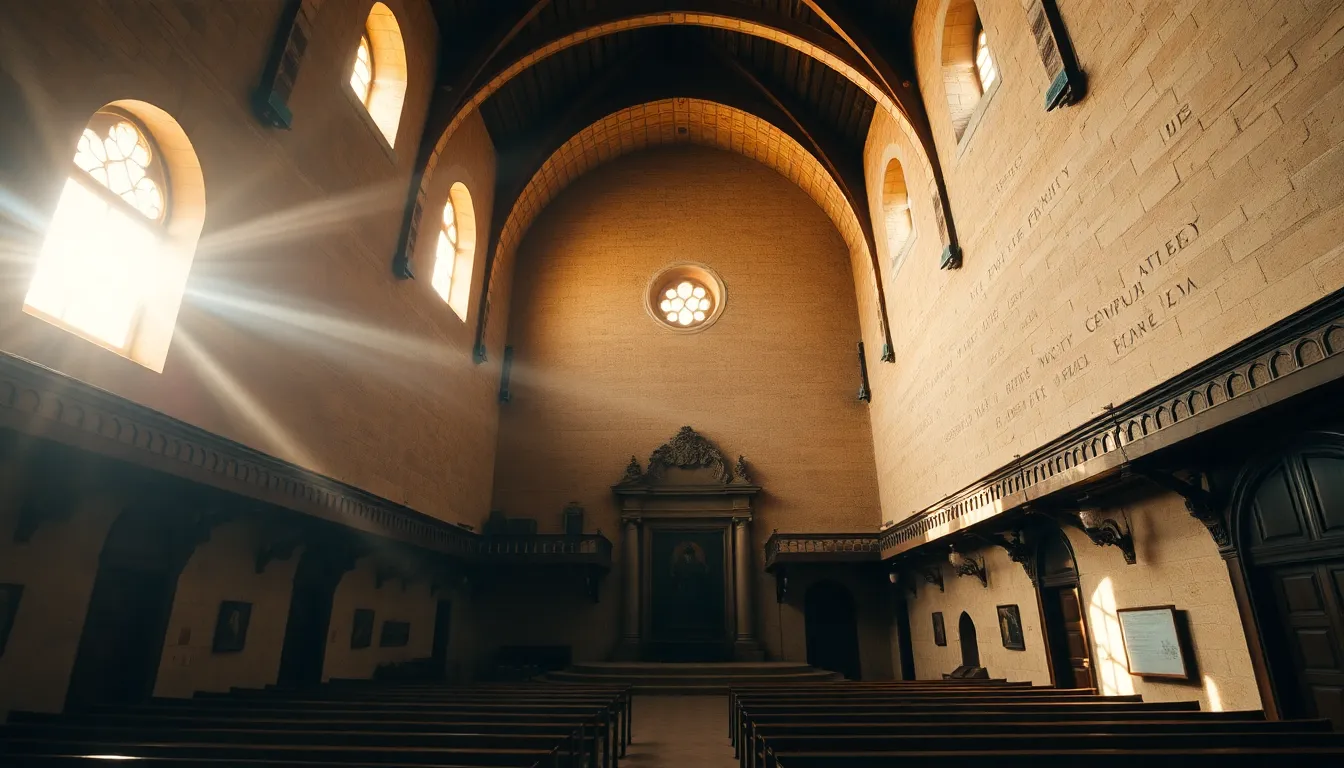
In 1996 the community built the Bet Eliahu synagogue. It is not a museum. It is an active house of worship for the descendants of those crypto-Jewish families. Visiting it does not feel like visiting a heritage site. It feels like reaching the last page of a story that opened in 1497.
The second day lets your group see the Jewish Museum of Belmonte, walk the old streets, and simply absorb what they have learned. The museum tells the community’s story in its own words, including the role the women of each household played in carrying the tradition through five centuries when writing anything down was too dangerous. The prayers were memorized, the customs taught mother to daughter, and that is part of what makes the survival so striking. Belmonte deserves a closer look than I can give it here, and the crypto-Jewish itinerary traces the Marrano story in full.
Getting to Belmonte takes planning. It sits off the main routes, and this is a living community, not a tourist stop. Heritage Tours coordinates visits in advance, because the people there deserve that respect.
Days 6 and 7: Porto, the Kadoorie Synagogue, and a Rescue Story
The drive from Belmonte to Porto is about two and a half hours. Porto carries a Jewish story that is both ancient and startlingly recent.
Begin at the Kadoorie Mekor Haim Synagogue, the largest on the Iberian Peninsula, built in the 1930s with funding from the Kadoorie family of Hong Kong. During the Second World War it was a lifeline for refugees moving through Portugal. It is still active and can be visited by arrangement.
The story I always tell groups in Porto is that of Aristides de Sousa Mendes. In June 1940, as Portuguese consul in Bordeaux, he defied direct orders from Salazar’s government and signed an estimated 30,000 visas for refugees, many of them Jewish, fleeing the Nazi advance. He lost his career, his pension, and his standing, and died in poverty in 1954. Portugal rehabilitated him in 1988, and in 2020 parliament voted to move his remains to the National Pantheon. It is one of the great acts of moral courage of the last century, and your group should hear it told properly.
Porto also held a documented medieval Jewish quarter on the slopes below the cathedral, and the Olival district carries echoes of the New Christian families who lived there after 1497. A good local guide can walk your group through those streets and connect the medieval community to the modern one that built the Kadoorie Synagogue four centuries later.
The final afternoon is for the historic Ribeira district along the river and, if there is time, the port wine cellars across in Vila Nova de Gaia. After the emotional weight of Belmonte, Porto’s slower rhythm is a gift. Groups continuing on often add a coastal day, which the 5-day Lisbon and Tomar itinerary and our Portugal destination page can help frame.
Adapting the Week for Your Community
Seven days is a real constraint, and the way to honor it is to protect the interior. If your group is older or moves slowly, I sometimes drop Tomar to a quick stop and bank the time in Belmonte. If your community has a strong connection to rescue history, I weight the final days in Porto more heavily and add the Sousa Mendes story at his family home in Cabanas de Viriato.
What I never cut is Belmonte. It is the reason this route exists.
With 15 or more participants, the group leader travels free. That changes the math for a synagogue trip and frees the leader to focus on the experience rather than the budget. You can see how the group leader role works on our group heritage tours page.
FAQ: Planning a 7-Day Jewish Heritage Trip to Portugal
Is 7 days enough for a Jewish heritage tour of Portugal?
Yes, if you focus the week on the Sephardic core: Lisbon, Tomar, Belmonte, and Porto. Seven days is not enough to add the Algarve or the Douro Valley wine country, but it is enough to trace the expulsion-to-survival story with real depth. Groups that try to add coastal sightseeing on top of this route usually end up rushing Belmonte, which is exactly the place that should never be rushed.
Why does Belmonte get two days when it is such a small town?
Because Belmonte is not really about its size. It is about a community that kept Judaism alive in secret for five hundred years and is still active today. The first day is for the synagogue and the Jewish Museum. The second is for the streets, the conversations, and the time to absorb what the place means. Groups consistently tell me afterward that Belmonte was the part they could not stop thinking about.
How far is Lisbon from Belmonte?
The direct drive is roughly three to three and a half hours. On this itinerary we break it with a day in Tomar, which sits near the halfway point and is a major heritage site in its own right, so the longest single drive your group faces is the two and a half hours from Tomar to Belmonte.
Can a Christian group use this same itinerary?
It can, though the framing shifts. A Christian group following this route gains a deep understanding of Sephardic history and survival, and Tomar’s Templar convent and Porto’s churches add Christian texture. If your group wants Fatima and the Marian story included, the 10-day Christian heritage itinerary is the better starting point.
When should we book a group trip like this?
For a group of fifteen or more, eight to twelve months of lead time is comfortable. That gives you room to secure hotel blocks in the interior, where rooms are limited, coordinate the Belmonte community visit in advance, and build your participant numbers to the threshold that makes the group economics work.
If a focused Sephardic week through Portugal is what your community is after, I would be glad to talk it through with you and shape it around your group’s specific interests. Contact us whenever you are ready to start.