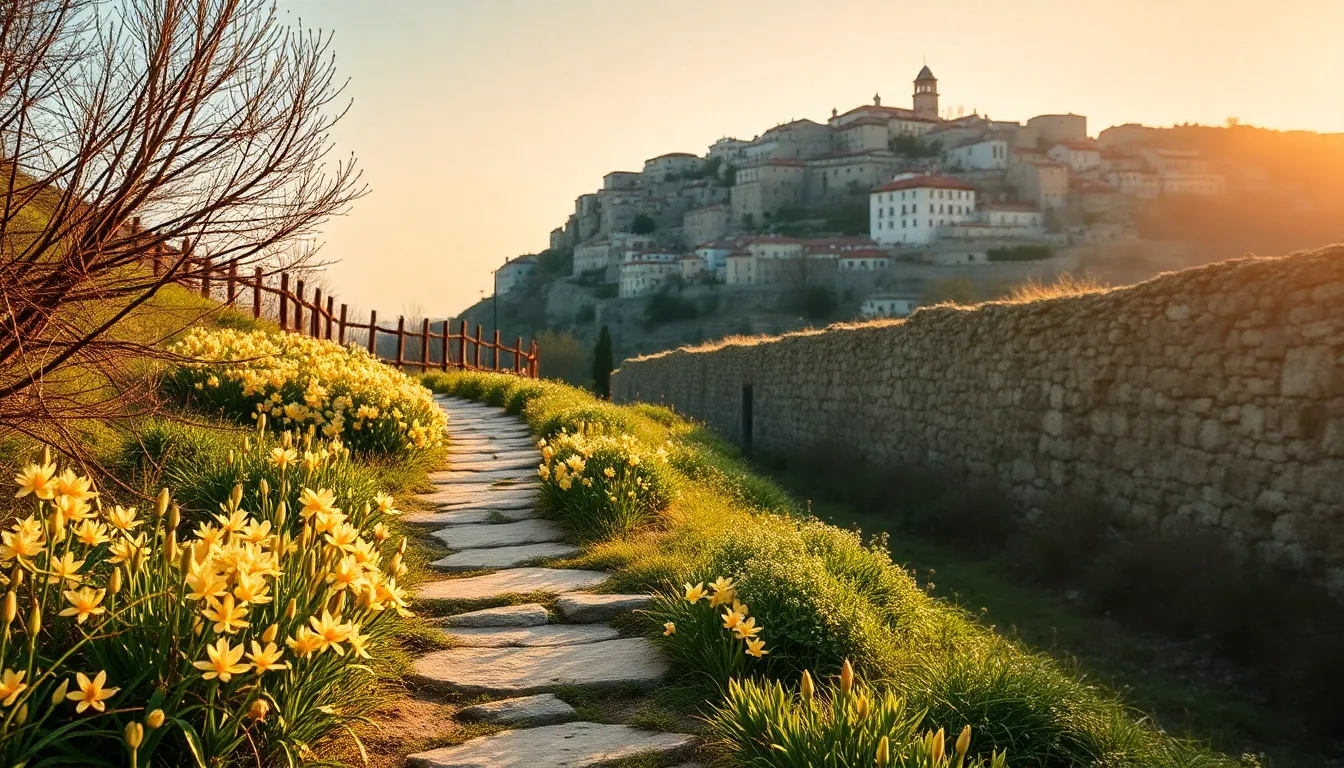
I have led enough spring groups through Portugal to know that “spring” is not one season. March in the interior is not May on the coast. The light, the crowds, the temperature, the feel of the Fatima sanctuary, all of it shifts week by week between the first thaw and the end of May. So when a pastor or a rabbi tells me they want to travel “in the spring,” my first question is always: which part of it?
This article is for the group leader who has already decided spring is the window and now needs to choose inside it. If you are still weighing spring against fall or winter, start with our best time to visit Portugal guide, which lays out the full year. What follows narrows in on March through May and walks it month by month, the way I think about it when I am actually building an itinerary.
What Spring Actually Means in Portugal
Portugal sits at the southwestern edge of Europe, and its spring arrives earlier and gentler than most of the continent. By mid-March the coast is already mild. The interior, where so many of the Jewish heritage towns sit, takes a few weeks longer to warm but rewards you with green hills and wildflowers that summer burns away by July.
Here is the rough shape of it. Coastal cities like Lisbon and Porto run from the high 50s into the upper 60s Fahrenheit through March and April, climbing into the low 70s by May. The interior is cooler at night, sometimes noticeably so in March, but the daytime walking weather is comfortable across the whole season. Rain is more likely in March and tapers off through May. None of this is harsh. The worst spring weather in Portugal is a gray, drizzly morning, not a washout.
What makes spring distinct for a heritage group is not the temperature. It is the combination of pleasant walking weather, a landscape at its greenest, and a Fatima calendar that builds toward one of the most significant pilgrimage dates of the year.
March: The Quiet Start of the Season
March is the most underrated month in the Portuguese spring, and I say that as someone who genuinely loves it.
The crowds have not arrived yet. The big Fatima pilgrimage is two months out. Hotels are open and far easier to book than they will be in May. The interior towns, Belmonte, Tomar, Trancoso, Castelo de Vide, are nearly empty, which means your group can walk through a medieval Jewish quarter and actually hear itself think. For a community that values reflection over spectacle, that emptiness is a gift.
The trade-off is weather variability. Early March can still be cool and damp, particularly in the north and the interior. You will want layers, and you will want a plan B for a rainy afternoon. I build March itineraries with a little more indoor time woven in, a synagogue here, a museum there, a long lunch when the sky turns gray.
For Jewish groups, March often brushes up against the run-up to Passover, which usually falls in late March or April. Many congregations prefer not to travel in the days right before the holiday. If that is your situation, late March can still work if we plan the return carefully, but it is worth flagging early so the calendar lines up.
April: The Balance Point
If I had to name the single best week of the Portuguese spring for a mixed-age heritage group, it would land somewhere in April.
By April the interior has warmed into comfortable walking weather, the wildflowers are out, and the hills around Belmonte and the Alentejo are as green as they get all year. The light is soft and long. The Fatima sanctuary is active but not yet at the May crush. Crowds at the major Lisbon sites are picking up but remain manageable with a guide who knows when to arrive.
April is also when Passover typically falls. For Jewish groups, a post-Passover trip in late April can be a beautiful fit. The holiday is behind you, the congregation has energy again, and Portugal is at its most welcoming. We build Shabbat observance into every Jewish itinerary, so Friday and Saturday are planned around services, meals, and rest rather than sightseeing. Lighting candles in Belmonte, where families kept their faith in secret for centuries, lands differently in the soft April evening light.
For Christian groups, April often overlaps with the Easter and Lenten season, which gives the journey a liturgical frame. Coastal towns and Fatima both carry that spring weight well.
May: Fatima’s Peak and the Pilgrimage Crush
May is the headline month, and for one reason: May 13, the anniversary of the first Fatima apparition in 1917.
The week around May 13 draws hundreds of thousands of pilgrims to the Sanctuary of Our Lady of Fatima. The candlelight procession on the evening of May 12, the sanctuary grounds filled with people holding candles and singing into the dark, is one of the most powerful collective expressions of faith you will ever stand inside. If your group wants to be at Fatima for the anniversary, May is the month, and there is nothing else quite like it.
But I have to be honest about what that scale costs you. Hotels within an hour of Fatima book months ahead for the May pilgrimage, often a year out. Roads clog. The grounds are crowded enough that moving a group of fifteen or twenty together takes patience and a clear plan. This is not a casual stop you can improvise. If you want to be there for May 13, start planning at least twelve months ahead. I am not exaggerating that number to be cautious. It is the real lead time.
There is a quieter version of May, too. If your group does not need to be at the sanctuary on the anniversary date, early May and the weeks after the 13th are lovely. Warm, green, long days, and crowds that thin quickly once the pilgrimage passes. You get the best of the season without the logistical squeeze.
How Spring Changes the Itinerary
Spring lets us do things that summer makes hard. The interior heritage sites, the ones that turn brutal under July sun, are comfortable in spring, which means we can spend real time in Belmonte, Tomar, and the Alentejo without racing the heat. We can walk slowly. We can let people sit in a synagogue courtyard for twenty minutes instead of five.
It also means we plan around the Fatima calendar with intention. If your group wants the pilgrimage, May shapes everything. If your group wants Fatima without the crowds, we point you at March, April, or late May instead. Either is a good trip. They are just very different trips, and choosing between them is exactly the kind of conversation worth having before anything is booked. You can see how we structure these journeys on our Portugal destination page and our group heritage tours page.
For groups thinking about heat and crowds at the other end of the year, our summer travel guide and fall travel guide cover those windows in the same detail.
FAQ: Portugal Heritage Travel in Spring
Is spring a good time to visit Portugal for a heritage group?
Yes, for most groups it is one of the two best windows of the year. Spring offers comfortable walking weather on the coast and in the interior, a landscape at its greenest, and the option to be present for the Fatima pilgrimage in May. The main thing to decide is whether you want the May pilgrimage crowds or a quieter visit in March, April, or late May.
What is the weather like in Portugal in spring?
Coastal cities run from the high 50s into the low 70s Fahrenheit across March through May, warming as the season goes. The interior is cooler at night, especially in March, but daytime walking weather is comfortable throughout. Rain is most likely in March and tapers off toward May. Spring weather is mild overall, with no extreme heat or cold.
When is the Fatima pilgrimage in spring?
The major spring pilgrimage centers on May 13, the anniversary of the first apparition in 1917. The candlelight procession on the evening of May 12 is the emotional peak. The week around the 13th draws hundreds of thousands of pilgrims, so hotels near Fatima book up many months ahead. Smaller pilgrimages occur on the 13th of each month from May onward.
Is March too early for a Portugal heritage trip?
Not at all. March is quiet, affordable, and the interior heritage towns are nearly empty, which suits groups that value reflection over spectacle. The trade-off is variable weather, with cooler, occasionally damp days, so we build in a bit more indoor time and flexibility. For Jewish groups, March can brush up against the run-up to Passover, which is worth flagging early so the calendar lines up.
Can Jewish groups travel to Portugal in spring around Passover?
Yes. Passover usually falls in late March or April, and many congregations travel in the weeks just after the holiday, often in late April. We build Shabbat observance, dietary needs, and the congregational calendar into the itinerary from the start, so the trip fits your community’s rhythm rather than working against it.
If spring feels like the right window for your community, the next step is deciding where inside it you land. That choice shapes everything from your hotel options to whether you stand in the Fatima candlelight on May 12. It is one of my favorite conversations to have with a group leader, because the answer is always specific to the people you are bringing.
Contact us whenever you are ready to start mapping it out.