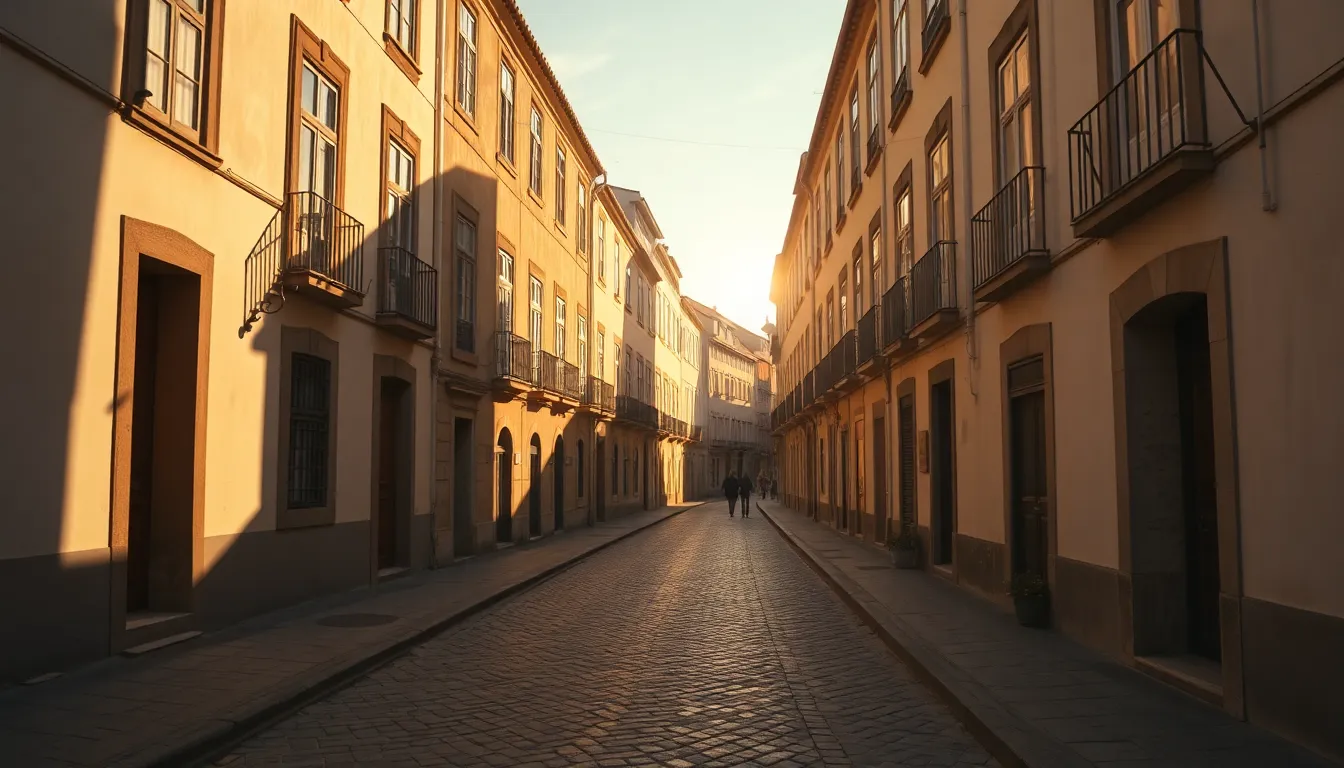
If a group leader asked me to pick one window to bring their community to Portugal, I would have a hard time arguing against early fall. September into October is the season I keep coming back to, year after year, and the reasons are practical and spiritual at the same time.
The summer heat that makes the interior so difficult has broken. The peak crowds have thinned. The October Fatima pilgrimage is less overwhelming than May’s. And for Jewish congregations, the weeks right after the High Holidays open a natural travel window that lines up almost too neatly with Portugal’s best weather. This article walks through all of it. If you want the full year laid side by side, our best time to visit Portugal guide covers every season. What follows narrows in on September and October specifically.
Why Fall Works When Summer Does Not
The single biggest argument for fall is the interior.
So many of Portugal’s most meaningful Jewish heritage sites sit inland, away from the cooling ocean. Belmonte, Tomar, Castelo de Vide, Trancoso, the Alentejo villages. In July and August these towns can pass 40 degrees Celsius, over 100 Fahrenheit, and walking a mixed-age group through medieval streets in that heat is genuinely hard. Fall removes that problem entirely.
By September the worst of the heat has eased, and October settles into the comfortable range, typically mid-60s to mid-70s Fahrenheit across the whole country, interior included. The light turns golden in a way that sounds like a travel-brochure cliche until you actually see Tomar’s synagogue or Belmonte’s streets in the late afternoon October sun. Then you stop calling it a cliche.
The crowds matter too. Portugal’s tourist peak runs through summer. By late September the volume drops, and by October you are walking sites that felt packed two months earlier with room to breathe. For a heritage group, that space changes the experience. People can linger. The pace slows. The reflection that these sites are meant to invite actually has room to happen.
September: Warm, Bright, and Easing
September is the bridge month. Early September still carries summer’s warmth, particularly inland, but the edge is coming off. By the back half of the month the interior is comfortable for full days of walking, and the coast is at its mellow best.
What I like about September is the light and the energy. The days are still long. The sky is reliably clear. The summer crowds have started to leave but the towns have not gone sleepy yet. It is an easy month to move a group through, and the weather rarely throws you a surprise.
For Jewish groups, September is where the calendar gets specific. The High Holidays, Rosh Hashanah through Yom Kippur, usually fall in September or very early October, and most congregations stay home through that stretch. That is not a problem to plan around so much as a marker. The window opens the moment the holidays clear.
October: The Sweet Spot
If September is the bridge, October is the destination.
The weather in October is as good as Portugal gets for a heritage trip. Mid-60s to mid-70s nearly everywhere, cool enough at night for a light jacket, warm enough by day to walk comfortably for hours. The interior, so punishing in summer, is a pleasure. The golden light I mentioned is at its richest. And the crowds are genuinely thin, which means your group often has these sites close to itself.
October also carries its own Fatima moment. October 13 is the anniversary of the last apparition, and the October pilgrimage is significant, drawing large crowds, though smaller and more manageable than the May crush. If your group wants to experience Fatima during an actual pilgrimage but would rather not be swallowed by the May scale, October is the better choice. The weather is usually mild and clear, and the sense of shared faith on the sanctuary grounds is no less real for the smaller numbers.
For Jewish groups, October is where the post-High Holidays window opens fully. Once Rosh Hashanah, Yom Kippur, and Sukkot have passed, congregations often feel a collective exhale. The calendar clears. People are spiritually fed but ready for something different. A heritage journey in mid-to-late October can feel like a natural extension of the reflection the holidays began, carried now into the streets of Belmonte and the synagogue at Tomar.
The Post-High Holidays Window, in Practical Terms
I want to spell this out because it is the most common fall conversation I have with rabbis.
The High Holidays keep most congregations close to home from Rosh Hashanah through the end of Sukkot, which usually means most of September into early October. Once that clears, you have a stretch of weeks, roughly mid-October onward, where the congregational calendar is open and Portugal’s weather is at its best. Those two things almost never line up this well. It is the closest thing to a natural travel window the Jewish calendar offers in the fall.
We build Shabbat observance into every Jewish itinerary, so Friday and Saturday are planned around services, meals, and rest. Lisbon and Porto both have active synagogues where your group can join Shabbat services. Dietary needs and any other religious considerations get woven in from day one, not bolted on at the end.
One more practical note that matters for the planning math. With Heritage Tours, group leaders travel free with fifteen or more participants. The fall window, with its comfortable weather and natural calendar fit, tends to be an easier trip to fill, which makes reaching that threshold simpler. The earlier you confirm the dates, the more runway you have to build your group.
Planning Around the Fall Window
Fall lets us build the kind of itinerary I most enjoy. We can spend real, unhurried time in the interior, because nobody is racing the heat. We can slow down at Belmonte and Tomar. We can let an afternoon stretch.
If your group wants the October Fatima pilgrimage, we plan around October 13 and book accommodation well ahead, because even the smaller October crowd fills the hotels near the sanctuary. If your group wants the mild weather and the empty sites without the pilgrimage, the weeks on either side of the 13th are wide open and quiet. You can see how we structure these journeys on our Portugal destination page and our group heritage tours page.
For the other ends of the year, our spring travel guide covers the March-to-May window and the May Fatima pilgrimage, and our summer travel guide covers managing heat and crowds in the peak season.
FAQ: Portugal Heritage Travel in Fall
Is fall the best time to visit Portugal for a heritage group?
For many groups, yes. September and October combine comfortable weather across the whole country, including the interior, with thinning crowds and the option of the October Fatima pilgrimage. For Jewish congregations, the weeks right after the High Holidays line up naturally with Portugal’s best fall weather, making it one of the easiest windows to plan and fill.
What is the weather like in Portugal in October?
October is mild and pleasant, typically mid-60s to mid-70s Fahrenheit across the country, including the interior heritage towns. Nights are cool enough for a light jacket. The light turns golden in the late afternoon, and rain is intermittent rather than persistent. It is genuinely comfortable for mixed-age groups doing full days of outdoor site visits.
How does the October Fatima pilgrimage compare to May?
October 13 marks the anniversary of the last apparition and draws a significant pilgrimage, but it is smaller and more manageable than the May 13 crowds. If your group wants to experience Fatima during a true pilgrimage without the overwhelming scale of May, October is usually the better choice. Hotels near the sanctuary still book up, so plan ahead.
Why is fall good for Jewish heritage groups specifically?
The High Holidays keep most congregations home from Rosh Hashanah through Sukkot, usually September into early October. Once that clears, the calendar opens just as Portugal’s weather reaches its best, creating a natural travel window from mid-October onward. The post-holiday period also carries its own spiritual weight, which can make a heritage journey feel like an extension of the reflection the holidays began.
When in fall should we travel to avoid crowds entirely?
Late September and the weeks of October on either side of the 13th are the quietest. Summer crowds have left, and unless you are aiming for the October pilgrimage itself, you will find the interior sites nearly empty and the pace unhurried. We can build the dates around exactly the kind of experience your group wants.
If your community follows the Jewish calendar, the fall window may already feel like it is waiting for you. And if you are a Christian group drawn to the October pilgrimage at a gentler scale than May, this season fits you too. Either way, the timing question is almost always the first one I work through with a group leader, and it is one of my favorites.
Contact us whenever you are ready to talk through the dates.