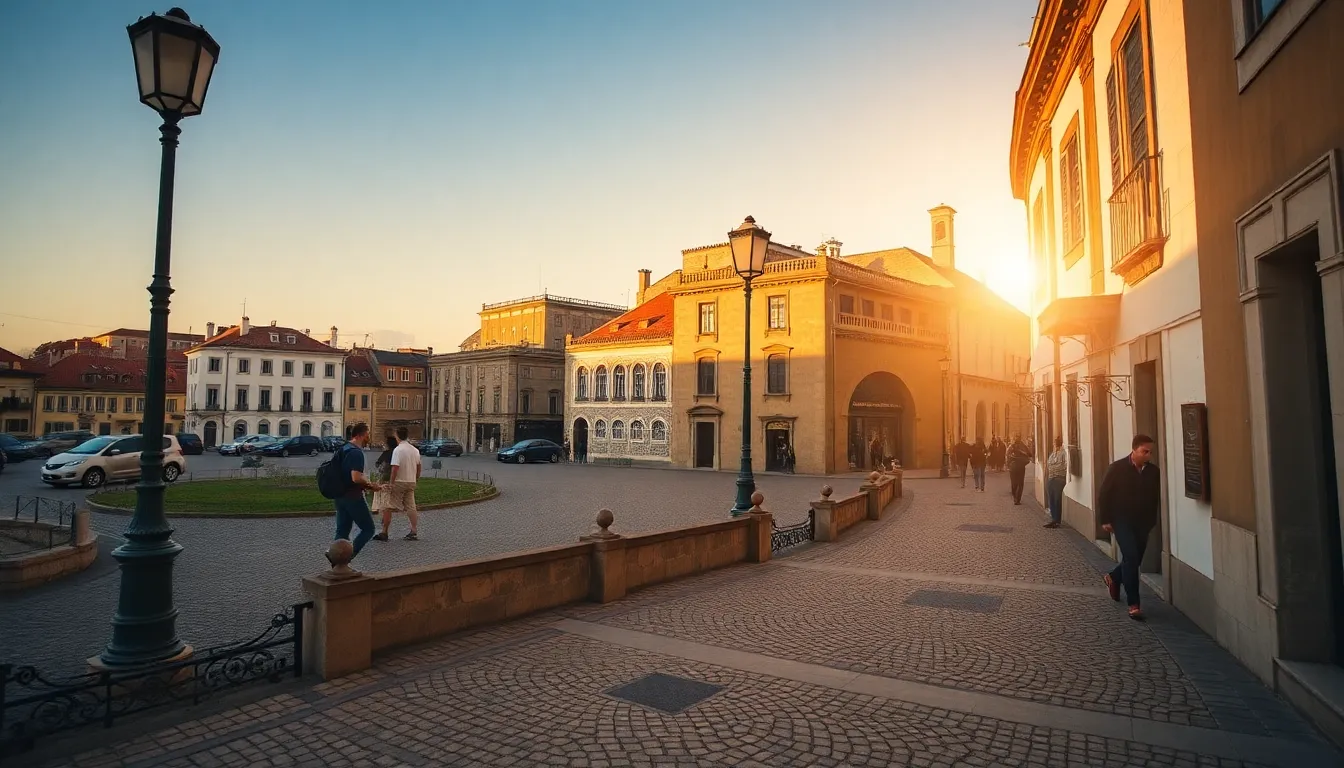
A rabbi called me a few years ago, embarrassed, almost apologetic. Half his congregation used a cane or a walker, two members used wheelchairs, and he was sure that meant Portugal was off the table. He had read the itineraries. Cobblestone hills, steep medieval streets, a country that looked like it was built to exclude anyone who could not climb. He expected me to gently tell him it would not work.
I told him the opposite. Portugal is more reachable for groups with limited walkers than most people assume, as long as the trip is built for it from the first day rather than adapted at the last minute. Some of the most powerful heritage sites in the country are flat, paved, and step-free. The trick is choosing the right sites, planning the transport carefully, and being honest about which places work and which do not.
This is the itinerary I built for that rabbi, and for every group since that travels with limited walkers, wheelchair users, or members who simply cannot manage long distances or steep ground. It is mobility-conscious from start to finish. Where our 9-day route sends groups up the steep streets of Belmonte, this one chooses differently and explains why.
How I Build a Mobility-Conscious Trip
A few principles shape every day below. Transport drops as close to each site as physically possible, never at a distant car park with a long walk in. We choose accessible-equipped coaches with low boarding where available. Hotels are confirmed in advance for elevators, step-free rooms, and accessible bathrooms, never assumed from a website photo. The daily distance is set by the least mobile member of the group, with generous rest and seating built into every visit. And I am honest in advance about any site that has real limits, so nobody is surprised on the ground.
Days 1 and 2: Lisbon, Choosing the Reachable Sites
Lisbon is famously hilly, which scares off some groups, but the heritage sites that matter most here are among the more reachable ones if you plan around the climbs.
The first day is gentle recovery from travel. Rather than the steep Alfama, I bring the group to the lower city and the area around the Sao Domingos church, where the memorial to the 1506 Lisbon massacre stands. Over three days in 1506, a mob killed thousands of forced converts here, and the memorial marks one of the darkest moments in Portuguese Jewish history. The site is on flat ground in the lower city, reachable by everyone, and reading the inscription together is one of the most moving moments of the trip. For members who want the Alfama experience, I arrange a tram ride and a single accessible viewpoint rather than the full climb.
The second day is Belem, and Belem is a gift for accessible travel. The whole riverfront district is flat, wide, and paved. The Jeronimos Monastery, the great Manueline church from Portugal’s Age of Exploration, has step-free access to its main church, and the open plazas around the Tower of Belem give wheelchair users and slower walkers room to move at their own pace. It is one of the best days of the trip for everyone, regardless of mobility.
Day 3: Tomar, With Honest Choices
The drive to Tomar takes about ninety minutes. Tomar requires honest planning, because it holds one fully reachable treasure and one site with real limits.
The reachable treasure is the Synagogue of Tomar in the old town, the oldest surviving synagogue in Portugal, built in the mid-fifteenth century. It sits on flat ground in the town center, the entrance is manageable, and the single room means everyone in the group shares the same view of five centuries of survival. This is the heart of the Tomar day and it works for the whole group.
The site with limits is the Convent of Christ, the Templar headquarters on the hill above the town. It involves significant climbing and uneven historic surfaces, and parts of it are genuinely difficult for limited walkers. I am direct about this. For groups where most members can manage it, I arrange transport to the upper entrance and we take the convent slowly with frequent rest. For groups where they cannot, we make the synagogue the focus and offer the convent only to those who want and are able to attempt it, while the rest of the group enjoys an accessible cafe and the level streets of the lower town. Nobody is left stranded, and nobody is pushed beyond what is safe.
Days 4 and 5: A Reachable Base in the Interior
The famous crypto-Jewish town of Belmonte is one of the most moving sites in Portugal, and I have to be honest that its steep hilltop streets make it genuinely hard for limited walkers. For accessible groups I handle the interior differently, and I tell leaders the truth up front so they can decide.
Where a group is determined to experience Belmonte, I arrange private transport that drops as close as physically possible to the synagogue and the Jewish Museum, both of which can be reached with effort and assistance, and we skip the steep residential streets entirely. The story of a community that kept its faith in secret for roughly five hundred years is worth real effort to reach, and many groups choose to make it. Visits are coordinated with the community in advance regardless, because it is a living community, not an attraction.
Where a group cannot manage Belmonte at all, I substitute a fuller, slower experience of accessible interior heritage, with extra time at reachable sites and a genuinely restful second day. The two days in this part of the trip are paced deliberately gently, because the interior driving is the longest of the journey and rest matters more here than anywhere.
Day 6: Fatima, the Most Accessible Major Site in Portugal
From the interior, the drive to Fatima takes a few hours, and Fatima is the day where accessibility stops being a constraint entirely. Of all the great heritage sites in Portugal, Fatima is the most reachable, and that is by design. It is one of the world’s largest pilgrimage destinations and it receives enormous numbers of people of every age and ability every year.
Fatima is where, in 1917, three shepherd children reported apparitions of the Virgin Mary, witnessed in the final apparition by an estimated 70,000 people. The sanctuary is vast, flat, and fully paved. The Capelinha das Aparicoes at its center is reachable across level ground. The Basilica of Our Lady of the Rosary holds the tombs of the shepherd children, and the newer Church of the Holy Trinity, completed in 2007 and seating over 8,000, is fully step-free and built for accessibility. Wheelchair users and walker users can take part in everything here without compromise. For Christian groups it is often the emotional peak of the trip, and for accessible groups especially, it is a day of complete inclusion.
Day 7: Porto, Heritage on Level Ground
The trip can end in Porto, and the heritage core of Porto is reachable with planning. The anchor is the Kadoorie Mekor Haim Synagogue, the largest synagogue on the Iberian Peninsula, built in the 1930s and a refuge for Jewish refugees during World War II. It is a modern building with manageable access, and it is visited by arrangement.
Here we tell the story of Aristides de Sousa Mendes, the Portuguese consul who, in June 1940, defied his government’s orders and signed an estimated 30,000 visas to save refugees fleeing the Nazis, losing his career and dying in poverty for it. It is a story that needs no climbing to land. Porto’s old riverfront has steep stretches, so I choose level viewpoints and accessible vantage points over the Douro rather than the steepest lanes, and arrange seating and short transfers throughout. The trip ends on flat ground, with the group together.
The Honest Promise
I will never tell you that every heritage site in Portugal is fully accessible, because it is not true, and a group that travels on false promises ends up stranded and disappointed. What I promise instead is a trip built around the people actually traveling, honest about every limit, and designed so that the least mobile member shares the heart of the experience rather than watching from the bus. Fatima, Belem, the Tomar synagogue, and the heritage core of Porto are reachable for nearly everyone. With careful transport, even more opens up.
Our multigenerational itinerary covers similar ground at a gentle pace for mixed-age groups, and our 9-day route shows the full standard journey. You can see the destination on our Portugal page, and our group tours page explains how the group experience works. With 15 or more participants, the group leader travels free, which helps make a carefully supported trip reachable for the whole congregation.
FAQ: Accessible Portugal Heritage Travel
Is Portugal accessible for groups with limited walkers?
More than most people expect, with the right planning. Major sites like Fatima, the Jeronimos Monastery in Belem, and the synagogue in Tomar are flat and reachable. The challenge is the hilly medieval towns, which we plan around with close transport drop-offs, honest site selection, and a pace set by the least mobile traveler.
Which Portugal heritage site is the most wheelchair-friendly?
Fatima. The sanctuary is vast, flat, and fully paved, and the newer Church of the Holy Trinity is built for full accessibility. It is one of the world’s largest pilgrimage sites and receives visitors of every ability, so wheelchair and walker users can take part in everything there without compromise.
Can a wheelchair user visit Belmonte?
It is difficult but not always impossible. The steep hilltop streets are the obstacle, but the synagogue and Jewish Museum can be reached with private transport that drops as close as possible and with assistance. We are honest with each group about the effort involved and offer a fuller alternative for groups who cannot manage it.
How do you handle sites that are not fully accessible?
We are direct about every limit before the trip, choose the reachable parts of each site, and arrange transport to the closest possible point. Where part of a site cannot be reached, we offer it only to those able to attempt it and provide a meaningful accessible alternative for the rest, so nobody is left stranded or excluded.
What support do you arrange for accessible group travel?
Accessible-equipped coaches where available, hotels confirmed in advance for elevators and step-free rooms, transport drop-offs as close to each site as possible, built-in rest and seating, and a daily distance set by the least mobile member. We plan the whole trip around the real people traveling rather than a standard route.
If your congregation includes limited walkers or wheelchair users and you want a heritage trip built honestly around them, I would welcome that conversation. Contact us whenever you are ready.