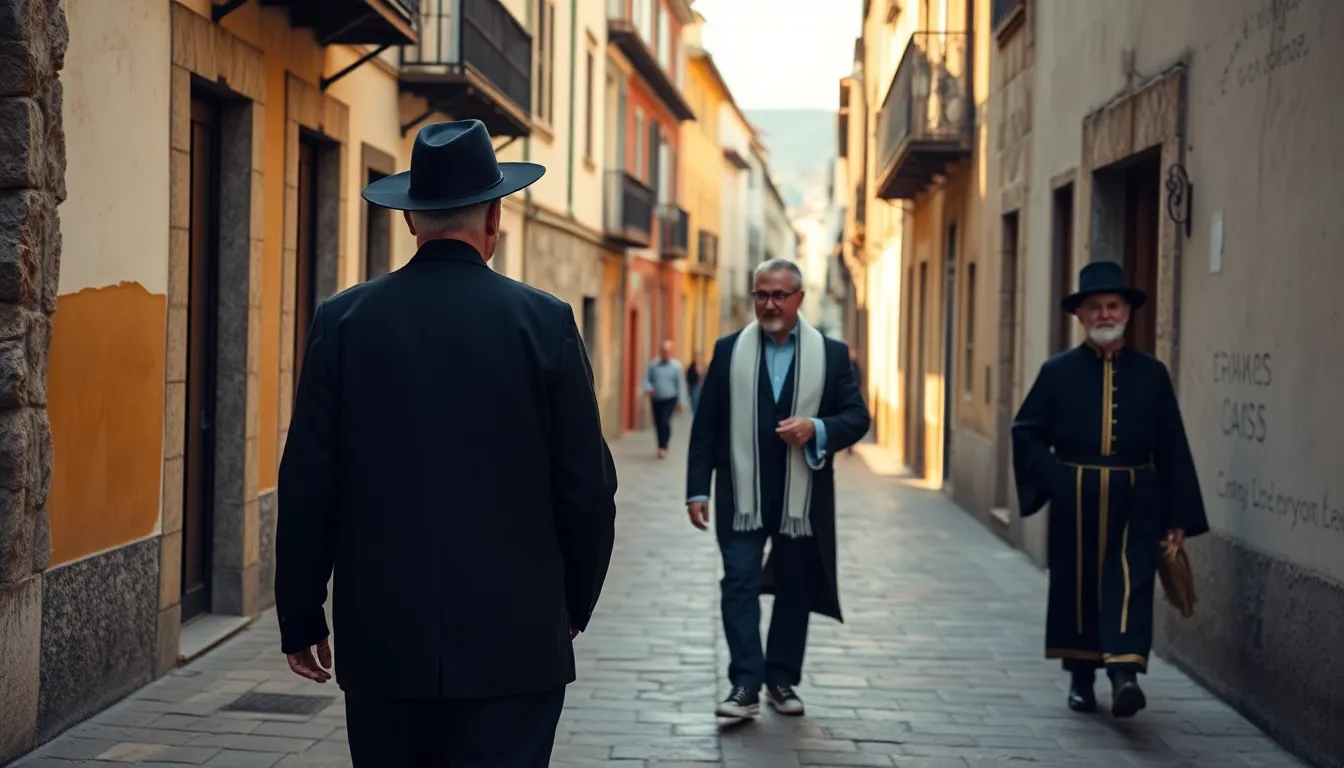
The first interfaith trip I helped coordinate, a rabbi and a pastor co-leading one group to Portugal, I will admit I was nervous about it. I had seen joint trips go sideways when the two communities never really became one group. What I watched instead, over those ten days, was two congregations arrive as strangers and leave as friends, standing together in a synagogue where Jews hid their faith for 500 years and a sanctuary where pilgrims come by the hundreds of thousands. It worked. And it worked for reasons I can now point to, which is what this piece is about.
Portugal is, in my experience, the single best country in Europe for an interfaith heritage trip. Not because it is convenient, though it is. Because the Jewish and Christian stories here are not parallel tracks that happen to share a bus. They are woven into the same landscape. If you are a rabbi and a pastor considering leading together, here is what I have learned about doing it well.
Why Portugal Suits Interfaith Travel So Naturally
Most destinations force an interfaith group to compromise. One community gets the main sites and the other gets the add-ons. Portugal does not do that. Fatima, one of the most significant Catholic pilgrimage sites in the world, and Belmonte, where a crypto-Jewish community preserved Judaism in secret for more than five centuries, are both in central Portugal, a few hours apart. Tomar holds Portugal’s only pre-expulsion synagogue and, around the corner, the Convent of Christ.
This geographic closeness means neither community is the guest of the other. Both are home. A combined itinerary moves through Fatima, Tomar, Belmonte, Lisbon, and Porto without backtracking and without anyone feeling like their part of the trip was an afterthought. Our main Portugal group tour guide lays out how that itinerary fits together. What I want to focus on here is the leadership.
Dividing the Leadership: Who Does What
The most important decision you and your co-leader make is how you split the spiritual leadership, and the answer is simpler than people expect. At each site, the leader whose tradition the site belongs to takes the lead.
At Fatima, the pastor leads. He frames the apparitions, the pilgrimage tradition, what this place means to the Christian world, and he invites his own community into it while the Jewish travelers witness with respect. At Belmonte and Tomar, the rabbi leads. She tells the story of forced conversion, of faith kept alive in secret, of rediscovery, and her community enters it while the Christian travelers witness with the same respect.
This is not about taking turns to be polite. It is about authenticity. Each leader speaks from inside their own tradition at the places that are theirs, which is far more powerful than either of you trying to narrate the other’s story. The witnessing community gains something too. There is a particular depth to standing quietly inside a tradition not your own, led by someone for whom it is everything.
Agree on this division before you ever board the plane. Map it site by site. The trips that struggle are the ones where the two leaders never clarified who carries which moment.
The Conversations to Have Before You Go
Co-leading well is mostly about alignment established in advance. A few conversations make all the difference.
Talk about your own relationship first. Your two communities will take their cue from the two of you. If you and your co-leader are visibly warm, curious about each other, and at ease, the groups relax into the same posture. If there is tension between the leaders, the communities feel it. Spend real time together before the trip. The friendship between the leaders is the model.
Agree on the shared moments. Beyond the site-specific leadership, decide where the whole group gathers as one. A shared meal each evening. A closing gathering where both communities reflect together. Perhaps a moment at a site that speaks to both, where one of you offers a reflection that holds the whole group. These shared moments are what fuse two congregations into one travel community.
Set the tone for respect explicitly. Before departure, each of you prepares your own community for what it means to witness another tradition with full attention. I wrote more about this group-level preparation in preparing your group spiritually for Portugal. The leaders model it; the preparation makes the communities ready to follow.
Decide how you handle questions across the line. Travelers will ask each other things. A Christian participant will ask the rabbi about kashrut. A Jewish participant will ask the pastor about Mary. Agree that these questions are welcome, that you will answer them generously, and that curiosity is the whole point. A group where people feel free to ask is a group that is actually becoming interfaith rather than just sharing transport.
Practical Balance: Pacing, Meals, and Calendar
A few logistics carry extra weight on an interfaith trip.
Balance the itinerary genuinely. Neither community should feel they got the shorter end. We build interfaith itineraries to give real depth to both the Christian and Jewish sites, not a full immersion for one and a quick stop for the other. If your group leans one way, that is a conversation to have openly in planning, not a default to drift into.
Get the shared table right. Meals are where two communities actually bond, and they are also where dietary needs across faith lines have to be handled with care, kosher, halal, and medical diets often all in one group. This is worth getting exactly right, and our guide on handling dietary needs across a mixed Portugal group covers how. When the food is handled so well it is invisible, the table becomes the warmest part of the trip.
Mind both calendars. A combined group has two sets of observances. Plan around Shabbat for the Jewish community and around Sunday worship for the Christian community, and treat both as fixed points the itinerary respects. Built in well, these become shared rhythms the whole group appreciates rather than scheduling conflicts.
The Economics of Co-Leading
A fair question: if two leaders are bringing one group, how does the free leader benefit work? The honest answer is that it scales with group size. With 15 or more paying participants, the standard free leader structure applies, and a combined group of two congregations usually clears that threshold comfortably. With a larger combined group, there is room to discuss covering both co-leaders. This is a conversation to have early and specifically, and the full mechanics are laid out in our piece on how the free group leader model works. The short version: a healthy combined group makes the leadership arrangement easier, not harder, to support.
FAQ: Co-Leading an Interfaith Portugal Trip
Can a rabbi and a pastor really lead one heritage trip together?
Yes, and Portugal is unusually well suited to it. Because Fatima and the Jewish heritage sites at Belmonte and Tomar sit close together in central Portugal, neither community is the guest of the other. The key is dividing the leadership so that at each site, the leader whose tradition the site belongs to takes the lead, with the other community witnessing with respect. Done that way, two congregations consistently travel as one.
How do we decide who leads at each site?
Map it site by site before you travel. At Fatima, the Christian leader frames the apparitions and pilgrimage tradition. At Belmonte and Tomar, the Jewish leader tells the story of forced conversion and faith kept alive in secret. Each leader speaks from inside their own tradition at the places that are theirs, which is far more powerful and authentic than either leader narrating the other’s story.
What is the most important factor in an interfaith trip succeeding?
The relationship between the two leaders. Both communities take their cue from how the rabbi and pastor relate to each other. If the leaders are visibly warm, curious, and at ease together, the groups relax into the same posture. Spend real time together before the trip; the friendship between the leaders is the model the whole group follows.
How do you handle different observances and dietary needs in one group?
Plan around both calendars, respecting Shabbat for the Jewish community and Sunday worship for the Christian community as fixed points. For meals, kosher, halal, and medical diets are arranged far in advance so the right meal is simply present at the table with no friction. When handled early, both the observances and the shared meals become rhythms that bond the group rather than logistics that divide it.
Does the free leader benefit cover both co-leaders?
It depends on group size. With 15 or more paying participants, the standard free leader structure applies, and a combined interfaith group usually clears that threshold comfortably. Larger combined groups can open room to discuss covering both co-leaders. It is best worked out early, and we are glad to run the specific numbers for your two communities.
If you and a co-leader are even loosely considering this, I would be glad to talk it through. Interfaith trips are some of the most meaningful journeys I help build, and Portugal is the place I most often recommend for them. Explore the Portugal destination page, see how our group heritage tours are structured, and contact us when you are ready to start the conversation together.