Why Portugal Is Worth the Conversation with Your Congregation
If you are reading this, you have probably already considered the more obvious heritage destinations. Israel, of course. Maybe Greece or Italy. Portugal is less likely to be the first name your congregation suggests, and that is actually part of its strength.
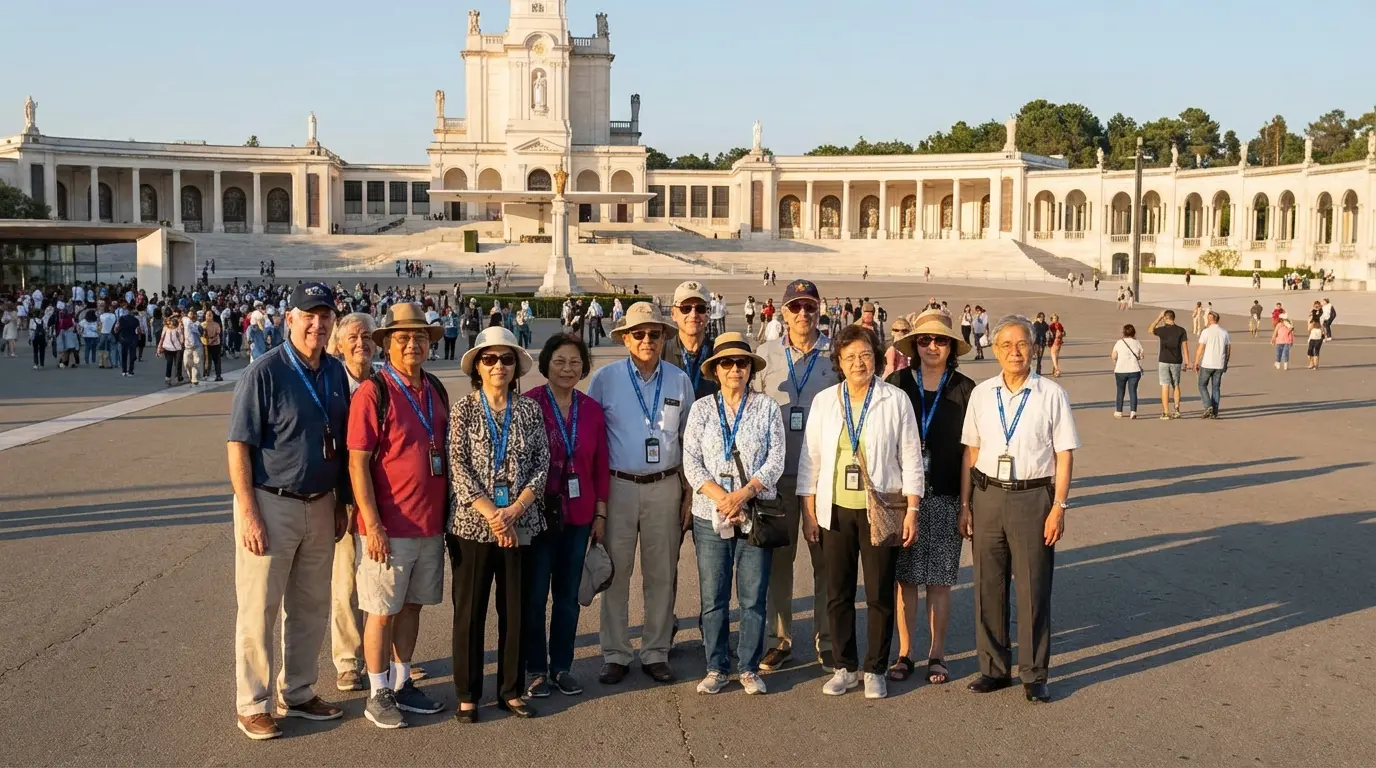
Portugal holds two of Europe’s most significant pilgrimage stories. For Christian groups, there is Fatima, one of the most important Catholic sites in the world. For Jewish groups, there is Belmonte, where families kept Judaism alive in secret for more than 500 years. What makes Portugal unusual, genuinely unusual, is that these two stories exist in the same small, welcoming country. A rabbi and a pastor could bring their communities on a combined trip and both would find the journey deeply meaningful.
That is a conversation worth having with your community. Portugal is the rare destination where a mixed-faith group does not mean compromise. It means both communities get something extraordinary.
The country is also manageable. It is small, well-connected, safe, and the cost of travel is lower than most of Western Europe. The food is excellent. The people are warm. And the heritage sites are not overrun, at least not yet.
The Leader’s Planning Timeline: 12 Months to Day One
Planning a group heritage trip is real work, and it helps to know what the timeline looks like before you commit. If you want a broader walkthrough of the whole process, the complete guide for group leaders covers it step by step. Here is what I have seen work well over decades of organizing these journeys.
12 months out: Start the conversation. Gauge interest. You do not need commitments yet, just a sense of whether your community is open to Portugal. If you want to coordinate with Fatima’s May 13 or October 13 anniversaries, the timing matters and hotel availability near Fatima books early.
9 to 10 months out: Contact Heritage Tours to begin building the itinerary. This is when we discuss your group’s specific interests, the mix of Christian and Jewish heritage sites, dietary needs, mobility considerations, and the pace that works for your community. You will get a detailed itinerary and pricing at this stage.
6 to 8 months out: Open registration to your congregation. Share the itinerary, the cost, and the story of why Portugal matters. The groups that fill fastest are the ones where the leader makes a personal case, not just a flyer in the lobby.
3 to 4 months out: Finalize numbers. This is when you confirm your group size, and if you have 15 or more participants, your own travel is covered. Handle passports, travel insurance, and any pre-trip preparation you want to share with the group.
1 month out: Heritage Tours handles the final coordination. Hotel confirmations, ground transportation, guide assignments, and any special access arrangements for sites in the Portuguese interior. You focus on preparing your community spiritually and practically for the journey.
Day of departure: You board the plane as the spiritual leader of a group that is about to experience something together. Heritage Tours takes care of the rest.
Building an Itinerary That Works for Both Jewish and Christian Groups
Portugal is one of the few destinations where a combined itinerary does not feel forced. The reason is geographic: Fatima, Tomar, and Belmonte are all in central Portugal, within a few hours of each other. A single trip can include Fatima’s sanctuary, the pre-expulsion synagogue in Tomar, Belmonte’s crypto-Jewish community, and the Monastery of Batalha without any backtracking.
A typical 8 to 10 day itinerary might look something like this:
Begin in Lisbon with its layered history, both the Alfama (site of the old Jewish quarter) and the Jeronimos Monastery. Travel north to Fatima for one or two days, depending on whether you want to attend a pilgrimage ceremony. Continue to Tomar to visit both the Convent of Christ and the synagogue. Move into the interior for Belmonte and, if time allows, Trancoso and Castelo de Vide. End in Porto with the Kadoorie synagogue and the old town.
The strength of this itinerary is that it tells a single story with two threads. The Christian heritage and the Jewish heritage are not competing for time. They are woven together, because in Portugal, they always have been.
Heritage Tours builds these itineraries to fit your group’s interests, pace, and calendar. Every trip is custom. If your community leans more toward the Fatima pilgrimage, we can expand that portion. If the Jewish heritage story is the primary draw, we adjust accordingly.
Costs, Perks, and the Leader Travels Free Structure
Let me be direct about the financial side, because I know it matters when you are presenting this to your community’s leadership.
Group heritage tours to Portugal typically fall in a moderate range for European travel. Portugal is meaningfully less expensive than Italy, France, or the UK for comparable quality hotels and meals. Heritage Tours provides all-inclusive pricing that covers accommodations, ground transportation, guided site visits, and most meals, so your group knows the full cost upfront.
For groups of 15 or more participants, the group leader travels free. This is not a promotional offer. It is how Heritage Tours has always worked. The person who brings the group together, who gives the trip its spiritual direction, who does the work of organizing and inspiring, should not bear the cost of their own travel. We cover it because we believe the leader is what makes a heritage trip meaningful.
If your group is smaller than 15, you are still welcome to reach out. Heritage Tours works with groups of various sizes, and we can discuss options that fit your community.
What to Tell Your Group Before You Go
The groups that get the most from a Portugal heritage trip are the ones where the leader has prepared them for what they are about to experience. Here are a few things worth sharing before departure.
Portugal’s heritage story is not widely known. Most of your group will not have heard of Belmonte or the crypto-Jewish community. They may not know that Fatima draws hundreds of thousands of pilgrims. A short introduction, even just an email with a few paragraphs of context, changes the experience entirely.
The interior is different from the coast. Lisbon and Porto are cosmopolitan European cities. The interior, where many of the most important heritage sites are located, is rural, quiet, and traditional. The contrast is part of what makes the trip rich, but it helps to set expectations.
Comfortable shoes matter more than formal wear. Heritage sites in Portugal involve cobblestones, hills, and medieval streets. Encourage your group to pack accordingly.
Leave room for reflection. The most meaningful moments on a heritage trip are often unplanned. A conversation with a local community member in Belmonte. A quiet moment in Tomar’s synagogue. A view from the walls of Trancoso at sunset. Build some unstructured time into the group’s expectations.
This is not a sightseeing trip. It is a journey your community will take together, and it will change how they see each other and their shared faith. Frame it that way from the beginning, and the trip will live up to it.
If you are considering Portugal for your community, I would welcome the chance to talk about what the trip could look like. And if the Holy Land is also on your mind, our guide to church group trips to Israel is a good companion read. You can start by exploring our Portugal destination page and reach out whenever you are ready.
Frequently Asked Questions
Does the group leader pay for a heritage tour to Portugal?
No. For groups of 15 or more participants, the group leader travels free. Heritage Tours covers the leader’s travel because the spiritual leader is what gives a heritage trip its meaning. This applies to pastors, rabbis, ministers, and other community leaders organizing the journey.
How many people do I need to qualify for a group tour rate?
Heritage Tours works with groups of various sizes, but the group pricing structure and the leader-travels-free benefit apply to groups of 15 or more participants. Smaller groups are welcome and can receive custom pricing. Contact Heritage Tours to discuss your specific situation.
Can a Portugal heritage tour include both Fatima and Jewish heritage sites?
Yes, and Portugal is uniquely suited to this. Fatima, Tomar (home to Portugal’s only pre-expulsion synagogue), and Belmonte (the crypto-Jewish community) are all in central Portugal within a few hours of each other. A combined itinerary can include both Christian pilgrimage sites and Jewish heritage sites without any backtracking, making Portugal one of the best destinations for mixed-faith groups.
How far in advance should I start planning a group heritage tour to Portugal?
Plan to start about 12 months in advance. This gives you time to gauge interest from your congregation, work with Heritage Tours to build a custom itinerary, open registration, and handle travel preparations. If you want to visit during Fatima’s major feast days (May 13 or October 13), early planning is especially important as accommodations near Fatima book quickly.
What makes Portugal a good destination for a multi-faith group?
Portugal is one of the few countries in Europe where both Jewish and Christian communities have equally significant heritage sites. Fatima is one of the world’s most important Catholic pilgrimage destinations, while Belmonte holds the story of a crypto-Jewish community that preserved their faith for 500 years. These sites are geographically close and can be woven into a single itinerary, making Portugal an ideal destination for groups that include members of both faiths. Visit our Portugal page to explore options.