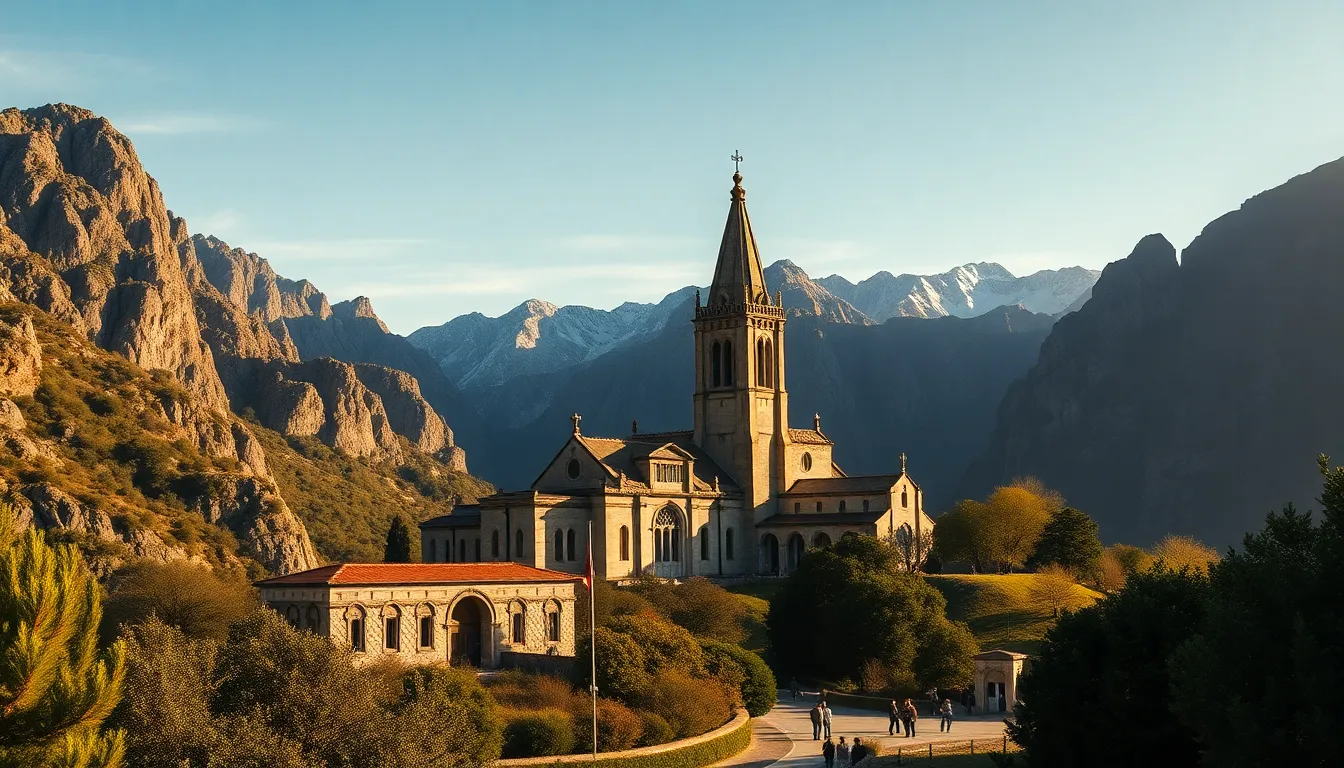
When I tell groups we are going up to Guarda, the first thing I mention is the air. Guarda is the highest city in Portugal, set above a thousand meters on the northeastern shoulder of the Serra da Estrela, the country’s highest mountain range. The light is sharper up here, the granite is everywhere, and the whole region has a toughness and a stillness that feels a long way from the beaches and tiles people associate with Portugal. This is the mountain heart of the country, and it carries a heritage story most visitors never reach.
Guarda was a frontier city, a fortress watching the border with Spain, and its old town is built almost entirely of gray granite, including a cathedral that looks more like a castle than a church. The surrounding mountains and valleys held some of the most resilient Jewish communities in Portugal, families who took to the highlands precisely because they were remote and hard for the Inquisition to reach. For a heritage group, Guarda and the Serra da Estrela offer Christian frontier history, mountain Jewish heritage, and a landscape that gives the whole journey a sense of scale.
Let me take you through the region.
Guarda: The Highest City in Portugal
The Granite Cathedral
The Se da Guarda, the cathedral, is the building everything else in the old city gathers around. Begun in the late fourteenth century and built over roughly two hundred years, it is a fortress-cathedral, raised in granite with battlemented walls and a solid, defensive bearing that matches a city built to guard a frontier. From a distance it reads as much like a stronghold as a place of worship, which tells you everything about the role Guarda played.
Inside, the severity gives way to a soaring Gothic and Manueline interior, with a remarkable carved stone altarpiece of around a hundred figures, one of the finest works of Renaissance sculpture in Portugal. The contrast between the harsh granite exterior and the intricate interior is the experience I want Christian groups to feel. This was a church built to survive, in a place where faith and defense were the same enterprise, yet inside it holds artistry of real delicacy. Climbing onto the cathedral, where access allows, gives a view over the granite city and out toward the mountains.
The Old Town and the Four Gates
Guarda’s old town still keeps the shape of its medieval defenses. Several of the old gates survive, including the Porta da Erva and the Porta d’El Rei, and stretches of the walls and a castle keep remain. Walking through these gates into the tight granite streets, you move through a city that was, for centuries, one of the key strongholds of the Portuguese border. The main square, lined with arcaded buildings, sits just below the cathedral and makes a natural gathering point for a group.
The Mountain Jewish Heritage
Why the Jews Went to the Mountains
Here is the part of Guarda’s story that I most want groups to understand. After the forced conversion of 1497, when King Manuel I ordered all Jews in Portugal to convert or leave, the families who wanted to hold onto their faith in secret needed places where they could do so without constant scrutiny. The mountains around Guarda were exactly that. Remote, hard to reach, far from the centers of Inquisition power, the highland villages of the Serra da Estrela and the surrounding country became refuges where crypto-Jewish life could endure.
Guarda itself had an important medieval Jewish community, with a Judiaria in the old town, and the broader district held many more. The single most remarkable survival in the wider region is Belmonte, just to the southwest, where a crypto-Jewish community kept its faith alive in secret for more than five hundred years before being rediscovered in the twentieth century. Belmonte sits in this same mountain country, and it is the crown of the region’s Jewish heritage. Our Portugal heritage guide tells the Belmonte story in full, and the historic villages trail covers Trancoso and the other inland communities that sit nearby.
Reading the Region
In Guarda’s old town you can trace the lines of the former Judiaria, and across the mountain villages you find the same carved doorways and quiet traces of hidden faith that mark the wider interior. As everywhere in this part of Portugal, the meaning is local and often unmarked, and a guide who knows these communities is what turns a row of granite houses into a living story. For Jewish groups, Guarda is best understood as the gateway to the mountain heartland of Sephardic survival, with Belmonte as its center.
The Serra da Estrela: Landscape and Pilgrimage
Portugal’s Highest Mountains
The Serra da Estrela, the Mountains of the Star, rises just southwest of Guarda and contains the highest point in mainland Portugal. It is a natural park of glacial valleys, granite plateaus, and high lakes, and in winter it carries snow, the one place in Portugal where you can ski. For a heritage group, the mountains are partly a landscape experience, a chance to see a side of Portugal that surprises everyone, and partly a deepening of the heritage story, because it was this terrain that sheltered the hidden communities for so long.
The range has its own gentle pastoral culture, including the famous Serra da Estrela cheese and the shepherd traditions of the high country, and driving through the valleys between villages is one of the quiet pleasures of a journey through this region. The land itself does a lot of the spiritual work here. Groups tend to grow contemplative in these mountains without needing to be told to.
The Name and the Story
The very name, Mountains of the Star, has gathered legends over the centuries, including pastoral and Christian associations with the guiding star. I do not oversell the folklore to groups, but the name itself, set against these high granite ridges, gives the region a quiet resonance that fits a faith journey. Standing in the high country, looking out over the valleys where families kept their faith hidden for generations, is a fitting place to reflect on endurance.
Planning a Visit to Guarda and the Serra da Estrela
Getting There and Structuring It
Guarda sits in the northeast interior, reachable by road or rail from Coimbra and the coast, and it makes a natural anchor for the whole mountain and historic-villages region. I usually build Guarda and the Serra da Estrela into an interior itinerary alongside Belmonte and the historic villages, often connecting west toward Coimbra or continuing the inland route. The region rewards two to three days, with time for Guarda’s old town and cathedral, a day in the mountains and the villages, and the Belmonte Jewish sites nearby.
Altitude and Season
This is the one region in Portugal where altitude genuinely shapes the planning. Guarda above a thousand meters, and the Serra da Estrela higher still, are cold in winter, with snow on the high ground from roughly December into spring. Even in summer the mountain evenings are cool. For most groups, late spring through early fall gives the most comfortable conditions for walking the granite towns and driving the high valleys. If your group wants to see snow on the peaks, winter delivers that, but the trade-off is cold and the chance of mountain road closures, so it needs careful planning.
For groups of 15 or more, the group leader travels free. That is how Heritage Tours honors the pastor, rabbi, or educator who gathers the community and gives the journey its purpose.
FAQ: Guarda and the Serra da Estrela Heritage Travel
What makes Guarda worth visiting for a heritage group?
Guarda is the highest city in Portugal, a granite frontier stronghold above a thousand meters. Its fortress-like cathedral, surviving medieval gates and walls, and atmospheric old town give groups a strong sense of Portugal’s mountain frontier history. It also served as a gateway to the highland villages where crypto-Jewish communities survived for centuries, including nearby Belmonte, making it valuable for both Christian and Jewish heritage travel.
Why is there Jewish heritage in the Serra da Estrela mountains?
After the forced conversions of 1497, families who wanted to keep their Jewish faith in secret sought out remote places beyond the easy reach of the Inquisition. The mountains around Guarda and the Serra da Estrela offered exactly that. Highland villages became refuges where crypto-Jewish life endured, most remarkably in Belmonte, where a community kept its faith hidden for more than five hundred years before being rediscovered in the twentieth century.
What is special about the cathedral in Guarda?
The Se da Guarda is a fortress-cathedral built in gray granite with battlemented, defensive walls, reflecting the city’s role guarding the Spanish frontier. From outside it reads almost like a castle. Inside, it holds a soaring Gothic and Manueline interior and a celebrated carved stone altarpiece of around a hundred figures, one of the finest works of Renaissance sculpture in Portugal. The contrast between the harsh exterior and the delicate interior is striking.
Can you combine Guarda with Belmonte and the historic villages?
Yes, and that is how I recommend it. Guarda, Belmonte, and the inland historic villages such as Trancoso sit in the same mountain region of interior Portugal. Building them into a two to three day stretch lets a group cover the granite cities, the mountain landscape, and the deepest Jewish heritage in the country, all within a connected route. Most groups reach the region through Coimbra to the west.
When is the best time to visit Guarda and the Serra da Estrela?
Late spring through early fall offers the most comfortable conditions for walking the granite towns and driving the high mountain valleys. Because of the altitude, Guarda and the Serra da Estrela are cold in winter, with snow on the high ground from roughly December into spring and the chance of road closures. Winter delivers snowy peaks for those who want them, but it requires more careful planning. Even in summer, mountain evenings stay cool.
If the mountain heart of Portugal sounds right for your community, I would welcome the conversation. Start with our Portugal heritage guide, explore the Portugal destination page, or see how our group heritage tours work.
Contact us whenever you are ready to begin planning.