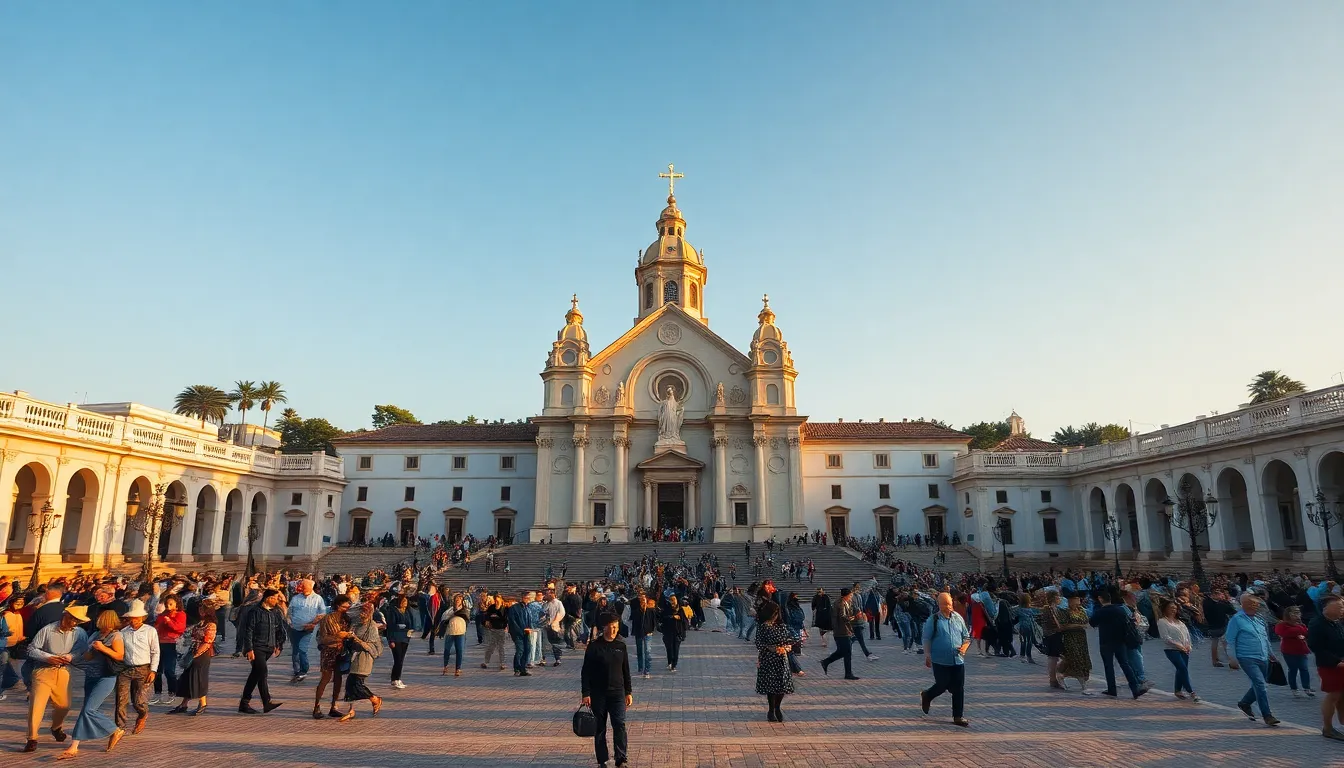
The first time I brought a group into central Portugal, one of the pastors traveling with me said something I have repeated ever since. We had just left Fatima, and we were standing inside the monastery at Batalha less than half an hour later, and he turned to me and said, “I did not know all of this was in one place.” That is the thing about this region. People come for Fatima. They leave understanding that Fatima sits inside a much larger story.
I want to give you that wider picture before you start planning, because the way most itineraries treat central Portugal does it a disservice. They drop a group at the Sanctuary for an afternoon and move on to Lisbon. That works if Fatima is all you want. But Fatima, Batalha, Alcobaca, and Tomar form one connected heritage region, four sites within roughly an hour of each other, each one a different chapter of how faith shaped this country. Understood together, they make one of the most concentrated heritage days you can plan anywhere in Europe.
Why These Four Sites Belong Together
Look at a map of central Portugal and you will see Fatima, Batalha, Alcobaca, and Tomar sitting in a loose cluster across the districts of Santarem and Leiria. None of the drives between them runs much over forty-five minutes. That geography is not an accident of tourism. These places grew up together, shaped by the same medieval kingdom, the same religious orders, the same centuries of building and devotion.
Three of the four are UNESCO World Heritage Sites. Batalha, Alcobaca, and the Convent of Christ in Tomar all carry that designation, and they carry it for different reasons. One commemorates a battle that secured Portuguese independence. One holds the tombs at the heart of the country’s most famous love story. One was the headquarters of the Knights Templar. Fatima, the fourth, is younger by centuries, but it is the reason most groups come to the region at all.
When you treat them as a single region rather than four separate stops, the trip changes character. Your group stops collecting sites and starts reading a continuous story, from the Templars in the twelfth century through the monastery builders, into a battlefield victory, and forward to three shepherd children in a field in 1917. For a faith community, that arc is the point.
Fatima: The Spiritual Anchor
Fatima is where almost every central Portugal itinerary begins, and for good reason. In 1917, three shepherd children reported a series of visions of the Virgin Mary in a field outside the village. What grew from those reports is now one of the most visited Catholic pilgrimage sites in the world, drawing millions of visitors each year.
The Sanctuary of Our Lady of Fatima is built around a vast esplanade, large enough to hold the enormous crowds that gather on the anniversary dates. The most significant gatherings happen on the 13th of May and the 13th of October, the anniversaries of the first and last apparitions. If your group wants to be present for one of those dates, plan early and understand that you will be sharing the space with hundreds of thousands of people. For many pilgrims, that scale is exactly what they came for. For groups that prefer reflection over crowds, the quieter months still deliver the full weight of the place.
I always give groups time at Fatima rather than rushing them through. The Chapel of the Apparitions, the basilica, the space itself, these reward stillness. Build in more than you think you need.
For the fuller picture of how Fatima fits into Portugal’s faith story, our Portugal heritage travel guide is the place to start.
Batalha: A Battle Turned Into Stone
A short drive from Fatima brings you to the Monastery of Batalha, and the shift in register is striking. Batalha was built to honor a vow. In 1385, a heavily outnumbered Portuguese force defeated the Castilians at the Battle of Aljubarrota, securing Portuguese independence. King John I had promised to build a monastery if he won. He won, and the result is one of the great works of Gothic architecture in Europe.
The full name, the Monastery of Saint Mary of the Victory, tells you the whole story. What I want groups to notice is the unfinished part, the Capelas Imperfeitas, the Imperfect Chapels, left open to the sky for centuries because the work simply stopped. There is something honest about a building that was never completed, and it tends to move people more than the finished sections do.
Batalha is a place where Portuguese national identity and Christian faith are fused into the same walls. For a faith group, it is a reminder that devotion and history are rarely separate things.
Alcobaca: Monks, Tombs, and a Love Story
Twenty minutes from Batalha sits the Monastery of Alcobaca, the oldest of the three and in many ways the foundation of the others. Founded by Cistercian monks in the twelfth century, Alcobaca was one of the most powerful religious communities in early Portugal. The monks here cleared land, taught agriculture, and shaped the development of the surrounding region for generations.
The church is vast and severe in the Cistercian way, stripped of decoration so that nothing distracts from the space itself. But the reason most visitors remember Alcobaca is the pair of tombs inside it. They hold King Pedro and Ines de Castro, whose story is Portugal’s great medieval tragedy. Pedro loved Ines, who was murdered for political reasons. When he became king, he had her body exhumed and, by tradition, crowned. The two tombs were placed foot to foot so that, the legend says, when the dead rise, the first thing each will see is the other.
I tell that story at the tombs every time, because it explains why Alcobaca holds people the way it does. It is a monastery, but it is also one of the most human places in the region.
For more on Portugal’s monastic and Templar heritage, our guide to Trancoso and the walled towns traces how these orders shaped the country’s interior as well.
Tomar: The Templar City
The fourth site, Tomar, completes the region and deepens it. The Convent of Christ was the headquarters of the Knights Templar in Portugal, and after the order was suppressed across Europe, it became the seat of the Order of Christ, which carried much of the Templar inheritance forward. The round church at its heart, the Charola, was modeled on the church of the Holy Sepulchre in Jerusalem, and standing inside it connects this quiet Portuguese town directly to the wider story of the Crusades and medieval Christendom.
Tomar holds something else that matters deeply, especially for Jewish groups. Tucked into the medieval streets of the old town is the synagogue of Tomar, the only intact pre-expulsion synagogue still standing in Portugal. It predates the forced conversions of 1497. It predates Columbus. When you walk into it, you are standing in a Jewish space that survived everything that came after. That makes Tomar one of the rare places where Christian and Jewish heritage sit a few streets apart, both alive, both worth a group’s full attention.
For groups exploring that Jewish layer, our Portugal heritage travel guide covers the crypto-Jewish story across the country, from Tomar to Belmonte.
Planning the Region as One Trip
Here is the practical heart of it. Because these four sites sit so close together, you can build a central Portugal heritage experience around a base in or near Fatima and reach all of them on comfortable day drives. No long transfers. No wasted hours. A group can stand at the Sanctuary in the morning, walk through Batalha before lunch, and reflect at the tombs in Alcobaca by mid-afternoon, with Tomar held for the following day.
I usually recommend at least two days for the region, three if you want time to breathe. One day rushing all four sites is possible, but it turns a pilgrimage into a checklist, and that is not why people come.
The driving and logistics are straightforward, but the heritage layer is not something you read off a plaque. The Templar history at Tomar, the Aljubarrota story at Batalha, the Ines de Castro tragedy at Alcobaca, these come alive when someone tells them well. That is the part worth investing in. You can see how a full Portugal itinerary takes shape on our Portugal destination page, and how the group structure works on our group heritage tours page.
For groups of 15 or more, the group leader travels free. That is how Heritage Tours honors the pastor, rabbi, or educator who gathers the community and gives the journey its meaning.
FAQ: The Fatima and Central Portugal Heritage Region
What sites make up the Fatima and central Portugal heritage region?
The core of the region is four sites within about an hour of each other: the Sanctuary of Our Lady of Fatima, the Monastery of Batalha, the Monastery of Alcobaca, and the Convent of Christ in Tomar. Three of the four (Batalha, Alcobaca, and Tomar) are UNESCO World Heritage Sites. Tomar also holds the only intact pre-expulsion synagogue in Portugal, which adds a significant Jewish heritage layer to the region.
How many days do you need for central Portugal?
I recommend at least two days, and three if your group wants time for reflection rather than a rushed pace. Because the sites sit so close together, a base near Fatima lets you reach all four on short, comfortable day drives without long transfers.
Is the region good for both Christian and Jewish groups?
Yes. Fatima, Batalha, and Alcobaca speak directly to Christian heritage, while Tomar holds both the Templar Convent of Christ and the pre-expulsion synagogue. That combination makes the region one of the few places where Christian and Jewish heritage sit within a short walk of each other, both worth a group’s full attention.
When is the best time to visit Fatima?
Fatima is meaningful year-round. The largest pilgrim gatherings happen on the 13th of May and the 13th of October, the anniversaries of the apparitions. Groups wanting to be present for those dates should plan early and expect very large crowds. Groups that prefer a quieter, more reflective visit do well in the spring and fall outside those anniversary dates.
Can Heritage Tours arrange a central Portugal itinerary for my group?
Yes. We build custom itineraries for faith groups across central Portugal, working with local operators who know the heritage stories behind each site. For groups of 15 or more, the group leader travels free. Visit our Portugal destination page to start, then reach out when you are ready to talk specifics.
If you are thinking about bringing your community to Fatima and want to understand how the wider region fits together, I would welcome that conversation. The region rewards groups that see it whole, and helping you build that itinerary is one of my favorite parts of this work.
Contact us whenever you are ready to begin.