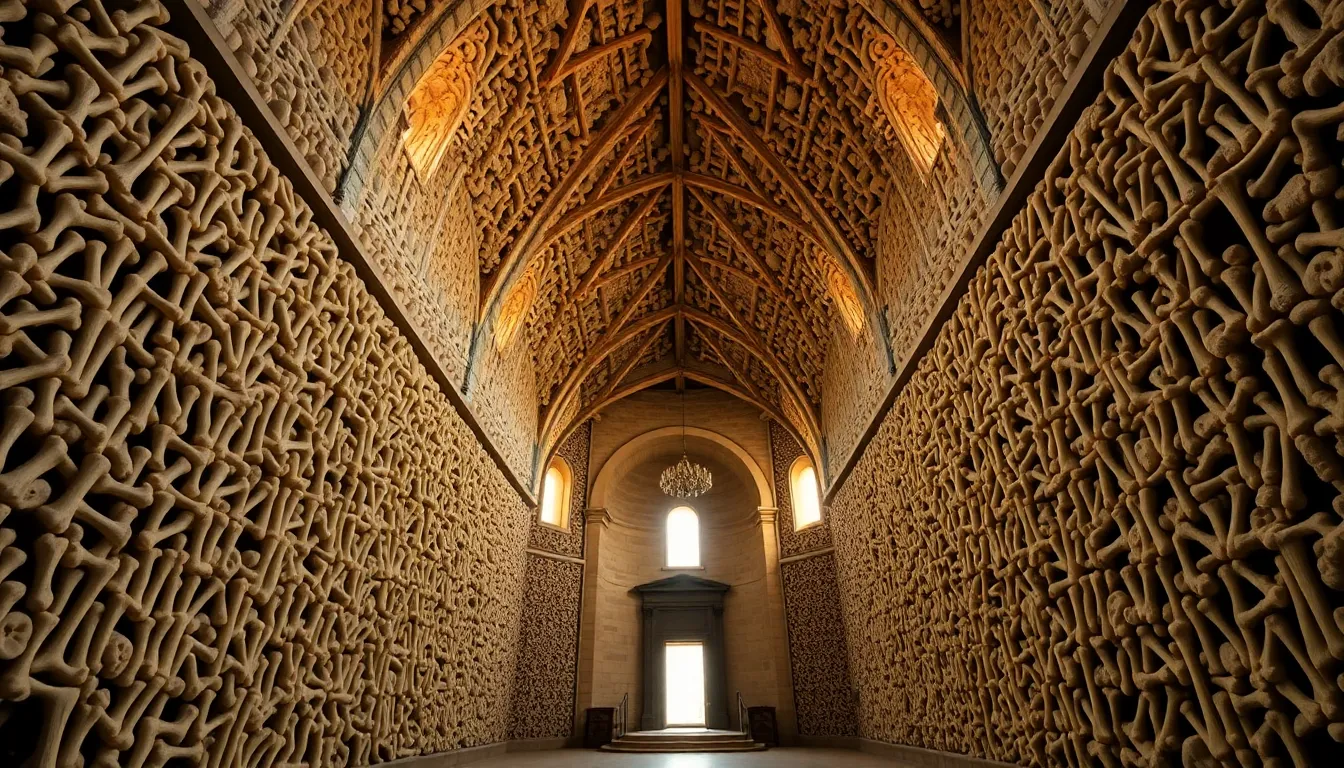
The first time I brought a group into the Capela dos Ossos, I watched a whole busload of people go quiet at the same moment. They had been chatting in the courtyard outside, comparing photos, asking about lunch. Then they stepped through the low doorway, read the inscription above it, and stopped talking. That silence is the reason I keep this site on Evora itineraries, and it is why I want to prepare you for it before your group walks in.
The Chapel of Bones is not a horror attraction, though it sometimes gets described that way. It is a 16th-century Franciscan meditation on death, built by monks who wanted the living to think seriously about how they spend their time. For a faith group, handled with the right framing, it becomes one of the most honest conversations a trip can hold.
What the Capela dos Ossos Actually Is
The chapel sits inside the Church of St. Francis, just off Evora’s main square. Franciscan friars built it in the early 1600s. Their motivation was practical and spiritual at once. Evora’s monastic cemeteries were overflowing, taking up land the city needed, and the friars were also living in an age that thought hard about mortality. So they gathered the bones of an estimated 5,000 people from those cemeteries and arranged them, deliberately and carefully, into the walls and pillars of a single chapel.
The result is a small space, maybe the size of a modest sanctuary, lined floor to ceiling with human bones and skulls set in patterns. Whole skeletons hang in two places. The ceiling is painted with images of death and resurrection. It is meticulous, not gruesome. Every bone was placed with intention.
Above the entrance is the line the whole place turns on, in Portuguese: “Nos ossos que aqui estamos pelos vossos esperamos.” We bones that are here, we await yours. That is the memento mori at the heart of the chapel. Remember that you will die. The friars did not put it there to frighten anyone. They put it there to focus the living.
The Memento Mori Message and Why It Belongs on a Faith Itinerary
I will be honest about why I value this site for groups. Most heritage travel is about glory and endurance, cathedrals that soared, kingdoms that lasted, faith that survived. The Capela dos Ossos asks a different question. It asks what any of that means in the face of your own ending.
That is not a morbid question. It is one of the oldest questions both Jewish and Christian traditions take seriously. “Teach us to number our days, that we may gain a heart of wisdom,” the Psalmist writes. Ecclesiastes circles the same ground. The Franciscan friars who built this chapel were standing in that exact tradition, using bones instead of words to say it.
For a pastor, the chapel opens onto resurrection and the brevity of life. For a rabbi, it touches the wisdom literature and the honesty about death that runs through Jewish thought. For an educator, it is a window into how a whole culture once held mortality in plain view rather than hiding it away. I have seen all three kinds of leaders find something real to say standing in that doorway.
The key, and I cannot stress this enough, is to frame it before you enter. A group that walks in cold can be unsettled. A group that has heard their leader name what they are about to see, and why it matters, walks in ready to reflect. The bones do the rest.
How Groups Visit the Chapel of Bones
The Capela dos Ossos is small, and that shapes how you move a group through it. You cannot fit forty people inside comfortably at once. I usually split a large group, sending half into the adjoining Church of St. Francis and the small sacred art museum while the other half spends time in the chapel, then swapping. That way nobody is rushed and nobody is packed shoulder to shoulder among the bones.
I build in real time here, not a five-minute photo stop. Fifteen to twenty minutes inside lets people read the inscriptions, look closely at the workmanship, and sit with it. I often gather the group back in the courtyard afterward for a short reflection or a passage read aloud. That outdoor moment, with the sun on everyone again, is where the conversation the chapel started actually happens.
A good local guide matters here. The history of the friars, the reasons behind the construction, the small details in the patterns, these are easy to miss without someone who knows them. The chapel rewards understanding. Without it, a group can read the place as a curiosity. With it, they read it as a sermon in bone.
Evora itself is compact and walkable, so the chapel pairs naturally with the rest of the old town. Many groups visit the Roman Temple of Evora the same morning, since the two sites sit minutes apart and together tell the long story of the city, from imperial Rome to Franciscan Portugal.
Practical Access for Your Group
The chapel is open most days, with a modest entrance fee that includes the church and museum. Photography is allowed inside, though I gently ask groups to be thoughtful about it. This is a place built from human remains, and a moment of restraint with the camera honors that.
The doorway and parts of the floor are uneven, typical of a building four centuries old, so for groups with members who have mobility difficulties, plan a slower pace and let people take their time at the threshold. There is no long climb, which makes it more accessible than many heritage sites in Portugal.
Evora is roughly an hour and a half from Lisbon by road, which makes it a comfortable day trip or, better, an overnight stop. I prefer the overnight. Evora at dusk, after the day-trippers leave, is a different and quieter town, and the chapel feels even more reflective in that calm. The city is a UNESCO World Heritage Site, so there is plenty to fill a full day around it.
Evora fits cleanly into a broader Portugal heritage route. Groups often combine it with the Alentejo heritage towns and the better-known pilgrimage and discovery sites. You can see how it connects to the wider picture on our Portugal destination page and in our overview of Portugal’s hidden heritage sites.
FAQ: The Capela dos Ossos in Evora
What is the Capela dos Ossos in Evora?
The Capela dos Ossos, or Chapel of Bones, is a small 16th-century chapel inside Evora’s Church of St. Francis. Franciscan friars built it from the bones of around 5,000 people, arranging them into the walls and pillars as a meditation on mortality. An inscription above the door reads, in Portuguese, “We bones that are here, we await yours.”
Why did the monks build a chapel out of bones?
The friars had two reasons. Evora’s cemeteries were overcrowded and the city needed the land, so the bones had to be moved. At the same time, the friars wanted to give the living a powerful reminder of death, a memento mori, to encourage them to live with purpose and faith. The chapel is a deliberate spiritual statement, not a casual ossuary.
Is the Chapel of Bones appropriate for a faith group to visit?
Yes, when it is framed thoughtfully. The chapel speaks directly to themes both Jewish and Christian traditions take seriously: the brevity of life, the wisdom that comes from facing mortality, and for Christian groups, the hope of resurrection. I always recommend that a group leader prepares people before they enter and gathers them afterward for reflection. Handled this way, it is one of the most meaningful stops on an Evora itinerary.
How long should a group spend at the Capela dos Ossos?
Plan for fifteen to twenty minutes inside the chapel, plus time for the adjoining church and sacred art museum. Because the chapel is small, large groups are best split in two and rotated through so nobody feels rushed or crowded. Building in a short reflection in the courtyard afterward is well worth the extra time.
How do groups get to Evora and the Chapel of Bones?
Evora is about ninety minutes by road from Lisbon, which makes it a comfortable day trip or, even better, an overnight stop on a Portugal heritage tour. The chapel sits in the walkable old town near the main square. Heritage Tours builds Evora into custom group itineraries and arranges the local guides who bring the site’s history to life.
If you are a pastor, rabbi, or educator planning a Portugal journey and you want a stop that makes your group stop and think, the Capela dos Ossos belongs on your route. For groups of 15 or more, the group leader travels free. You can explore our group heritage tours or contact us to start shaping an itinerary that fits your community.