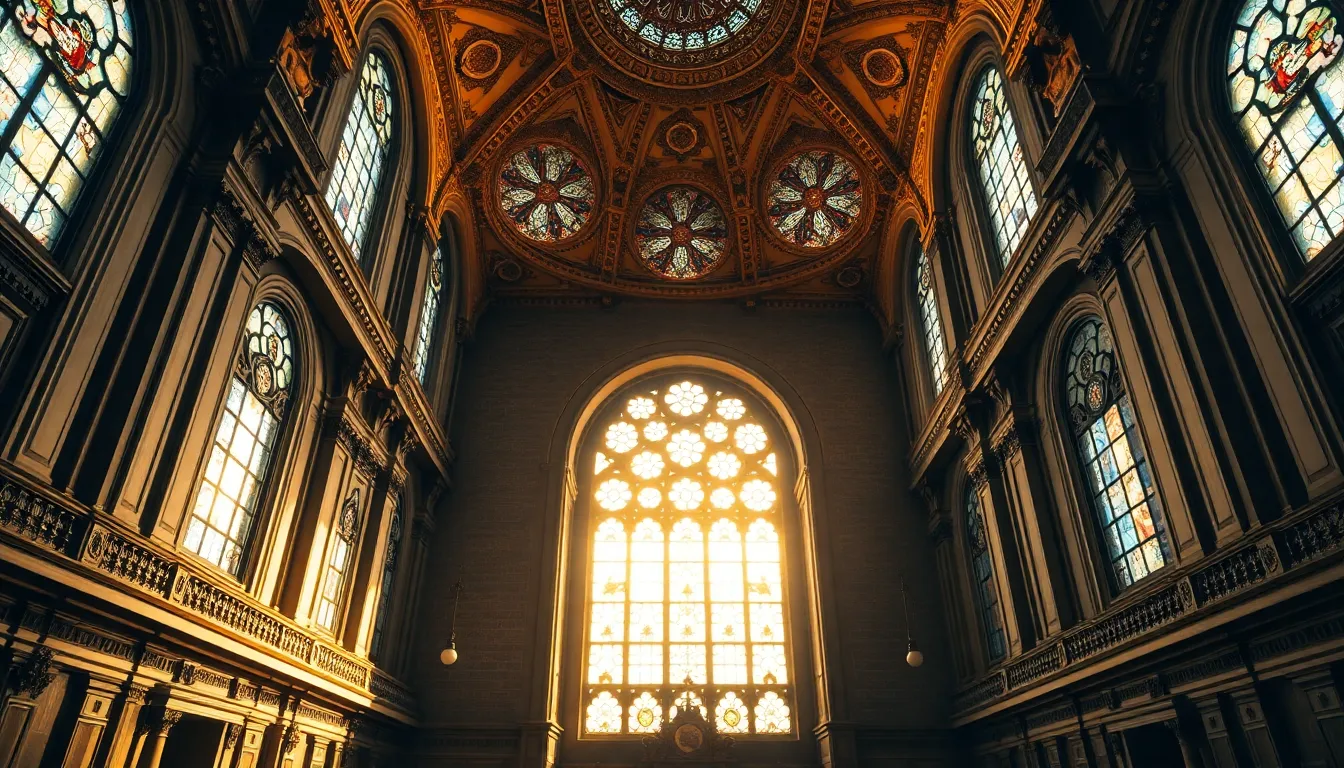
When I take a group through Kazimierz, Krakow’s old Jewish quarter, the synagogues come in a particular order of feeling. The Old Synagogue is heavy with age. The Remuh is intimate and still alive with prayer. And then we step into the Tempel, and people gasp. After the dim stone of the older shuls, the Tempel hits you with color and light: gilded ceilings, stained glass, ornamentation everywhere you look. It feels less like the medieval synagogues nearby and more like a grand 19th-century European concert hall.
That contrast is not an accident. The Tempel was built to look this way on purpose, and the story of why tells you a lot about a chapter of Jewish history that often gets overlooked on heritage trips. Let me walk you through it.
If your group is exploring the synagogues of Poland and Kazimierz in particular, the Tempel deserves more than a quick glance.
A Synagogue Built for a New Kind of Community
The Tempel Synagogue was built in the 1860s, with later expansions, by Krakow’s progressive Jewish community. To understand it, you have to understand what was happening in Jewish life across Central Europe at that time. The 19th century brought the movement often called Reform or progressive Judaism, which sought to bring Jewish worship into closer dialogue with the surrounding modern world while keeping it rooted in tradition.
The Jews who built the Tempel were part of that current. They were largely acculturated, often well-off, and they wanted a synagogue that reflected their place in modern Krakow society. The very name tells you something. They called it a Tempel, using the German-derived word that progressive congregations across Europe favored, rather than the traditional shul or beit knesset. The building’s grand architecture, its choir loft, and its organ were all part of a worship style that looked outward as much as inward.
How It Differed From the Older Shuls
Walk from the Old Synagogue to the Tempel and you are walking across centuries of Jewish religious development in a few hundred yards. The older synagogues of Kazimierz served traditional communities whose worship had continued largely unbroken for generations. The Tempel served a community that was consciously modern, that wanted sermons in the vernacular, decorum modeled on the surrounding culture, and a building that announced Jewish presence in the civic life of the city with confidence rather than caution. Both belong to the same Jewish story. They just sit at different points on it.
The Interior: One of the Most Ornate in Poland
The Tempel’s interior is the reason it stops people in their tracks. The walls and ceilings are richly decorated with patterned ornamentation in deep colors and gold. The stained glass windows let in colored light that shifts through the day. There is a women’s gallery, a grand bimah area, and the whole space carries a sense of dignity and grandeur that the architects clearly intended.
Much of what you see has been carefully restored. The synagogue was damaged during the Second World War, when the Nazis used it as a stable and a store, stripping and desecrating the building as they did across occupied Poland. After the war, and especially in the decades of restoration work that followed, the interior was brought back. The decoration, the stained glass, and the fittings you see today are the result of patient conservation, much of it supported by foundations dedicated to preserving Jewish heritage in Poland.
A Survivor
It is worth pausing on the fact that the Tempel survived at all. Most of the synagogues of Poland were destroyed, burned, or demolished, either during the war or in the decades after. Kazimierz is unusual in that several of its historic synagogues still stand, and the Tempel is one of the grandest survivors. When a group stands inside it, they are standing in a building that the people who built it would still recognize, which is rarer than most visitors assume.
How Heritage Groups Visit the Tempel
The Tempel is part of the cluster of historic synagogues in Kazimierz, and it works naturally into a walking itinerary of the district. I usually build a Kazimierz morning or afternoon that moves through several of the synagogues in sequence, and the Tempel is often the high point of the visual experience, the place where the group lingers longest with their heads tilted back at the ceiling.
The synagogue is open to visitors, and it sometimes hosts concerts and cultural events, particularly around Krakow’s Jewish Culture Festival, when its acoustics and grandeur come into their own. For a group, it is worth checking whether anything is scheduled, since attending a concert in the Tempel is an experience of a different order from a daytime visit.
Practical Notes
A few things I tell group leaders. As with any synagogue, men should have a head covering inside, kippot are generally available at the entrance if someone needs one. Modest dress is appropriate. The Tempel is sometimes still used for services on certain occasions, so on a given day it may be functioning as a house of prayer rather than purely a visitor site, and we adjust accordingly and follow the lead of the community.
The Tempel pairs especially well in a group’s mind with the Remuh nearby. Standing in both lets a group feel the full range of Krakow Jewish life: the centuries-old traditional community at the Remuh, still praying, and the confident, outward-facing progressive community at the Tempel. Together they tell a fuller story than either does alone.
Why It Belongs on a Group Itinerary
Heritage groups in Poland spend a great deal of their time, rightly, with loss and memory. The Tempel offers something a little different. Yes, its wartime history is part of it, and yes, the community that built it was largely destroyed. But the building itself is an act of confidence and beauty. It was made by Jews who saw a future for themselves in Krakow and built something splendid to express it.
For a group, that matters. It reminds them that Jewish life in Poland was not only the small-town shtetl or the crowded city quarter. It was also this: cosmopolitan, ambitious, and proud, building a synagogue that could hold its own against any grand building in the city. Restored and standing today, the Tempel lets a group glimpse that confidence, and feel the loss of it more sharply for having seen what it produced.
Heritage Tours builds Kazimierz and its synagogues into custom Poland itineraries, with the route, timing, and a knowledgeable local guide arranged for you. As on every journey we plan, group leaders travel free with groups of 15 or more, so the person organizing the trip for their community is not paying their own way to lead it.
FAQ: The Tempel Synagogue of Krakow
What is the Tempel Synagogue in Krakow?
The Tempel Synagogue is an ornate 19th-century synagogue in Krakow’s Kazimierz district, built in the 1860s by the city’s progressive Jewish community. It is known for its richly decorated interior, stained glass, and grand scale, which set it apart from the older, plainer synagogues nearby.
Why is it called the Tempel?
The community that built it was part of the progressive or Reform movement that spread through Central European Judaism in the 19th century. Progressive congregations across Europe favored the German-derived word Tempel for their houses of worship, rather than the traditional shul, and that name stuck to the Krakow building.
Is the Tempel Synagogue restored?
Yes. The Nazis damaged and desecrated the building during the Second World War, using it as a stable and store. Its decoration, stained glass, and fittings were restored over later decades, much of it with support from foundations dedicated to preserving Jewish heritage in Poland.
Can groups visit the Tempel Synagogue?
Yes. It is open to visitors and forms part of any walking tour of Kazimierz’s synagogues. It also hosts concerts and cultural events, especially around Krakow’s Jewish Culture Festival. Men should cover their heads inside and modest dress is appropriate.
How does the Tempel compare to the other Krakow synagogues?
The Tempel served a modern, progressive community and is grand and ornate, while the Old Synagogue and Remuh served traditional communities and are older and plainer. Visiting both the Tempel and the still-active Remuh lets a group experience the full range of Krakow’s Jewish religious life.
If your group wants to walk the synagogues of Kazimierz with a guide who can tell the whole story, reach out to us and we will build the day with you. You can also see how we handle group travel, or read about Poland’s hidden heritage sites and the spiritual sites worth seeing.