I tell group leaders that if you want to understand where Poland began, you go to Poznan. Not Warsaw, not Krakow, but a quiet island in a river in the west of the country, where a wooden church once stood and a duke was baptized more than a thousand years ago. That moment, in the year 966, is when Poland entered the Christian world, and it happened here. Standing on that island with a group, you are standing at the root of the whole story the rest of the trip tells.
Over more than forty years of planning heritage journeys, I have come to value Poznan as the place that gives a Poland trip its foundation. It is not as famous as Krakow and it does not carry the weight of the camps, but for groups who want to understand the birth of the Polish church and the layered history of western Poland, it is essential. Let me walk you through it.
Where Poland Was Born
Poznan is a city of around 540,000 in western Poland, on the Warta River, roughly halfway between Berlin and Warsaw. Long before Warsaw or Krakow rose to prominence, Poznan was a seat of the first Polish rulers, the Piast dynasty.
The defining moment came in 966, when Mieszko I, the first historical ruler of Poland, accepted Christian baptism. That single decision tied the emerging Polish state to the church and to western Europe, and it is widely regarded as the founding event of the Polish nation. The place where this is remembered is Ostrow Tumski, Cathedral Island, the oldest part of the city. For Christian groups, this is the spiritual headwater of everything else they will see in Poland.
Ostrow Tumski: Cathedral Island
Poznan Cathedral
The Cathedral of St. Peter and St. Paul stands on the island where the first church was built. The present building is gothic, rebuilt after heavy damage in 1945, but its foundations reach back to the very beginnings of Polish Christianity. In the crypt beneath, archaeologists have uncovered remains of the earliest structures, and the first Polish rulers, Mieszko I and his son Boleslaw the Brave, are traditionally associated with burial here. The Golden Chapel inside the cathedral holds their monument, a nineteenth-century shrine to the founders of the nation.
For a group, this is a quiet but profound stop. There is no spectacle here in the way of a great pilgrimage shrine. What there is, is origin. You are standing where a nation chose its faith.
The Genius Loci and the Baptism Exhibition
Near the cathedral, the modern Porta Posnania interpretation center and the Genius Loci archaeological reserve tell the story of the island and the early Polish state through the actual remains in the ground, including parts of the original tenth-century fortifications. These sites help your group connect the abstract idea of “where Poland began” to physical evidence they can see.
The Old Market Square
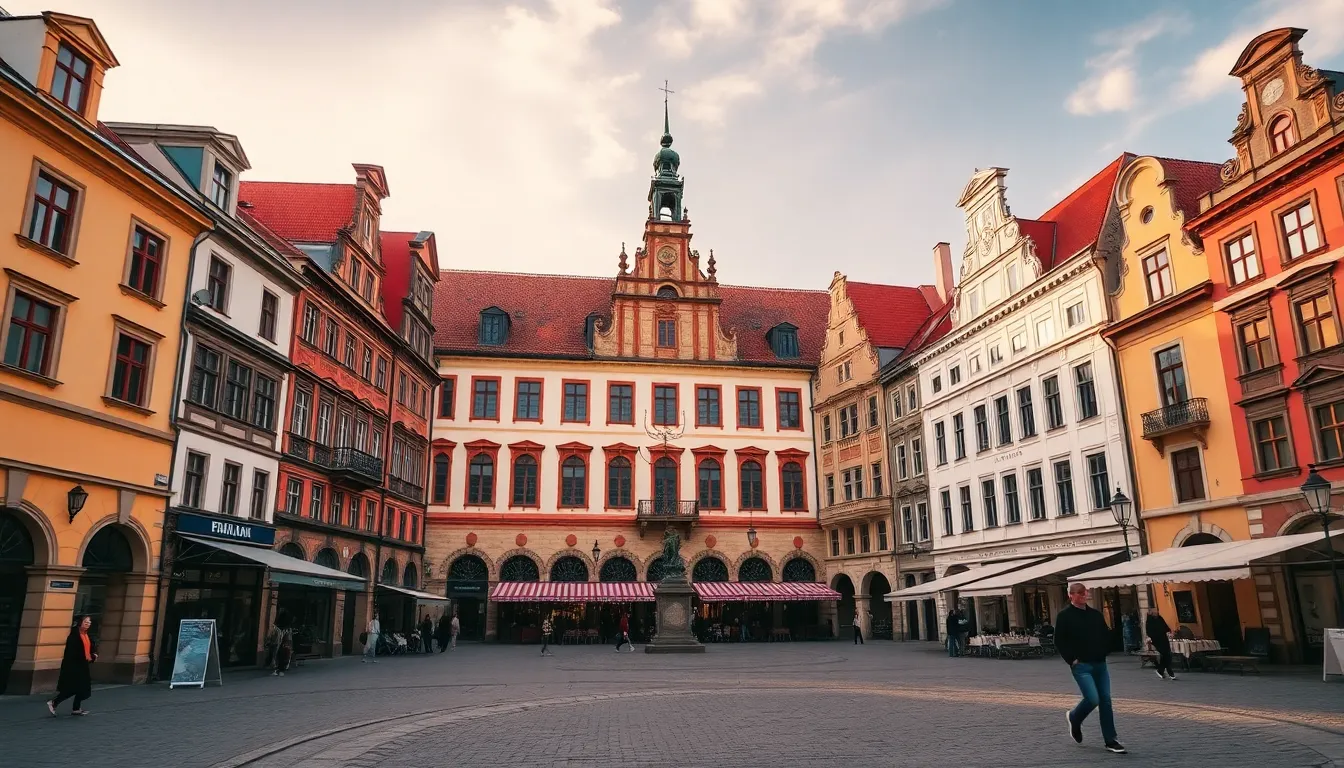
A short distance from the island lies Poznan’s old market square, the Stary Rynek, one of the most beautiful in Poland. At its center stands the Renaissance town hall, painted in warm colors, with a famous mechanical clock. Every day at noon, two metal goats emerge above the clock face and butt their horns together twelve times, a tradition that draws a crowd and gives your group a moment of lightness.
The square is ringed with colorful merchant houses and the small, narrow “fishmongers’ houses” in their bright facades. This is the heart of historic Poznan, a city that grew wealthy on trade and craft. It is a good place for your group to walk, eat, and absorb the everyday texture of a western Polish city.
The Jewish Heritage of Poznan
Poznan had a long and important Jewish history that most visitors never hear about, and I make sure groups do. Jews lived in the city from the medieval period, and Poznan, known in Jewish sources as Posen, was a major center of rabbinic scholarship for centuries. Under Prussian rule in the nineteenth century, it was also a birthplace of significant modern Jewish movements and produced rabbis and scholars who shaped Jewish life across the German-speaking world.
The old synagogue still stands, though its story is painful: during the German occupation it was converted into a swimming pool, a deliberate act of desecration, and that use continued for decades after the war. Efforts have been underway to restore the building as a Jewish cultural site. There is also a memorial marking the former Jewish quarter. For Jewish groups, Poznan represents the western, more assimilated, German-influenced strand of Polish Jewry, a different world from the shtetls of the east, and a reminder of how many distinct Jewish civilizations existed within one country.
Western Poland’s Layered History
Poznan changed hands repeatedly over the centuries. It spent more than a century under Prussian and then German rule, which left its mark on the city’s architecture, its institutions, and its character. You will see grand German-era buildings, including the Imperial Castle built for Kaiser Wilhelm II, alongside the deeply Polish heart of Cathedral Island.
This layered identity is part of what makes Poznan instructive for a group. It shows that Poland’s history is not a single straight line but a story of borders that moved, rulers who changed, and communities, Polish, German, and Jewish, that lived together and apart in the same streets. Understanding that complexity helps your group read the rest of the country with more depth.
How Group Leaders Should Plan Poznan
How Much Time
Poznan rewards a focused day: Cathedral Island in the morning, the old market square and the Jewish heritage sites in the afternoon. Groups with more time can add the interpretation centers and the German-era landmarks for a fuller picture of the city’s layers.
Where It Fits
Poznan sits in western Poland, on the main rail line between Berlin and Warsaw, which makes it a natural stop for groups arriving from or traveling to Germany. It pairs well with Gdansk to the north for a western-Poland route, and it offers a meaningful contrast to the Galicia trail in the south. For groups building a full itinerary, our Poland heritage travel guide shows how Poznan connects to the larger arc of the country.
A Foundation, Not a Footnote
I encourage group leaders to think of Poznan not as a side trip but as a foundation. If your itinerary allows it near the beginning, visiting the birthplace of the Polish church first gives your group a frame for everything that follows: the cathedrals, the pilgrimage sites, and the long entanglement of faith and nationhood that runs through all of Poland.
The Free Leader Program
If you are organizing a heritage group of 15 or more, your travel is covered. You fly free, stay free, and tour free. For the person doing the work of planning and leading, that support matters. You can see how it works across our group heritage tours and read more about the country on our Poland destination page.
FAQ: Visiting Poznan
Why is Poznan called the birthplace of the Polish church?
In the year 966, Mieszko I, the first historical ruler of Poland, accepted Christian baptism, an event widely regarded as the founding of the Polish nation. This is remembered on Ostrow Tumski, Cathedral Island, in Poznan, where the first church was built. For this reason Poznan is considered the cradle of both the Polish state and the Polish church.
What is the main heritage site in Poznan?
Ostrow Tumski, or Cathedral Island, is the central heritage site. It holds Poznan Cathedral, built on the foundations of the earliest Polish churches, with the Golden Chapel monument to the first rulers and a crypt containing remains of the original tenth-century structures. The nearby Porta Posnania and Genius Loci centers tell the story of the early Polish state through archaeological remains.
Did Poznan have a Jewish community?
Yes. Poznan, known in Jewish sources as Posen, was a major center of rabbinic scholarship for centuries and, under Prussian rule, a birthplace of significant modern Jewish movements. The old synagogue still stands, though the Germans converted it into a swimming pool during the occupation. Restoration efforts are underway, and a memorial marks the former Jewish quarter.
How much time should a group spend in Poznan?
A focused day works well: Cathedral Island in the morning, the old market square and Jewish heritage sites in the afternoon. Groups with more time can add the interpretation centers and the German-era landmarks for a fuller sense of the city’s layered history.
Where does Poznan fit in a Poland itinerary?
Poznan sits in western Poland on the main rail line between Berlin and Warsaw, making it a natural stop for groups traveling from or to Germany. It pairs well with Gdansk for a western route and offers a strong contrast to the southern Galicia region. Visiting it early gives a group the historical foundation for everything else they will see.
If you would like to include Poznan in your community’s Poland journey, I would be glad to help you plan it. It is the place where the whole story begins, and where it fits in your itinerary depends on what your group is seeking. Reach us any time through our contact page.