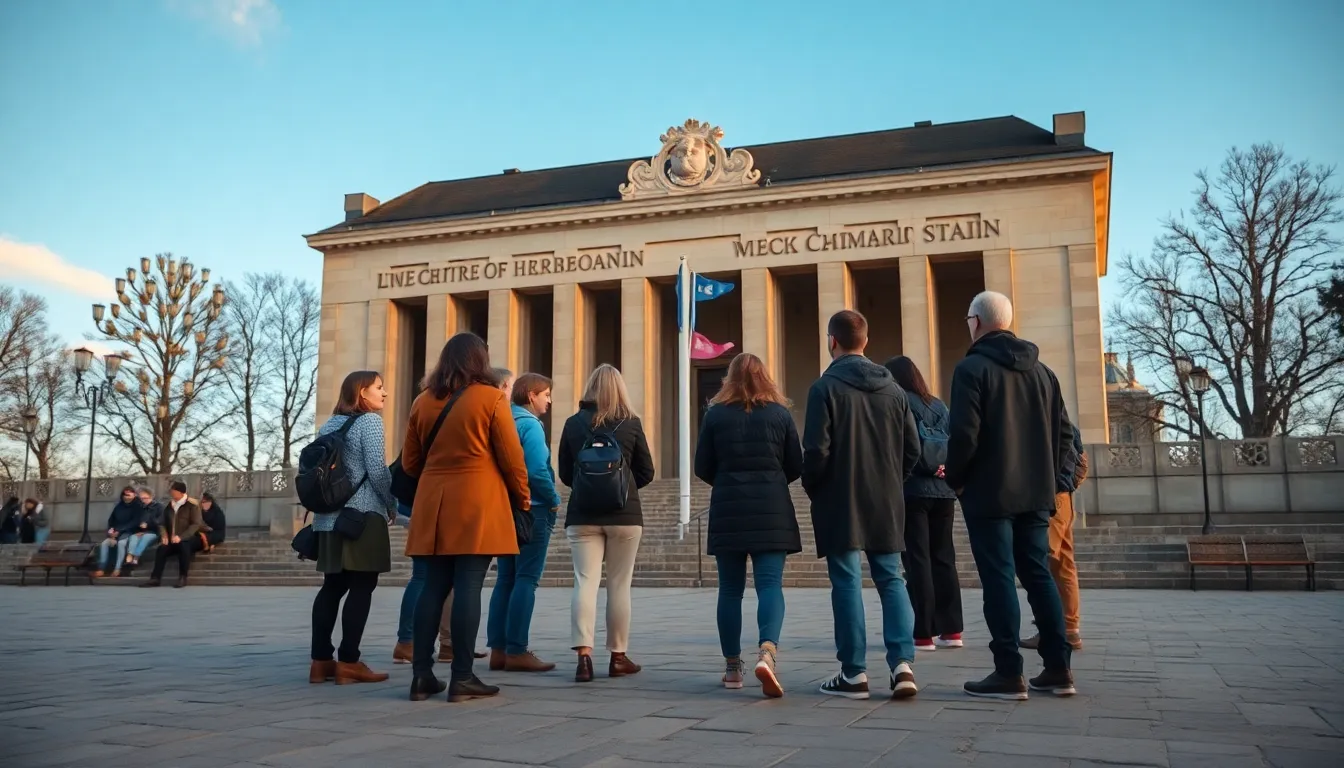
One of the first questions a pastor or rabbi asks me is some version of “how many people do we need?” Often there is anxiety behind it. They are picturing the worst case, twelve people rattling around a forty-seat coach, or a number so large it feels unmanageable. The truth is that group size is one of the most important decisions you will make, and it pulls in two directions at once. The economics pull you toward more people. The experience, at the memorial sites especially, pulls you toward fewer. Getting the balance right is most of what makes a Poland trip work.
This article is about that balance: the real economics, the free-leader threshold, and what different group sizes actually feel like on the ground. If you are mapping out the wider logistics, our Poland heritage travel tips cover the broader picture. Here I want to focus on the number.
The Two Forces Pulling on Group Size
Every group-size decision is a tension between two things, and naming them makes the choice clearer.
The first force is economics. Many of the costs of a Poland trip are fixed or shared, the coach, the guide, certain site arrangements. Spread those costs across more people and the per-person price falls. A larger group also makes the free-leader threshold easier to reach, which I will come to in a moment. Economically, bigger is cheaper per head.
The second force is experience. Poland is not a sightseeing trip. It is a journey through memorial sites where the quality of the experience depends on intimacy, on the ability to stand quietly in a barrack or at a field of stones without being lost in a crowd of your own making. Past a certain size, a group starts to lose that. People cannot all hear the guide. The pace slows. The contemplative moments get harder to protect.
The right group size is the one that captures enough of the economics without sacrificing the experience. For most congregations, that lands in a sweet spot, and I will tell you where.
The Free-Leader Threshold
Let me address the threshold directly, because it shapes a lot of group leaders’ planning.
With Heritage Tours, the group leader travels free with fifteen or more participants. That is a real number with real consequences for your planning conversation. For a pastor or rabbi leading a congregation, reaching fifteen means your own cost is covered, which changes the math you present to your board or your community. It is often the difference between a trip that feels personally affordable to lead and one that does not.
Fifteen is also, not by accident, close to where the economics of the trip start working comfortably. Below fifteen, the fixed costs spread across fewer people and the per-person price climbs. At fifteen and above, the numbers settle into a more comfortable range, and the leader travels free on top of that. So the threshold is not arbitrary. It reflects roughly where a group becomes economically sound.
This is why, when a leader tells me they are worried about filling the group, my advice is almost always the same: give yourself enough lead time to build to fifteen. A trip that struggles at ten often fills comfortably at twenty when the leader starts early and markets it properly to the congregation.
What Different Group Sizes Feel Like
Numbers on a spreadsheet do not tell you what a group feels like on the ground. Here is the honest version.
Small Groups (Under 15)
A small group is intimate and flexible. You can move quickly, adapt the itinerary on the fly, and protect the quiet moments easily. The downside is purely economic. With fewer people sharing the fixed costs, the per-person price is higher, and the leader does not reach the free threshold. Small groups work beautifully for the experience, but they ask each participant to pay more. For some tight-knit communities, that trade is worth it. For most, getting to fifteen is the better goal.
The Sweet Spot (Roughly 15 to 25)
This is where I steer most congregational groups, and it is no coincidence that it sits right at and above the free-leader threshold. A group of fifteen to twenty-five is large enough that the economics work and the leader travels free, and small enough that the experience stays intimate. Everyone can hear the guide. The coach is comfortably full without being packed. The contemplative moments at Birkenau and Treblinka stay protected. You can still adapt the pace to the group. For the great majority of congregations, this range is the answer.
Larger Groups (25 to 40 or More)
A larger group brings the best economics and the lowest per-person cost, and for a big, enthusiastic congregation it can be the right call. But it changes the experience, and you should go in knowing that. At a memorial site, a group of forty is harder to keep together, harder to position so everyone hears the guide, and harder to move through narrow indoor spaces without crowding. The intimacy is harder to protect.
This is manageable, and we do it well, often by splitting a large group into two smaller units with separate guides at the sites, so each cluster keeps the close, quiet experience even though the group travels as one. But it takes more structure and more careful planning. If your community is large, raise it early so we can build the trip to hold that intimacy at scale.
How to Choose Your Number
Here is the practical advice I give every leader.
Start with your community, not the spreadsheet. How many people in your congregation realistically want to make this journey? That honest number is your starting point.
If it is below fifteen, decide whether you want to push to reach the threshold, which gives you free leader travel and better per-person economics, or whether your community genuinely prefers a smaller, more intimate group and is willing to pay for it. Both are legitimate.
If it is well above twenty-five, plan for the structure that keeps a large group feeling intimate at the sites, including splitting into clusters with separate guides where it helps.
And in every case, start early. The single biggest factor in landing the right group size is lead time. Six to eight months at minimum, more for peak seasons, gives you the runway to build to your target number and to present the trip properly to your community.
Group size also touches the other planning topics that matter most. A well-sized group is easier to support for accessibility and easier to keep properly covered with travel insurance, both of which are worth reading alongside this.
FAQ: Poland Heritage Group Size
How many people do you need for a Poland heritage group tour?
With Heritage Tours, the group leader travels free at fifteen or more participants, and fifteen is also roughly where the economics settle into a comfortable range. Smaller groups are possible but cost more per person. For most congregations, a group of fifteen to twenty-five is the sweet spot, balancing affordability with an intimate experience at the memorial sites.
Why does the group leader travel free at fifteen?
Many of a Poland trip’s costs are fixed and shared, so once a group reaches fifteen, the economics support covering the leader’s travel. Practically, it means a pastor or rabbi can lead the journey without bearing their own trip cost, which often makes the difference in whether a leader can take it on.
Is a bigger group better or worse for a Poland trip?
It is a trade-off. Bigger groups have lower per-person costs but are harder to keep intimate at memorial sites, where the contemplative experience depends on not being lost in a crowd. We manage larger groups by splitting them into smaller clusters with separate guides at the sites, which preserves the intimacy. Below about twenty-five, this is rarely necessary.
What if our congregation can only gather ten or twelve people?
That works, but expect a higher per-person price, since fewer people share the fixed costs, and the leader will not reach the free threshold. Many groups that start at ten or twelve grow to fifteen or more when the leader begins early and markets the trip properly. If your community genuinely prefers to stay small, the intimate experience is excellent, just at a higher cost per person.
How far ahead should we start building our group?
Six to eight months at minimum, and longer for peak spring and summer seasons. Lead time is the single biggest factor in reaching your target group size, because it gives you room to present the trip to your congregation, answer questions, and build real momentum before committing to hotel blocks and transport.
Let’s Find Your Right Number
Group size is not a detail to settle last. It shapes the cost, the feel, and the planning of the entire trip. The good news is that the sweet spot, fifteen to twenty-five, serves most congregations beautifully, and reaching it is mostly a matter of starting early.
If you want to talk through your community’s likely numbers and what they mean for your trip, I am glad to help you find the right size for the right journey. Reach out through our contact page whenever you are ready.