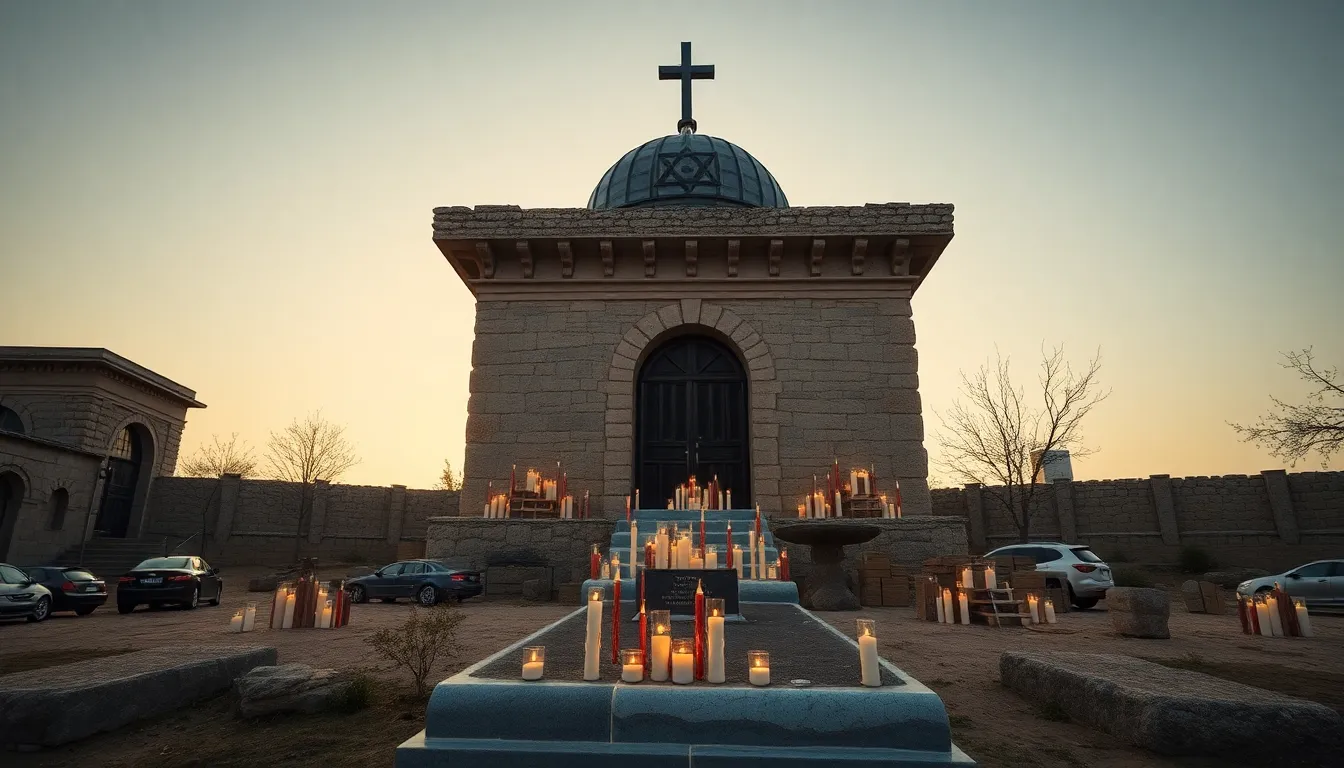
The first time I brought a group to Lezajsk, one of the men in our group, a quiet man who had said very little all week, walked into the ohel, put his hand on the stone, and stood there for a long time without a word. When he came out, he told me his great-grandfather used to make this trip on foot. That is Lezajsk. It is a small town in the southeast corner of Poland that most travelers have never heard of, and it is one of the most visited Jewish pilgrimage sites in the country.
People come here for one reason: to pray at the grave of Rebbe Elimelech of Lizhensk, one of the founding teachers of Hasidic Judaism. I want to walk you through who he was, why this grave draws thousands of pilgrims, and how a heritage group visits a living pilgrimage site with the care it deserves.
If your group is shaping a Poland journey around Jewish heritage, Lezajsk asks for a particular kind of attention, and it rewards it.
Who Rebbe Elimelech Was
Rabbi Elimelech Weisblum of Lizhensk, who lived from 1717 to 1787, is one of the central figures in the early Hasidic movement. Hasidism began in the 1700s as a spiritual renewal within Eastern European Judaism, emphasizing joy, devotion, prayer from the heart, and the idea of the tzaddik, the righteous teacher who guides a community and connects it to the divine.
Elimelech was a student of the Maggid of Mezeritch, who himself was the successor to the Baal Shem Tov, the founder of Hasidism. After his teacher died, Elimelech settled in Lizhensk, the Yiddish name for Lezajsk, and it became a center of Hasidic life. Disciples came to him from across the region, and many of them went on to found their own Hasidic dynasties. In that sense, a large part of the Hasidic world traces its spiritual lineage back through Lezajsk.
The Book That Carries His Name
Elimelech is best known for a work called Noam Elimelech, published after his death. It is one of the foundational texts of Hasidic thought, especially on the role and responsibilities of the tzaddik. For many Hasidim, the book itself is treated with reverence, and the man who wrote it is remembered as a tzaddik whose merit still carries weight. That belief is the engine behind the pilgrimage.
Why Pilgrims Come to the Ohel
Over the grave of Rebbe Elimelech stands an ohel, a small stone structure built to shelter the tomb of a holy person. Inside, pilgrims pray, leave handwritten notes called kvitlach asking for blessings, and light memorial candles. The practice of visiting the graves of tzaddikim is old and deeply rooted in this tradition. The belief is not that the dead are worshipped, that would be a misunderstanding, but that the merit of a righteous person is a fitting place to pour out a prayer, and that praying at such a grave draws a person closer to God.
The Yahrzeit Pilgrimage
The largest gathering happens around the rebbe’s yahrzeit, the anniversary of his death, which falls on the 21st of Adar in the Hebrew calendar, usually in late winter or early spring. Thousands of Hasidic pilgrims travel to this small Polish town for it, many from Israel, the United States, and Hasidic communities across the world. For a few days, Lezajsk fills with prayer, study, and song, and a town that is otherwise quiet becomes the spiritual center of a movement.
This is a living pilgrimage, not a museum visit. The men who come are not tourists. They are continuing a practice their families have kept for generations, in some cases returning to the exact ground their ancestors once walked.
How Heritage Groups Visit Lezajsk
A heritage group visiting Lezajsk is doing something different from the Hasidic pilgrims, and the right posture is to know that and to honor it. Most groups I bring here are not coming for the yahrzeit. We visit on a normal day, when the ohel is open and quiet, and that is often the better experience for a mixed or educational group. You can stand in the space, hear the story, and feel the weight of it without navigating a crowd of thousands.
What the Visit Looks Like
The ohel sits within the old Jewish cemetery of Lezajsk. Inside, the tomb is marked, and there is a clear space for prayer. Men cover their heads, kippot are usually available if someone does not have one. The site is maintained, and there is a place for pilgrims to write and leave their kvitlach. Many in my groups, Jewish and not, choose to write a note. I never push it. I just tell them they can, and most do.
For Jewish travelers, especially those with Hasidic or Eastern European roots, this can be the most personal stop of an entire trip. For Christian group leaders bringing a congregation, Lezajsk offers a window into a form of devotion that is alive and continuous, and into the depth of the Jewish world that flourished in Poland for centuries before the Holocaust.
A Note on Respect
I want to be direct about this part. When pilgrims are present, a heritage group is a guest in someone else’s act of worship. That means men and women may pray separately at the ohel, voices stay low, and we follow the lead of the people for whom this is sacred rather than a sightseeing stop. Photography inside the ohel may not be appropriate, especially during prayer, and I always ask before anyone raises a camera. Getting this right is not a constraint on the visit. It is the visit. The respect is the point.
Practical Access
Lezajsk is in the Subcarpathian region of southeastern Poland, roughly between Rzeszow and the Ukrainian border. It is a few hours by road from Krakow, so most groups visit it as part of a wider loop through eastern and southeastern Poland rather than as a quick day trip from the city. It pairs well with other sites in the region for groups focused on Hasidic and small-town Jewish heritage.
Because it is off the standard Warsaw-Krakow-Auschwitz route, Lezajsk needs local knowledge to do well. You want a guide who understands the site as a living pilgrimage place, who can arrange access and time the visit, and who can prepare the group for what they will see. That is exactly the kind of stop Heritage Tours builds into custom Jewish heritage itineraries, with the route, timing, and a knowledgeable guide handled for you. Group leaders travel free with groups of 15 or more, so the person carrying the responsibility of organizing the journey is not paying their own way to lead it.
FAQ: The Grave of Rebbe Elimelech in Lezajsk
Who was Rebbe Elimelech of Lizhensk?
Rabbi Elimelech Weisblum of Lizhensk, who lived from 1717 to 1787, was one of the founding teachers of Hasidic Judaism. He was a student of the Maggid of Mezeritch and authored Noam Elimelech, a foundational Hasidic text on the role of the tzaddik. Many later Hasidic dynasties trace their spiritual lineage to him.
What is the ohel in Lezajsk?
The ohel is a small stone structure built over the grave of Rebbe Elimelech in the old Jewish cemetery of Lezajsk. Pilgrims pray there, light memorial candles, and leave handwritten notes called kvitlach asking for blessings. It is one of the most visited Jewish pilgrimage sites in Poland.
When is the pilgrimage to Lezajsk?
The largest gathering is around the rebbe’s yahrzeit, the anniversary of his death, on the 21st of Adar in the Hebrew calendar, usually late winter or early spring. Thousands of Hasidic pilgrims come from Israel, the United States, and around the world. Heritage groups often visit on quieter days instead.
Can a non-Jewish group visit the grave of Rebbe Elimelech?
Yes. Visitors of any background are welcome to visit respectfully. Men cover their heads, voices stay low, and the group follows the lead of any pilgrims present. When prayer is happening, it is best to observe quietly and ask before taking photographs.
How do groups get to Lezajsk?
Lezajsk is in southeastern Poland, a few hours by road from Krakow. It sits off the standard tourist route, so groups usually include it in a wider loop through the region with a guide who knows the site as a living pilgrimage place and can arrange timed access.
If your group wants to include Lezajsk in a Jewish heritage journey through Poland, contact us and tell us what matters most to your community. We will build the route with care. You can also see how we handle group travel, or read about Poland’s hidden heritage sites and the spiritual sites across the country.