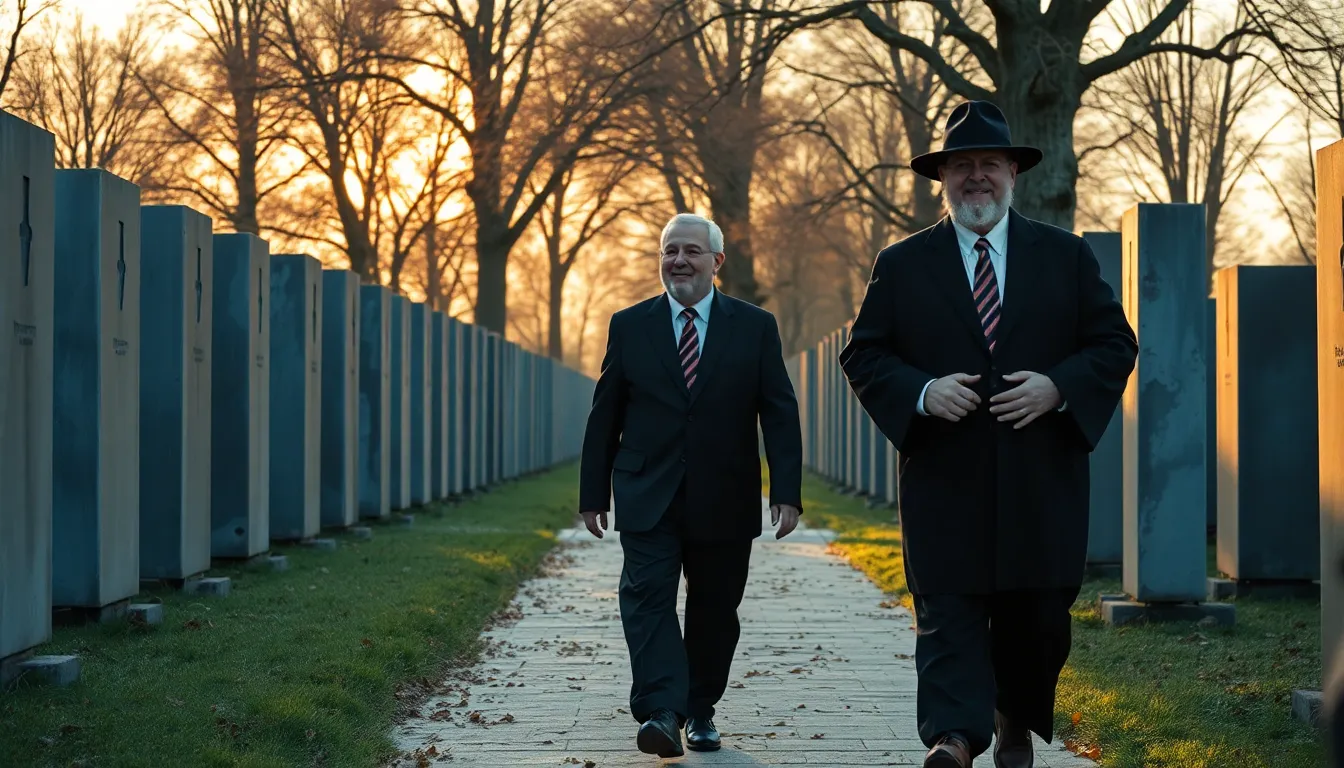
Some of the most meaningful trips I have ever helped plan were led by two people who would not normally share a pulpit. A rabbi and a pastor, standing together at the same memorial, leading the same group through the same grief from two different traditions. When it works, it is one of the most powerful things a heritage journey can be. When it is not planned carefully, the two leaders can quietly work against each other without meaning to.
If you are considering co-leading a Poland trip across faiths, this piece is for you and your co-leader to read together. Interfaith leadership is not just two clergy on one bus. It is a genuine partnership that has to be designed.
Why Interfaith Co-Leadership Suits Poland
Poland is, in some ways, the natural ground for an interfaith heritage journey, and not by accident.
The story Poland holds is one that belongs to more than one community. For Jewish travelers, it is ancestral and central to identity. For Christian travelers, it raises hard and necessary questions about complicity, silence, and what faith demands in the face of suffering. When a rabbi and a pastor lead together, those two relationships to the same history are present in the room at once, and they deepen each other. A Christian group bearing witness alongside a Jewish community, with a Jewish leader, encounters the history with a depth that a single-faith trip rarely reaches. The framing of what Poland asks of different communities is explored further in the group tour guide for pastors and rabbis.
Designing the Partnership Before You Recruit
The work of co-leading begins long before the trip, in honest conversation between the two leaders.
Have the Hard Conversation First
Before you announce anything to your communities, sit down together and talk plainly. Why are you doing this together? What does each of you hope your community gains? Where might your theologies differ on this ground, and how will you handle those differences in front of mixed travelers? You do not need to resolve every difference. You need to know where they are, so neither of you is surprised on the bus. The trips that struggle are the ones where two leaders assumed they agreed and discovered mid-trip that they did not.
Define Who Leads What
Co-leadership does not mean both of you doing everything together at all times. It means a clear division that plays to each of your strengths. Decide who leads which moments. Perhaps the rabbi leads the remembrance at the memorial sites and the pastor leads reflection at the Christian heritage sites. Perhaps you alternate teaching. Perhaps one of you is stronger with logistics and the other with pastoral care. Name it in advance. A group can feel when its leaders are coordinated, and it can feel when they are improvising who speaks next.
Agree on Shared Practices
Decide together how the whole group will mark the heavy moments. Will the group say Kaddish together at the memorial sites, with the Christian members standing in witness? Will there be shared silence, shared readings, a combined act of remembrance? Agreeing on this in advance, in a way both traditions can hold with integrity, is the heart of interfaith planning. Done well, it lets every traveler participate honestly without anyone being asked to pray in a way that violates their own faith.
Leading Two Communities as One Group
On the ground, your task is to make two communities feel like one group without erasing what makes each distinct.
Mix the Group Deliberately
Small things shape this. Seat people across the two communities together on the coach and at meals rather than letting them cluster by congregation. Pair people for reflection. The relationships that form between a Jewish traveler and a Christian traveler over a shared week are often what people remember most years later, and those relationships do not form if the two groups sit on opposite sides of the bus the whole trip.
Honor Each Tradition Without Flattening It
The goal of an interfaith trip is not to blur two faiths into a vague shared spirituality. It is to let each tradition be fully itself while bearing witness together. When the group says Kaddish, let it be Kaddish, with the Christian members present and respectful. When the group reflects at a Christian heritage site, let that be what it is, with the Jewish members present. The respect runs both ways, and travelers feel honored rather than homogenized. As co-leaders, you model this every time you defer to each other’s tradition with genuine respect.
Carry Remembrance Together
At Auschwitz especially, the two of you leading together carries a weight that one leader cannot. A Jewish community grieving where their people were murdered, accompanied by a Christian community bearing witness alongside them, with both clergy present, is a profound act. Plan this day with particular care between you, deciding who holds which part, and read the dedicated guidance in leading a group through Auschwitz with care together before you go. This is the day your partnership matters most.
Dietary, Logistical, and Pastoral Coordination
An interfaith group brings practical complexity, and the two of you should divide it clearly.
A mixed-faith group often brings a wide range of dietary needs, kosher and halal and more, to one table, and handling that well keeps the group eating together rather than splitting. We cover this fully in handling dietary needs across a mixed heritage group, and it is worth deciding which of you owns that coordination. The same goes for pastoral care: agree on who checks in with whom, so that no traveler falls between you because each of you assumed the other was watching. Two leaders can cover a group beautifully or can leave gaps, and the difference is simply having decided in advance.
The Free Leader Question for Co-Leaders
A practical note that matters for interfaith trips specifically. When a group reaches 15 paying participants, the group leader travels free, and on larger groups a second covered spot for a co-leader is frequently workable. Interfaith trips also tend to fill faster, because you are recruiting from two networks at once, which makes reaching the threshold easier than it is for a single leader. Raise the co-leader spot with us early in the planning. The full economics are laid out in the group leader travels free, and you can see how group leadership works on our group heritage tours page.
What Heritage Tours Brings to an Interfaith Journey
Our local educator-guides are not generic tour guides. They have worked with heritage groups from different faith communities and know how to read a mixed group and adjust. Our itineraries are built with emotional pacing in mind and can hold both the Jewish heritage sites and the Christian ones within a single coherent journey. And we coordinate the practical complexity, the dietary range, the logistics, the timing, so the two of you can focus on leading your people rather than managing a foreign country. You can read more about the destination on the Poland page.
FAQ: Co-Leading an Interfaith Poland Trip
Why lead a Poland heritage trip with a rabbi and a pastor together?
Because Poland holds a story that belongs to more than one community. For Jewish travelers it is ancestral and central to identity; for Christian travelers it raises necessary questions about complicity and what faith demands in the face of suffering. When both leaders are present, those two relationships to the same history deepen each other, and a mixed group encounters the journey with a depth a single-faith trip rarely reaches.
How do two leaders divide the work on an interfaith trip?
Decide in advance who leads which moments, playing to each leader’s strengths. The rabbi might lead remembrance at the memorial sites while the pastor leads reflection at Christian heritage sites, with teaching alternated and pastoral care divided clearly. The key is naming the division before the trip so the group feels coordinated rather than watching the leaders improvise who speaks next.
How do you handle prayer and remembrance across two faiths?
Agree together, in advance, on shared practices that both traditions can hold with integrity. When the group says Kaddish, let it be Kaddish with the Christian members standing in witness; when the group reflects at a Christian site, let it be that, with the Jewish members present. The goal is to let each tradition be fully itself while bearing witness together, never to blur the two into a vague shared spirituality.
Does co-leading affect the free leader benefit?
It can work in your favor. The group leader travels free at 15 paying participants, and on larger groups a second covered spot for a co-leader is frequently workable, so raise it with us early. Interfaith trips also tend to reach the threshold faster, since you are recruiting from two congregations at once rather than one.
How do you keep two communities feeling like one group?
Mix the group deliberately: seat people across the two communities at meals and on the coach, and pair them for reflection rather than letting them cluster by congregation. The relationships that form between a Jewish traveler and a Christian traveler over a shared week are often what people remember most. The leaders model this by deferring to each other’s tradition with genuine respect throughout.
Your Next Step
If you and a colleague from another tradition are thinking about leading Poland together, I would genuinely like to help you design that partnership. It is some of the most rewarding work I do. Tell us about the two communities and what you hope to build through our contact page, and we will shape a journey that honors both faiths and carries everyone through together.