Food is rarely the first thing a group leader worries about when planning Poland. It is almost always one of the first things that goes wrong if you ignore it. I have seen a beautifully planned trip wobble because one traveler with a serious allergy was left standing at a buffet with nothing safe to eat, and because no one had asked the right question three months earlier.
A mixed heritage group brings a real range of dietary needs to one table. Kosher for some. Halal for others. Vegetarian and vegan. Gluten-free, nut allergies, diabetes, and a dozen other medical considerations. Handling this well is not complicated, but it does require asking early and planning deliberately. Here is how I help leaders get it right.
Ask Early, Ask Specifically
The single biggest mistake leaders make is asking about dietary needs too late and too vaguely. “Any dietary restrictions?” on a sign-up form gives you almost nothing useful.
Gather Needs at Sign-Up, Not at the Airport
Put a real dietary questionnaire into your registration, months before departure. Kosher arrangements, in particular, require lead time to coordinate properly in Poland, and you cannot improvise them on arrival. The earlier you have the full picture, the more cleanly we can build it into the itinerary.
Ask the Right Questions
Vague answers create risk. Ask specifically: Do you keep kosher, and at what level? Do you eat halal? Are you vegetarian, vegan, or pescatarian? Do you have any food allergies, and how severe are they? Do you have a medical condition that affects your eating or timing, such as diabetes? The difference between a preference and a medical necessity matters enormously, and a careful question surfaces it. Flag the life-threatening allergies in your own notes in bold, because those are not flexible.
Kosher on a Poland Trip
Poland has a real and growing Jewish food infrastructure, especially in Krakow, but kosher dining away from the main centers requires planning.
What Is Realistic
In Krakow’s Kazimierz district, kosher and kosher-style restaurants exist, and a Jewish heritage trip naturally spends time there. For the rest of the itinerary, kosher meals are arranged through coordinated catering, kosher-certified suppliers, and pre-ordered provisions rather than assumed to be available everywhere. This is entirely workable. It simply has to be built in advance, which is exactly why we ask about it early.
Levels of Observance
Kosher is not a single standard. Some travelers keep strictly kosher and require certified, sealed meals. Others keep kosher-style, avoiding certain foods but more flexible on certification. Some keep kosher at home but eat vegetarian when traveling. Ask each kosher-keeping traveler what they need specifically, because providing for the strictest observer is a different arrangement than providing for the most flexible, and you want to honor both accurately rather than guessing.
Halal in Your Group
If your group includes Muslim travelers, whether on an interfaith journey or otherwise, halal needs deserve the same care.
Halal-certified options are available in Poland’s larger cities and can be coordinated elsewhere on the itinerary. As with kosher, ask each traveler what they require: some need fully halal-certified meat, while others manage with vegetarian or seafood options when certified halal is not available. A well-planned itinerary keeps halal travelers genuinely fed rather than surviving on side dishes, and that planning is straightforward when you know the need in advance. Interfaith groups have their own rhythm to plan around, which we cover in co-leading an interfaith heritage trip to Poland.
Medical Diets and Allergies
This is the category where care becomes safety, and it deserves the most attention.
Allergies Are Not Preferences
A severe nut or shellfish allergy is a medical fact, not a dietary preference, and it must be communicated to every kitchen that serves your group. We coordinate this with our local partners so that allergens are flagged clearly in advance. Travelers with life-threatening allergies should carry their own emergency medication, such as an epinephrine auto-injector, and you as the leader should know who carries one and where it is. This is part of your broader duty of care on the trip.
Diabetes and Timing-Sensitive Conditions
Some conditions are less about what a person eats and more about when. Diabetic travelers, for instance, need predictable meal timing and access to food between meals. Build awareness of this into your day. A long touring stretch with no food is a problem for someone managing blood sugar, and a few snacks and a steady schedule solve it entirely. Knowing who has timing-sensitive conditions lets you plan the day around them quietly.
Keep a Master List
Carry a single, current list of every dietary need and allergy in your group, with severity noted. Share it with our coordinator before departure and keep your own copy on the ground. When a question arises at a restaurant, you are not relying on memory or scrambling, you are checking a list. That small piece of preparation prevents nearly every dietary problem I have ever seen on a trip.
Building Meals That Bring the Group Together
Dietary planning is not only about avoiding problems. It is about keeping the group whole.
Shared Tables Matter
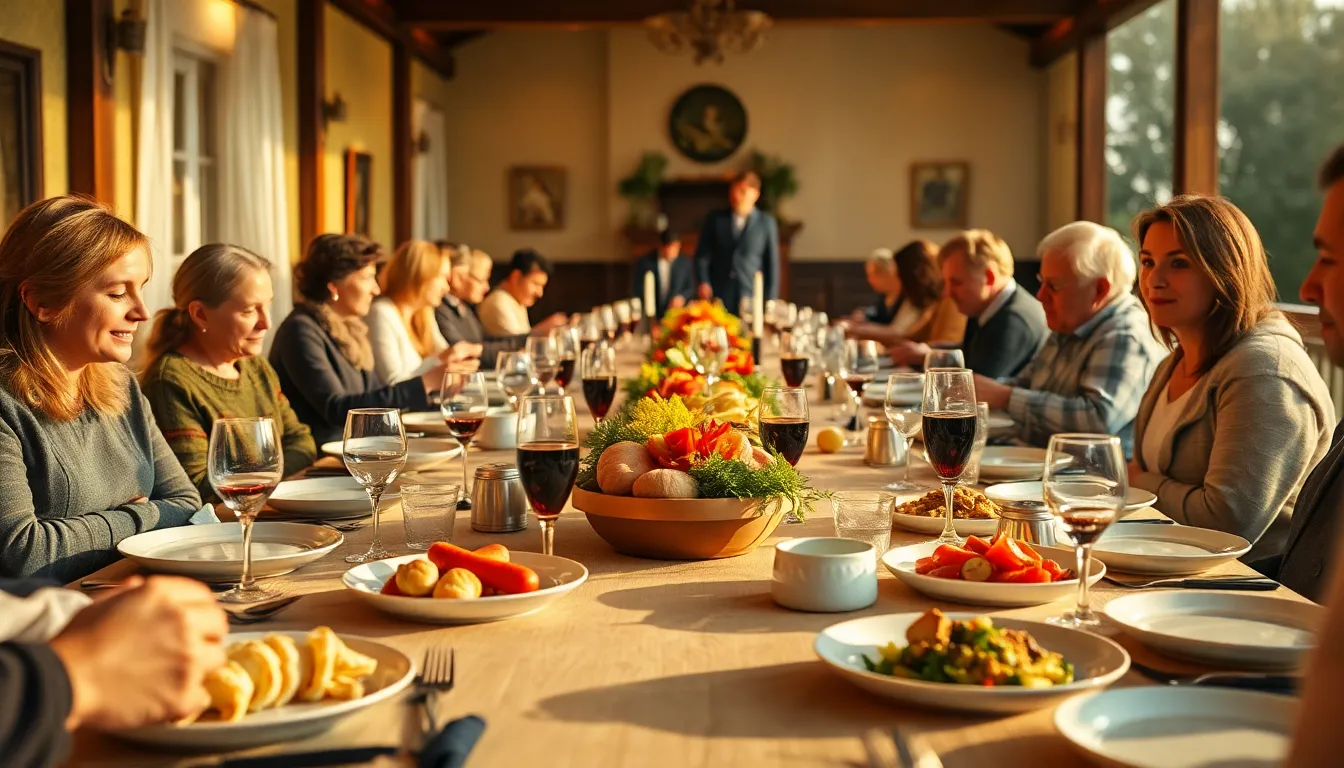
On a Poland trip especially, meals are where a group decompresses and reconnects after emotionally heavy days. The goal is for everyone to eat together, at the same tables, at the same time, with each person’s needs met, rather than splitting the group into a main table and a few people eating something separate off to the side. We build meals so that the kosher traveler, the halal traveler, the vegan, and the person with a nut allergy are all served at the same table as everyone else. That shared table is part of how a group stays a community through a hard week.
Communicate the Plan to Your Group
Once meals are arranged, tell your group what to expect. Travelers with specific needs relax considerably when they know their meals are already handled and they will not have to negotiate at every restaurant. That reassurance, given in advance, removes a quiet anxiety that some of your people are carrying without saying so.
What Heritage Tours Handles for You
You gather the needs. We build them into the trip. We coordinate kosher and halal arrangements with our local partners, flag allergens to every kitchen, structure meal timing for medical needs, and design shared meals that keep your group eating together. You are not negotiating with restaurants in a foreign language or hoping a buffet has something safe. That coordination is our work, which you can see across our group heritage tours, and you can read more about the journey itself on the Poland destination page. Your job is simply to ask your people the right questions early and pass us a complete picture.
FAQ: Dietary Needs on a Poland Heritage Trip
Can you arrange kosher meals on a Poland heritage tour?
Yes. Krakow’s Kazimierz district has kosher and kosher-style dining, and for the rest of the itinerary we coordinate kosher meals through certified suppliers, catering, and pre-ordered provisions. Kosher arrangements require lead time, so gather your travelers’ needs at sign-up rather than at the airport. We also ask about level of observance, since providing for a strictly kosher traveler is a different arrangement than providing for someone who keeps kosher-style.
Is halal food available for Muslim travelers in Poland?
Yes. Halal-certified options are available in Poland’s larger cities and can be coordinated across the itinerary. As with kosher, we ask each traveler what they require, since some need fully halal-certified meat while others manage with vegetarian or seafood options where certified halal is not available. With early notice, halal travelers are genuinely fed throughout the trip rather than left with side dishes.
How do you handle severe food allergies on a group trip?
A severe allergy is treated as a medical fact, not a preference. We flag allergens clearly to every kitchen that serves the group, and we ask that travelers with life-threatening allergies carry their own emergency medication. As leader, you should keep a master list of every need and severity and know who carries an auto-injector. That preparation, gathered early and carried on the ground, prevents nearly every dietary problem.
What about travelers with diabetes or timing-sensitive conditions?
We build predictable meal timing and access to food between meals into the day, which is what matters most for diabetic travelers and others with timing-sensitive conditions. A long touring stretch with no food is solved with steady scheduling and a few snacks. Knowing in advance who has these conditions lets us plan the day around them quietly and reliably.
How do you keep a mixed-diet group eating together?
We design meals so that kosher, halal, vegan, vegetarian, and allergy-aware travelers are all served at the same tables as everyone else, rather than splitting the group. On a Poland trip, shared meals are where the group decompresses after emotionally heavy days, so keeping everyone at one table is part of keeping the community whole. We tell travelers in advance that their meals are handled, which removes a quiet anxiety many carry without saying so.
Your Next Step
If your group has a real mix of dietary needs, that is not a complication, it is just a plan we make together early. Tell me about your travelers and their needs through our contact page, and we will build an itinerary where every person is fed, cared for, and seated at the same table as everyone else.