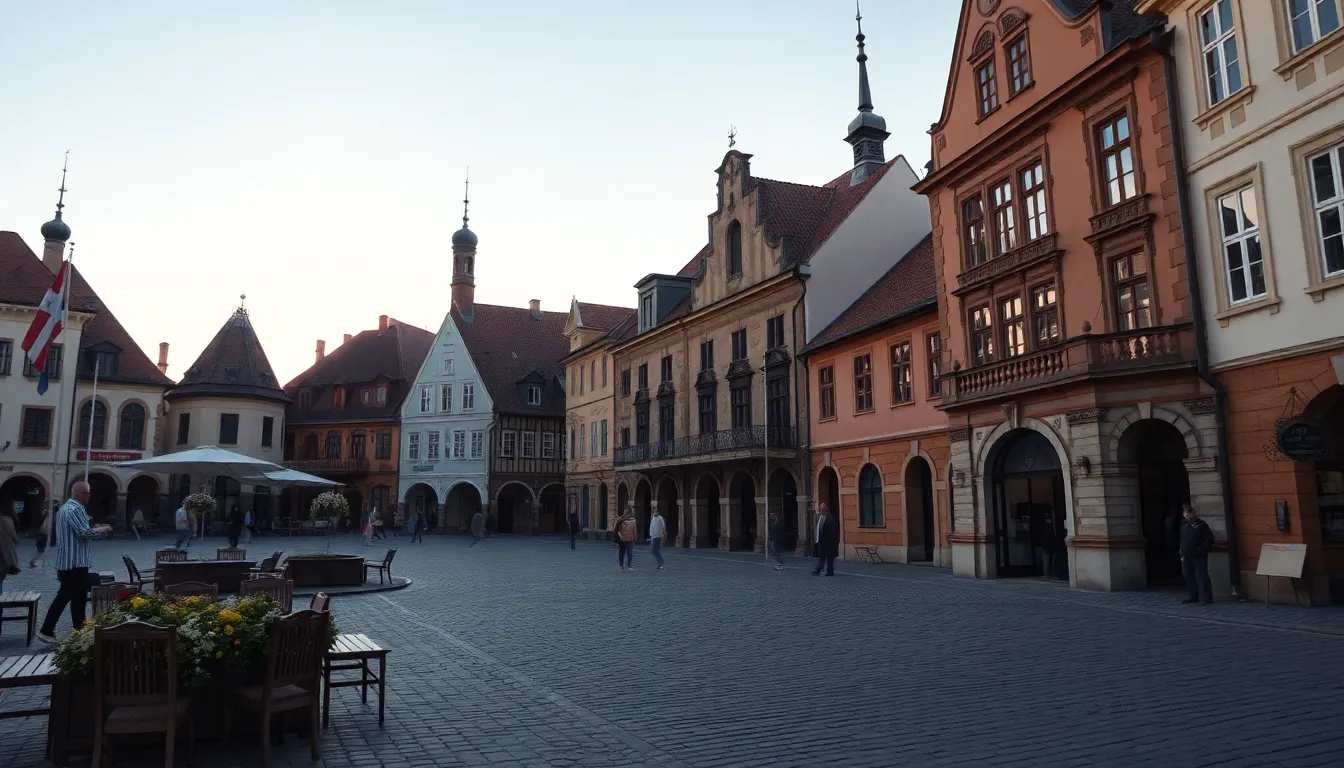
There is a town about an hour south of Warsaw called Gora Kalwaria. If you walk through it today, you would never guess what it once was. It looks like a quiet Polish market town. But for around a century, this place was the beating heart of one of the largest Hasidic movements in the world, a court that drew thousands of followers and shaped Jewish life across Poland. To the Jews who lived and prayed here, the town had a different name. They called it Ger.
I bring groups to Gora Kalwaria when they want to understand not just where Jews died in Poland, but where Jewish spiritual life was led, organized, and made vibrant. This is the home of the Ger dynasty, and its story is one of the most important in the history of Hasidism. Let me walk you through it.
If your group is building a Poland itinerary that goes beyond the memorial sites, Gora Kalwaria belongs on the list.
What Ger Was
Gora Kalwaria became the seat of a Hasidic court in the 19th century under Rabbi Yitzchak Meir Alter, known by the name of his major work, the Chiddushei HaRim. He founded what became the Ger, or Gur, Hasidic dynasty, taking its name from the Yiddish pronunciation of the town. Under him and his successors, Ger grew into one of the largest and most influential Hasidic groups in Poland.
By the early 20th century, the Ger court under Rabbi Avraham Mordechai Alter, known as the Imrei Emes, was a center of gravity for Polish Jewry. Tens of thousands of Hasidim looked to the Gerrer Rebbe for guidance. On holidays and special Shabbatot, followers would travel to Gora Kalwaria from across the country to be near the rebbe, to pray with the court, and to receive his blessing. The town’s train connection to Warsaw made it reachable, and on those occasions the small town filled with pilgrims.
A Court, Not Just a Congregation
It helps to understand what a Hasidic court was. It was not simply a synagogue. It was the household and institution of the rebbe, the spiritual leader, around which an entire community organized itself. People came to the court for guidance on questions of faith, family, livelihood, and conscience. The rebbe’s teachings, his conduct, even his table on Shabbat, were the center of the community’s religious life. Ger was one of the great courts of its era, and Gora Kalwaria was where it lived.
What Happened to the Community
The world of Ger in Poland was destroyed in the Holocaust, along with the rest of Polish Jewry. The Gerrer Rebbe of the time, the Imrei Emes, managed to escape to the Land of Israel during the war, and the dynasty was rebuilt there. Today Ger is one of the largest Hasidic movements in Israel, with tens of thousands of followers. But its leadership and center moved to Jerusalem, and Gora Kalwaria itself was left without the community that had given it its name.
That is the quiet weight you feel walking the town now. The institution survived and even thrives, but it survives elsewhere. The streets where the court once stood are still there. The buildings remain in part. What is gone is the living community that filled them.
What Remains in Gora Kalwaria
The physical traces of Ger in the town are modest but real. The building associated with the Gerrer court and the rebbe’s residence still stands, and there are remnants of Jewish communal buildings. The old Jewish cemetery survives, with the ohel, the small structure built over the graves of the Ger rebbes who are buried there. Pilgrims come to pray at these graves, continuing the practice of visiting the resting places of the tzaddikim, the righteous leaders.
For a group, the experience here is not about grand architecture. It is about standing in the actual place where a movement that still shapes Jewish life today was born and led. I tell my groups to slow down here. The significance is not in what you can photograph. It is in understanding that this ordinary-looking town was, for a century, a spiritual capital.
A Living Pilgrimage Site
Gora Kalwaria is still a destination for Ger Hasidim and others who come to pray at the ohel of the rebbes. That makes it a living pilgrimage site, not a static historical stop. When pilgrims are present, a heritage group visits as a guest. Men cover their heads at the cemetery and the ohel, voices stay low near prayer, and we follow the lead of those for whom this ground is sacred. I always ask before anyone takes a photograph near the ohel, and during active prayer it is often better to simply stand back and witness.
How Heritage Groups Visit
For most groups, Gora Kalwaria works beautifully as a stop on a Warsaw-based itinerary. It is close enough to the city, about an hour by road, that it can be paired with the major Warsaw sites without a separate overnight. I often combine it with a deeper Warsaw Jewish heritage day, so a group can move from the scale of the capital, with POLIN and the ghetto sites, to the intimate, town-level story of a single great Hasidic court.
The challenge is that Gora Kalwaria carries almost none of the signage, infrastructure, or interpretation of the major sites. Without a guide who knows the town and its history, a visitor would walk right past everything that matters. This is a place that lives or dies on local knowledge: knowing which buildings are which, where the cemetery and ohel are, how to arrange respectful access, and how to tell the story so it lands.
That is the kind of stop Heritage Tours builds into custom Jewish heritage itineraries, with the route, timing, access, and a guide who understands both the history and the living pilgrimage handled for you. As on every journey we build, group leaders travel free with groups of 15 or more, so the person organizing the trip for their community is not paying their own way to lead it.
Why This Site Matters for a Group Journey
A heritage trip to Poland that includes only the memorial sites tells one essential truth: that an immense Jewish world was destroyed here. But it can leave a group without a full sense of what that world was. Gora Kalwaria fills part of that gap. It shows your group a place where Jewish spiritual leadership was concentrated, where tens of thousands of people oriented their religious lives around a single court, where a movement that still flourishes today put down its roots.
When a group understands Ger, the loss of Polish Jewry becomes more specific and more real. They are no longer mourning an abstraction. They are standing in the home of something particular, something they can name, something that, against the odds, was carried out of Poland and rebuilt. That combination of loss and continuity is one of the deepest things a Poland journey can offer.
FAQ: Gora Kalwaria and the Ger Dynasty
What is the Ger Hasidic dynasty?
Ger, also spelled Gur, is one of the largest Hasidic movements in the world. It was founded in the 19th century in the Polish town of Gora Kalwaria by Rabbi Yitzchak Meir Alter and grew into one of the most influential Hasidic courts in Poland. After the Holocaust, the dynasty was rebuilt in Israel, where it has tens of thousands of followers today.
Why is Gora Kalwaria called Ger?
Ger is the Yiddish pronunciation of Gora Kalwaria, the town’s name. The Hasidic court that formed there took the town’s name, so the movement and its rebbes became known as Ger or Gur. Jews referred to the town itself by that name as well.
What can you see in Gora Kalwaria today?
The town retains the building linked to the Gerrer court and rebbe’s residence, remnants of Jewish communal buildings, and the old Jewish cemetery with the ohel over the graves of the Ger rebbes. There is little signage, so a knowledgeable guide is needed to find and interpret what remains.
Is Gora Kalwaria a pilgrimage site?
Yes. Ger Hasidim and others travel there to pray at the ohel of the rebbes in the old Jewish cemetery, continuing the tradition of visiting the graves of righteous leaders. Heritage groups visiting should treat it as a living place of prayer and follow the lead of any pilgrims present.
How do groups visit Gora Kalwaria?
It is about an hour by road from Warsaw, so most groups include it on a Warsaw-based itinerary, often paired with the city’s major Jewish heritage sites. Because the town has little visitor infrastructure, it is best visited with a guide who knows the history and can arrange respectful access.
If your group wants to stand where the Ger dynasty was born and understand the world it came from, get in touch and tell us what your community is looking for. We will build the journey with you. You can also see how we run group travel, or read about Poland’s hidden heritage sites and the country’s spiritual sites.