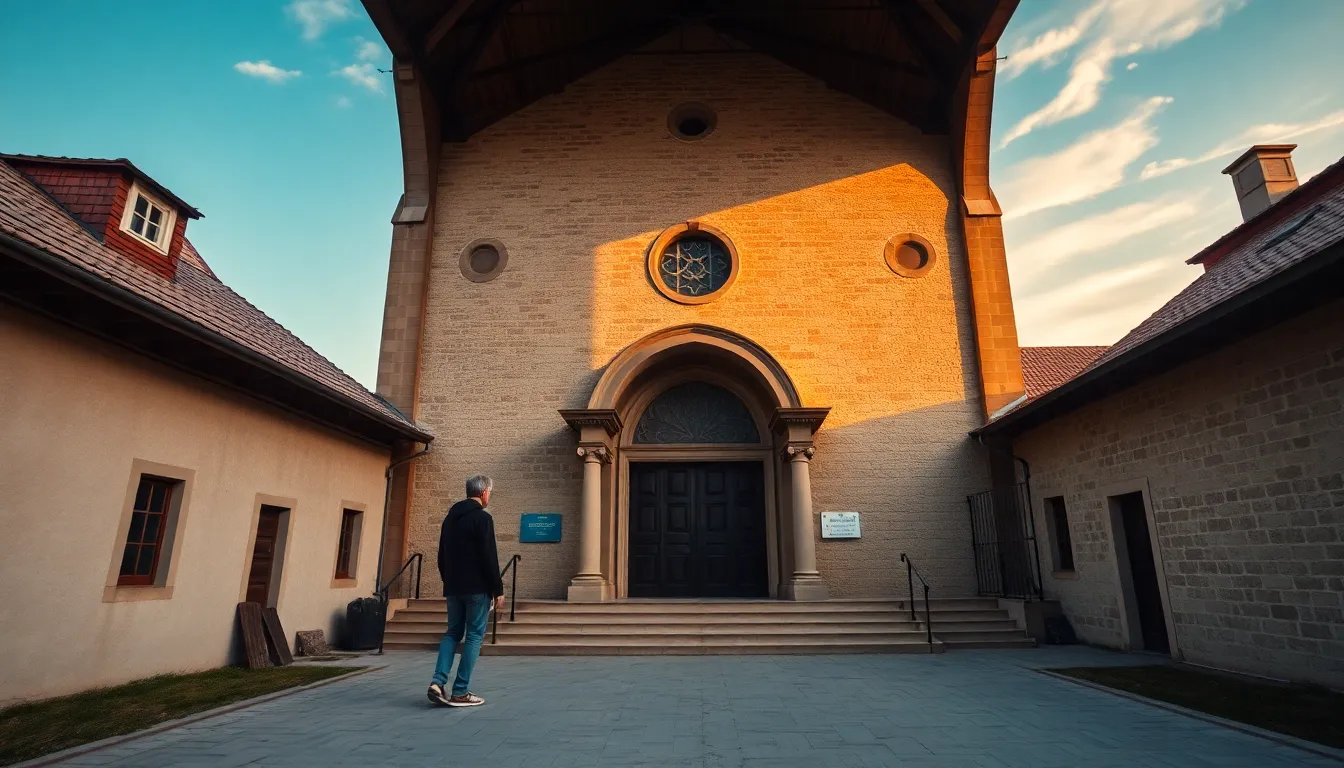
Most people have never heard the word Galicia, and the ones who have usually picture a different Galicia, the one in Spain. But for a great many Jewish families in America and Israel, Galicia is the answer to the question, where did we come from. When a group member tells me their grandparents were “Galitzianers,” I know we are talking about this corner of the world, the rolling country of Poland’s southeast, where for centuries Jewish life ran deep and dense, town after town after town. I have stood with descendants in places like Rzeszów and Lesko and Bobowa, watching them realize that the half-remembered name from a family story is a real place, with a real square and a real synagogue and a real cemetery, still here.
If you are a rabbi or a pastor planning to bring your community to Poland, Galicia deserves your attention, especially if your group includes descendants of Polish Jews. So much heritage travel concentrates on Warsaw and Krakow and the death camps, and those belong on any itinerary. But Galicia holds a particular treasure, the texture of small-town and regional Jewish life across an entire historic land. This guide introduces it.
What Galicia Was
Galicia is a historic region, not a country and not, today, a single administrative unit. From the late eighteenth century until the First World War, it was a province of the Austro-Hungarian Empire, stretching across what is now southeastern Poland and western Ukraine. Its main cities were Kraków in the west and Lwów (today Lviv, in Ukraine) in the east. When Jewish families speak of coming “from Galicia,” they usually mean this Austro-Hungarian province and the dense network of Jewish towns within it.
Galicia was, by any measure, one of the great centers of Jewish life. Hundreds of thousands of Jews lived here, in the cities and above all in the small towns, where they often made up a third, a half, or more of the population. Galician Jews were famous within the wider Jewish world for their piety, their poverty, and their warmth, and “Galitzianer” became an affectionate, sometimes teasing, term that traveled with emigrants to New York and Tel Aviv.
The part of historic Galicia that lies inside modern Poland, roughly the southeast of the country around Kraków, Rzeszów, Tarnów, Przemyśl, and the Carpathian foothills, is where heritage groups travel today.
The Religious World of Galicia
To understand Galician Jewish heritage, you have to understand that this was a deeply religious land, and in particular a heartland of Hasidism.
Hasidism, the movement of joyful, mystical, rebbe-centered piety that began in the eighteenth century, took root powerfully in Galicia. Town after town became a Hasidic court, gathered around a dynasty of rebbes whose names are still spoken with reverence in Hasidic communities around the world today. Bobowa, a small town near Nowy Sącz, was the seat of the Bobov dynasty. Nowy Sącz itself, Sanz in Yiddish, was the seat of the Sanz dynasty. Dynów, Ropczyce, Rymanów, and many others were centers of their own Hasidic lines.
What this means for a heritage group is that Galicia is, in a sense, still alive in the Hasidic world. Descendants of these courts in Brooklyn, in Jerusalem, in Antwerp, carry the names of these Galician towns to this day. When a group visits the grave of a great rebbe in a small Galician town, they may well find that Hasidic pilgrims have been there before them, leaving notes at the ohel, the small structure built over the grave. The land was emptied, but the spiritual lineage it produced never died.
What Survives in Polish Galicia
When I bring a group through this region, here is the heritage we encounter.
Krakow and Kazimierz
Krakow anchors the western edge of Galicia and is the natural base for exploring the region. Its Kazimierz district is the best-preserved Jewish quarter in Poland, with seven historic synagogues, the medieval Remuh Synagogue and its ancient cemetery, and a living Jewish cultural life. The Galicia Jewish Museum in Kazimierz is devoted specifically to the heritage of this region, documenting through photography both what was destroyed and what remains across the Galician towns. I send every group there, because it frames the whole regional journey.
Tarnów
Tarnów was a major Jewish center, with Jews making up nearly half the city before the war. Today the four columns of the destroyed Old Synagogue’s bimah still stand in the open air, a haunting fragment left exactly where the building once stood. Tarnów also holds one of the most significant Jewish cemeteries in the region. The town was the site of one of the first deportations to Auschwitz, and its story binds together the richness of Galician life and the depth of its destruction.
Rzeszów, Przemyśl, and the Regional Towns
Across the southeast, town after town holds its remnant. Rzeszów has surviving synagogues now used as cultural and archival spaces. Przemyśl, near the eastern border, preserves synagogue buildings and a layered history. Lesko, in the Carpathian foothills, has a fortified Renaissance synagogue and a hillside cemetery with stones reaching back to the sixteenth century, one of the most atmospheric Jewish sites in all of Poland. These are not crowded places. Often a group has them entirely to itself.
The Hasidic Towns
Bobowa, Nowy Sącz, Dynów, and the other Hasidic centers draw their own quiet stream of pilgrims to the graves of the rebbes. When our route allows, we include these towns, and I prepare groups to encounter living Hasidic devotion alongside the historical record.
Markowa
In the Galician countryside lies Markowa, home to the museum honoring the Righteous Among the Nations and the Ulma family, who were murdered with their children for sheltering their Jewish neighbors. It belongs in the regional story, holding together the warmth of Galician Jewish life, the horror of its destruction, and the courage of those who resisted.
How Groups Travel Through Galicia
Galicia rewards a slower pace. The distances between towns are real, the roads run through farmland and foothills, and the sites are spread out rather than concentrated. This is not a region you rush.
What I have learned over more than forty years is that Galicia is, above all, the region for descendants. The shtetl world of the former Jewish towns was at its densest here, and the family names that come down through the generations, the Galitzianer names, point straight into this landscape. When a group includes members with roots in a specific Galician town, we build the route around reaching those towns. To stand in the square, find the synagogue, walk the cemetery, and read a family name on a stone is a moment that nothing else on the journey can equal.
For groups without specific family ties, Galicia offers something different and just as valuable, an unhurried, uncrowded encounter with the regional fabric of Jewish life across an entire historic land. After the intensity of the cities and the death camps, the small towns of Galicia let a group breathe, reflect, and meet the human scale of what was lost.
FAQ: Jewish Heritage of Galicia
Where is Galicia, and is it in Poland?
Galicia is a historic region that was a province of the Austro-Hungarian Empire from the late eighteenth century until the First World War. It spans what is now southeastern Poland and western Ukraine. The Polish part, around Kraków, Rzeszów, Tarnów, and the Carpathian foothills, is where heritage groups travel. It is distinct from the Galicia in Spain, which shares only the name.
What does it mean that my family was “Galitzianer”?
It means your family came from Jewish Galicia, the Austro-Hungarian province in what is now southeastern Poland and western Ukraine. Galitzianer became an affectionate term for Jews of this region, known within the wider Jewish world for their piety and warmth. If your grandparents were Galitzianers, their town of origin is very likely in the area heritage groups visit today.
Why is Galicia important to Hasidic Judaism?
Galicia was one of the great heartlands of Hasidism. Many towns were the seats of Hasidic dynasties, including Bobov in Bobowa and Sanz in Nowy Sącz, whose descendants continue these traditions in communities around the world today. Hasidic pilgrims still travel to the graves of the great rebbes in these small Galician towns, so the region remains spiritually alive even where the communities are gone.
What Jewish heritage sites survive in Polish Galicia?
Surviving sites include Krakow’s Kazimierz district with its seven historic synagogues and the Galicia Jewish Museum, the open-air bimah remnant of Tarnów’s Old Synagogue, the fortified synagogue and ancient hillside cemetery of Lesko, synagogue buildings in Rzeszów and Przemyśl, the Hasidic towns, and the Ulma Family Museum in Markowa. Many of these sites are quiet and uncrowded.
Is Galicia a good region for descendants tracing family roots?
Yes, Galicia is perhaps the best region in Poland for descendants. Jewish life here was extraordinarily dense, town after town, and many family names that come down through the generations point directly into this landscape. We build routes around reaching a family’s specific town, where standing in the square or finding an ancestor’s grave becomes the most powerful moment of the entire journey.
A Land Worth the Journey
Galicia does not announce itself. It has no single famous monument, no one site that fills a postcard. What it has is depth, an entire historic land where Jewish life ran dense and deep for centuries, and where the remnants are scattered across quiet towns waiting to be reached. For descendants, it is the homeland behind the family stories. For every group, it is the human scale of a world that was lost.
If you are planning a heritage journey through Poland and want Galicia included with the care it deserves, I would be glad to help, especially if your community includes descendants of Polish Jews. You can read more in our guide to Jewish heritage in Poland, explore the wider journey at our Poland destination page, and learn how the group leader experience works through our group heritage tours. For group leaders bringing fifteen or more participants, you travel free.
When you are ready to begin, reach out to us. I have been helping group leaders plan journeys like this for over forty years, and I would be honored to help you plan yours.