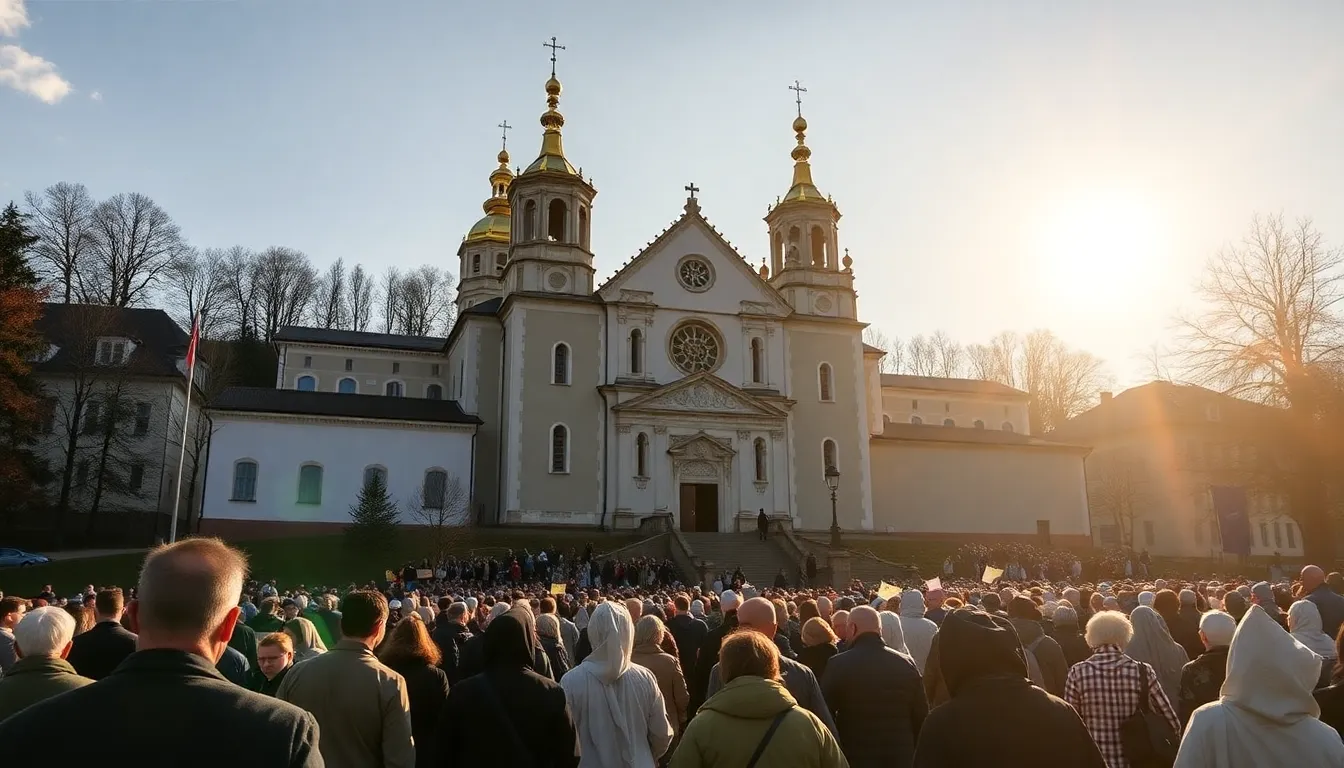
I have led groups to a lot of holy places. But there is something about the approach to Jasna Gora that I have never quite gotten used to, in the best way. You come up the long avenue toward the monastery on its hill, and even people in the group who arrived skeptical go quiet. By the time you reach the Chapel of the Miraculous Image and the silver cover lifts to reveal the Black Madonna, you are no longer organizing a tour. You are inside a pilgrimage that millions of people have made before you, for more than six hundred years.
That is exactly why Czestochowa needs to be planned carefully. A pilgrimage is not a sightseeing stop, and treating it like one is the most common mistake I see. The Black Madonna is the spiritual center of Polish Catholicism, and a well-structured group journey here can be the high point of an entire trip. This article walks through how to plan it: the timing, the daily flow, the logistics, and how to prepare your people before they arrive.
For where Czestochowa fits among Poland’s sacred sites, see our guide to spiritual sites in Poland.
What Makes Czestochowa a Pilgrimage, Not a Tour
Jasna Gora, which means Bright Mountain, is a Pauline monastery founded in 1382. That same year, the icon of the Black Madonna was brought here, and it has been venerated ever since. Tradition attributes the painting to Saint Luke; whatever its origins, it became the most sacred religious image in Poland and one of the most revered Marian icons in the Catholic world.
The Black Madonna is more than a painting. She was formally crowned Queen of Poland in 1656, after the monastery withstood a Swedish siege that became a symbol of national survival. For Polish Catholics, she binds faith, nationhood, and identity into one. Several million pilgrims come every year, many on foot, walking for days from across Poland.
This is the difference a group leader has to hold onto. People do not come to Czestochowa to look. They come to pray, to give thanks, to ask, to be present. Structuring the visit around that reality, rather than around a checklist of things to see, is what separates a pilgrimage from a stop.
Timing the Visit: The Unveiling of the Image
The single most important planning detail at Jasna Gora is the unveiling of the Black Madonna. The icon is kept behind a silver cover that is ceremonially raised and lowered at set times each day, with trumpet fanfare. When the cover lifts, the chapel fills, and the moment carries a weight that is hard to describe to someone who has not stood in it.
You want your group present for an unveiling. That means checking the current daily schedule in advance, because the times are fixed and your itinerary should be built around them, not the other way around. The cover is raised in the early morning and lowered in the evening, with the schedule varying by season and by feast day. Confirm the exact times for your travel dates before you finalize the day.
I plan the visit so the group arrives with enough margin to be settled and quiet in the chapel before the unveiling, not rushing in as the trumpets sound. Arriving flustered breaks the moment. Arriving early lets the group receive it.
Structuring the Day at Jasna Gora
A meaningful visit to Jasna Gora is a half day at minimum, and a full day if your group wants to enter into it fully. Here is the flow I use.
The Approach
Begin at the bottom of the avenue and walk up toward the monastery on foot, even if your coach could take you closer. The approach is part of the pilgrimage. It gives the group a few minutes to shift from travel mode into the right posture before they arrive at the gates.
The Chapel of the Miraculous Image
This is the heart of it. Time your arrival for an unveiling, and give the group room to be present without commentary. I say almost nothing in the chapel itself. Whatever teaching needs to happen, I do it before we enter. Inside, people should be free to pray, to sit, to simply look.
Mass
For Catholic groups, celebrating or attending Mass at Jasna Gora is the center of the pilgrimage. Mass is offered in the chapel and the basilica throughout the day, and arrangements can be made in advance for a group Mass with your own priest. This is the kind of thing to coordinate well ahead of time, and it is worth the effort.
The Basilica, Treasury, and Walls
Beyond the chapel, the complex holds the baroque basilica, the Knights’ Hall, a treasury of votive offerings left by pilgrims over the centuries, and the fortified walls with the Stations of the Cross. These can fill the rest of a half or full day. The treasury in particular helps a group understand the depth of devotion, room after room of gifts left in gratitude and petition.
Quiet Time
I always build in unstructured time. A pilgrimage needs space that is not programmed. Let people walk the ramparts, sit in the chapel again, or simply be still. Some of the most important moments of a pilgrimage happen when the group leader steps back.
Logistics: Getting There and Staying
Czestochowa sits in southern Poland, roughly two hours by road from Krakow and a similar distance from the Krakow side toward Warsaw. Most groups visit it as part of a route between the two cities, or as a day trip from a Krakow base.
For a group that wants the full experience, including an early morning unveiling and an unhurried day, staying overnight in Czestochowa is worth considering. The monastery itself operates a pilgrim house, and the town has hotels accustomed to group pilgrimages. Staying over lets you catch the early unveiling without a pre-dawn drive and gives the visit the unhurried rhythm a pilgrimage deserves.
If you are coming as a day trip, leave Krakow early. The drive plus a meaningful visit plus the return is a full day, and you do not want to be watching the clock during the unveiling.
Many groups pair Czestochowa with the Krakow shrines, Wawel Cathedral and the Divine Mercy basilica, and with the Calvary of Zebrzydowska, the Mannerist pilgrimage park southwest of Krakow. Together these make a rich Catholic pilgrimage circuit in southern Poland.
Preparing Your Group Before You Arrive
The preparation you do beforehand shapes the visit more than anything you say on site. A few things I always cover.
Explain the Black Madonna before the trip. Tell the story of the icon, the siege of 1655, the crowning as Queen of Poland, so that people arrive understanding why this place carries the weight it does. The unveiling means far more to someone who knows what they are looking at.
Set expectations about behavior. This is an active place of prayer. Modest dress is expected, photography is restricted in the chapel, and silence during the unveiling and during Mass is essential. A group that knows this in advance moves through the day with grace.
For non-Catholic members of the group, frame the visit as witness. You do not have to share the devotion to be moved by it. Standing among Polish pilgrims at the moment the cover lifts is an experience of another community’s living faith, and that is its own kind of meaningful.
One practical note for group leaders weighing the trip: with Heritage Tours, the group leader travels free with fifteen or more participants. Building a pilgrimage group around your parish becomes far easier with that in mind, and the earlier you start, the simpler reaching that number becomes.
FAQ: Planning a Czestochowa Pilgrimage
What is the best way to time a visit to the Black Madonna?
Build your visit around the daily unveiling of the icon, when the silver cover is ceremonially raised with trumpet fanfare. The times are fixed and vary by season and feast day, so confirm the current schedule for your travel dates and plan to arrive early enough to be settled in the chapel before the cover lifts.
How long should a group spend at Jasna Gora?
A meaningful visit is a half day at minimum and a full day if your group wants to enter into it fully. That allows time for the approach on foot, the Chapel of the Miraculous Image, Mass, the basilica and treasury, the fortified walls, and unstructured quiet time, which a pilgrimage genuinely needs.
Can a group celebrate Mass at Czestochowa?
Yes. Mass is offered throughout the day in the chapel and basilica, and groups can arrange a Mass with their own priest in advance. For Catholic groups this is usually the center of the pilgrimage, so coordinate it well ahead of your travel dates.
Should a group stay overnight in Czestochowa or visit as a day trip?
Both work. A day trip from Krakow, about two hours away, is common, but staying overnight lets you catch an early unveiling without a pre-dawn drive and gives the visit an unhurried rhythm. The monastery runs a pilgrim house and the town has hotels used to group pilgrimages.
Is Czestochowa meaningful for non-Catholic group members?
Yes. Even those who do not share Catholic devotion find that standing among Polish pilgrims at the moment of the unveiling is a powerful encounter with another community’s living faith. Framing the visit as witness, rather than as sightseeing, helps every member of a group receive it well.
If your parish or community is planning a pilgrimage to the Black Madonna, I would be glad to help you structure it so the visit becomes what it should be: the high point of the journey, not a stop along the way. Contact us whenever you are ready to start planning.