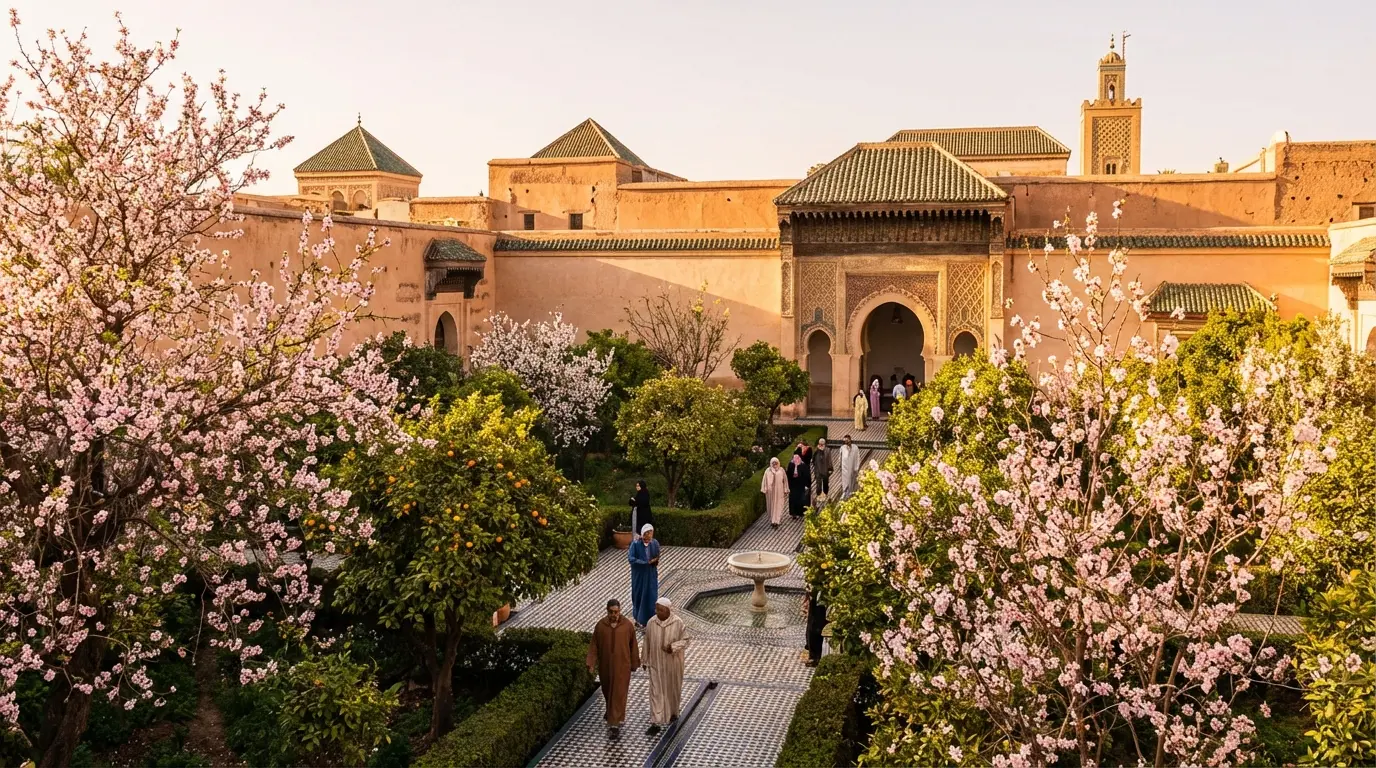
If you are a group leader in the early stages of planning a Morocco heritage trip, one of the first questions you need to answer is when. Not just “when is the weather nice,” because that is the easy part. The harder questions are: When does your community’s calendar allow it? When do the Jewish holidays fall this year? When is Ramadan, and does it matter for your itinerary? When can you actually get 15 or more people to commit to the same week?
This guide answers all of those questions, season by season, with the heritage group leader in mind. If you are planning a synagogue trip, a church group journey, or a multi-faith community experience, the timing considerations are different from what any general travel guide will tell you.
Here is the practical answer first, followed by the detail you need to make the right call.
The Short Answer (for Group Leaders in a Hurry)
Spring (March through May) is the best time for most heritage groups. October is the single most popular month. Summer is too hot for medina walking and outdoor cemetery visits. Winter works but is quieter, shorter on daylight, and cooler than many groups prefer.
If your group is Jewish, plan around the High Holidays in September and October. If you are traveling during Ramadan, know how it affects site access and daily rhythms. If your community includes school-age families, spring break and October school holidays are your scheduling windows.
That is the summary. Keep reading for the specifics that will help you choose the right dates for your community.
For a full overview of what Morocco offers heritage travelers, see our Morocco heritage travel guide.
Spring (March through May), the Heritage Sweet Spot
Weather in the Medinas and the Atlas Region
Spring temperatures in Fez and Marrakech hover between 65 and 80 degrees Fahrenheit, which is comfortable for long days of walking through medinas, visiting synagogues, standing in cemeteries, and spending time at outdoor sites like the Hassan II Mosque esplanade in Casablanca.
In the Atlas region and the south (Ouarzazate, the Dades Valley, the Draa), spring is particularly pleasant. The scorching heat that makes summer unbearable has not arrived yet, and the landscape is often green from winter rains. If your itinerary includes any of the lesser-known heritage sites in the mountains or valleys, spring weather makes those visits far more comfortable than summer would.
For heritage groups that include elderly members or anyone with mobility considerations, spring weather means your group can be outdoors for extended periods without the physical strain that heat causes. That matters when you are visiting cemeteries on exposed hillsides or walking through the car-free streets of the Fez medina, where there is no air conditioning and very little shade.
Jewish and Christian Calendar Considerations
Passover falls in March or April, depending on the year. If your group observes Passover strictly, you will want to schedule your trip either before or after the holiday rather than during it. Finding kosher-for-Passover food in Morocco is possible in the major cities, particularly Casablanca, but it requires advance planning and limits your restaurant options significantly. Most group leaders choose to avoid the Passover week entirely.
For Christian groups, Easter falls in March or April, so check the dates for your specific year. Post-Easter travel in late April and May is a common and comfortable window. Your congregation has just celebrated a major holiday, the energy is high, and the weather in Morocco is welcoming.
May is an excellent month for both Jewish and Christian groups. The weather is warm but not yet hot. The spring holidays have passed. The tourist crowds have not yet reached summer levels, which means shorter waits at popular sites and more personal encounters in the medinas and heritage quarters. If your community has flexibility, May is one of the strongest months on the calendar.
Summer (June through August), Why Most Heritage Groups Avoid It
Heat in Fez and Marrakech
Summer temperatures in Fez regularly exceed 100 degrees Fahrenheit, and some days push well beyond that. Marrakech is not much better. The medinas, which are enclosed and narrow, trap heat. Walking through the Fez mellah, visiting the Ibn Danan Synagogue, or spending time at outdoor cemeteries in July is physically taxing, especially for older group members or anyone not accustomed to extreme heat.
This does not mean summer travel is impossible. Coastal cities like Casablanca and Essaouira stay cooler, with summer temperatures in the 70s and low 80s. If your itinerary is heavily weighted toward the coast, summer can work. But for most heritage itineraries, which center on Fez and Marrakech as the primary Jewish heritage sites, summer is the least comfortable season by a wide margin.
The heat also affects the quality of the experience. When your group is focused on staying hydrated and finding shade, they are not fully present at the sites. The emotional depth that makes a heritage trip meaningful requires physical comfort, or at least the absence of physical distress. Summer heat works against that.
School-Year Calendars and Group Scheduling
Many group leaders find that summer does not work for a practical reason that has nothing to do with weather. For synagogue and church communities, summer is when families scatter. Kids are at camp or on family trips. Parents are using their vacation days for other commitments. Recruiting 15 or more participants for a group trip in July or August is significantly harder than in spring or fall.
If your community is mostly retirees or empty-nesters without school-age children, summer scheduling is more flexible. But for mixed-age congregations where families with children make up a significant portion of your potential participants, spring and fall are more realistic windows. The people you need to commit are simply more available during those seasons.
Fall (September through November), the Second Best Window
Post-High-Holiday Travel for Jewish Groups
For Jewish groups, the fall calendar revolves around the High Holidays. Rosh Hashanah and Yom Kippur fall in September or early October (the exact dates shift each year on the Gregorian calendar), followed by Sukkot and Simchat Torah. This cluster of holidays takes up roughly three to four weeks of the fall, and during that time, your community is not available for travel.
Most Jewish heritage groups schedule their Morocco trip for mid-to-late October, after all the holidays have ended and the community has returned to regular rhythms. This is the single most popular travel window for Jewish heritage groups in Morocco, and for good reason. The holidays are done. The emotional and spiritual intensity of the High Holiday season creates a natural openness to deeper experience. And there is a sense of renewal after Yom Kippur that makes a heritage journey feel especially appropriate and timely.
If you are a rabbi planning a Morocco trip for your congregation, October is almost certainly where you should start your date planning. Work backward from there to set your recruitment timeline.
Why October Is the Most Popular Heritage Month
October combines comfortable weather (highs in the low-to-mid 70s in Fez and Marrakech, cool evenings), post-holiday availability for Jewish groups, and a natural break in the church calendar for Christian groups (between the summer programs and the Advent season). It is also past the summer tourist peak, which means fewer crowds at heritage sites and more personal interactions with local guides and communities.
If your group is flexible on dates within October, mid-month tends to be the sweet spot. Early October can still overlap with Sukkot in some years, and late October starts to feel autumnal with shorter days. But the entire month works well, and Heritage Tours can help you pick the exact dates that align with your community’s calendar.
Winter (December through February), a Quieter Option
What Changes in the Medinas
Winter in Morocco is mild compared to most of the US and Europe. Daytime temperatures in Fez and Marrakech range from the mid-50s to mid-60s Fahrenheit. Evenings are cool, sometimes cold enough for a proper coat. Rain is possible, especially in the north and in the mountains, though Morocco does not get sustained winter rainfall like northern Europe.
The medinas are quieter in winter, which some groups prefer. Fewer tourists means more space in the narrow streets, more direct engagement with shopkeepers and local residents, and a different pace that allows for longer, more reflective visits. If your group values intimacy and quiet contemplation over warmth and sunshine, winter has real advantages. The heritage sites are the same. The experience of visiting them with fewer people around can actually be deeper.
The trade-off is shorter daylight hours. In December, sunset in Fez comes around 5:30pm, which limits the time available for outdoor site visits, particularly cemeteries and outdoor architecture. Plan your daily schedule accordingly, with outdoor visits in the morning and museum or synagogue visits (which do not depend on daylight) in the afternoon.
Christmas to New Year for Christian Groups
Some Christian groups schedule Morocco trips over the Christmas-to-New-Year window. This works well for groups that want to travel when their community is already on break from work and school. The weather is cooler but manageable, especially if your group includes people who prefer autumn-like temperatures over summer heat.
The contrast between Morocco’s Islamic and Jewish heritage and the Christmas season can produce meaningful reflection and conversation within your group. Standing in a Moroccan synagogue during the week of Christmas, or visiting a mosque while your own community is celebrating Advent, raises questions about faith, tradition, and belonging that can deepen the trip’s spiritual dimension.
Be aware that some heritage sites may have adjusted hours during this period, and hotel availability in Marrakech and Fez can be tighter around the Western New Year. Book early if this is your target window.
Ramadan, What Group Leaders Need to Know
How Ramadan Affects Site Access and Opening Hours
Ramadan is the Islamic holy month of fasting, and it shifts by about 11 days each year on the Gregorian calendar. During Ramadan, observant Muslims fast from dawn to sunset. This affects daily rhythms across the entire country in ways that heritage travelers should understand and plan around.
For heritage groups, the most practical impacts are:
Restaurants and meals: Many restaurants are closed during daylight hours, especially outside the major tourist cities. Hotels that cater to international visitors generally serve meals as usual, but your dining options outside the hotel will be limited until after sunset. If your itinerary includes small towns or rural areas, advance meal planning is essential during Ramadan.
Site hours: Some heritage sites, particularly those managed by local municipal authorities rather than national tourism boards, may have shortened hours during Ramadan. Mosques that are normally open to non-Muslim visitors may adjust their tour schedules. Synagogue and cemetery visits are generally less affected, but confirm hours with your local operator in advance.
Energy and pace: The country moves at a different speed during Ramadan. Shops may open later, close earlier, or not open at all during the day. Guides and drivers who are fasting may have lower energy in the afternoons. Being respectful of this is not just polite, it is part of the cultural experience. Your group should understand that they are visiting a country in the middle of its most important religious observance.
Should You Schedule Around It or Through It?
Most heritage group leaders choose to schedule around Ramadan. It simplifies meal planning, ensures consistent site access, and avoids putting your group in the position of eating publicly while the country around them is fasting. For a first visit to Morocco, scheduling outside of Ramadan removes one layer of complexity from an already rich and sometimes intense trip.
That said, traveling during Ramadan is not wrong or disrespectful, and some group leaders actively seek it out. The iftar (evening meal breaking the fast) is often a communal, celebratory occasion, and being invited to share iftar with a Moroccan family or community can be one of the most memorable and humanizing moments of any trip. The nighttime energy in the medinas during Ramadan is entirely different from any other time of year, with streets coming alive after dark in a way that your group will never forget.
If your group is culturally sensitive, adaptable, and open to adjusting their daily pace, Ramadan travel can add a profound layer of interfaith understanding to the trip. The key is knowing what to expect and planning for it rather than being surprised by it. Heritage Tours can advise on Ramadan dates for your travel year and help you decide whether to schedule around it or through it based on your group’s character and flexibility.
For practical guidance on organizing your group trip, including recruitment timelines and how to frame the trip for your community, see our guide for pastors and rabbis.
When Heritage Tours Recommends You Go
If you ask us to pick one window, we will say October. Comfortable weather, post-High-Holiday availability for Jewish groups, a natural break in the church calendar, and the sweet spot before the winter rains arrive. April and May are a close second, particularly for groups that want to travel in spring.
But the honest truth is, the best time for your group is the time that works for your community. If your congregation can only travel in January, January works. The heritage sites are open, the medinas are quiet, and the experience is still meaningful. If March is when your schedule clears and your participants can commit, March is a fine month for Morocco.
Heritage Tours builds custom itineraries around your calendar. We do not have fixed departure dates that you have to fit your community into. You tell us when your people can go, and we build the trip around that window. That is one of the advantages of working with an operator who specializes in group heritage travel rather than a mass-market tour company with preset schedules.
If you are starting to think about dates, reach out and we will talk it through. There is no commitment required. Just a conversation about what works for your people and how to make the most of whatever season you choose.
Frequently Asked Questions
What is the best time of year to visit Morocco for a heritage tour?
Spring (March through May) and fall (September through November) are the best seasons for heritage groups. October is the single most popular month, combining comfortable weather, post-High-Holiday availability for Jewish groups, and a natural break in the church calendar. The weather is ideal for walking through medinas and visiting outdoor heritage sites.
How does Ramadan affect touring Morocco as a heritage traveler?
During Ramadan, many restaurants close during daylight hours, some heritage sites adjust their schedules, and the country operates at a slower daytime pace. Hotels serving international visitors generally maintain normal meal service. Most heritage groups schedule around Ramadan for simplicity, but traveling during Ramadan is possible and can add a meaningful interfaith dimension if your group is prepared for the adjusted rhythms.
Is spring or fall better for a Morocco group trip?
Both seasons are excellent. Spring offers warming weather, green landscapes in the Atlas region, and a post-holiday window for both Jewish and Christian communities. Fall, particularly October, is the most popular month because it follows the Jewish High Holidays, offers comfortable temperatures, and falls in a natural scheduling gap for most congregations. The best choice depends on your community’s calendar and the dates your participants can commit to.
What should Jewish groups know about scheduling a Morocco trip around the High Holidays?
Rosh Hashanah, Yom Kippur, Sukkot, and Simchat Torah fall in September and early October, taking up roughly three to four weeks. Most Jewish heritage groups schedule their Morocco trip for mid-to-late October, after all holidays have ended. Passover (March/April) also needs consideration for spring travel. Heritage Tours builds itineraries around your community’s religious calendar to avoid conflicts.
Is Morocco too hot to visit in summer?
For most heritage itineraries that center on Fez and Marrakech, summer heat is a significant issue. Temperatures regularly exceed 100 degrees Fahrenheit in July and August, making extended walking through medinas and visits to outdoor cemeteries physically demanding. Coastal cities like Casablanca and Essaouira are cooler, but the core inland heritage sites are best visited in spring or fall when temperatures are 20 to 30 degrees lower.