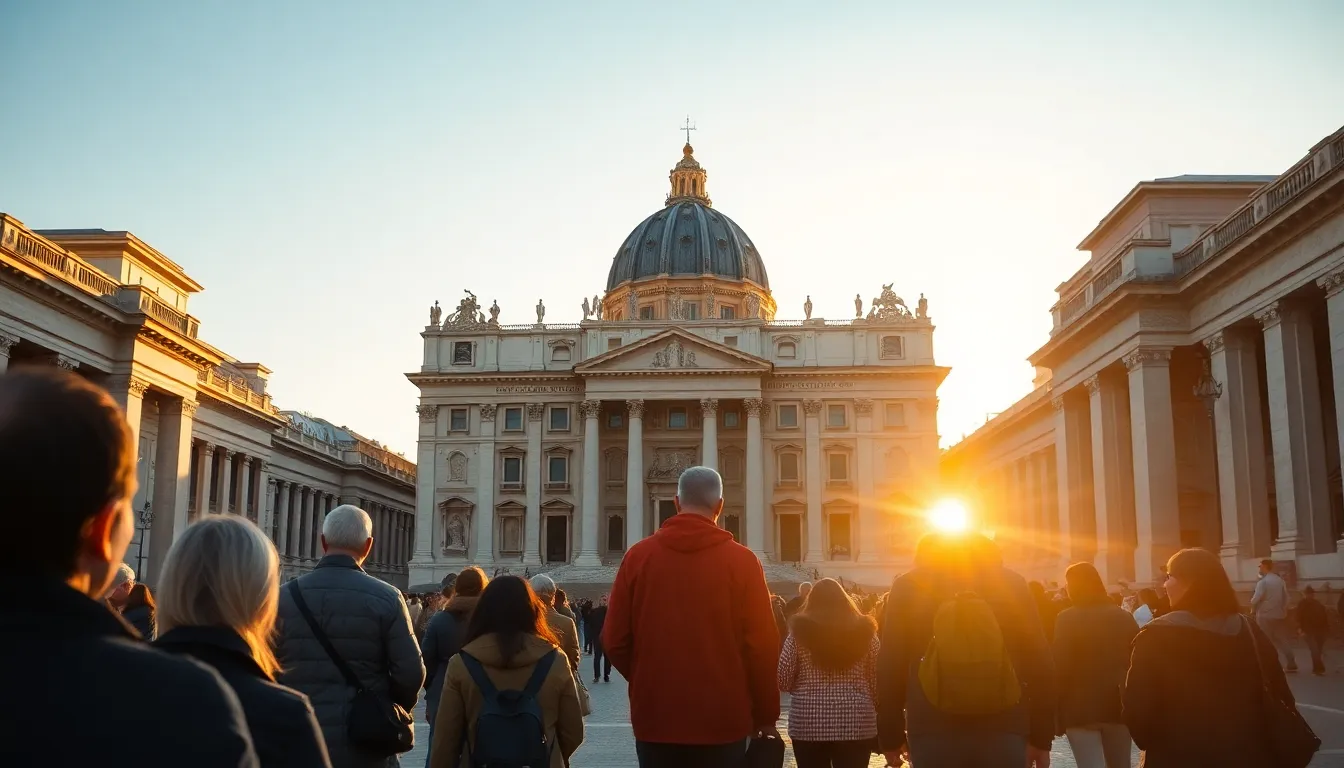
The Vatican is the one stop on an Italy heritage itinerary where I have watched a well-prepared group have a transcendent morning and an unprepared group spend three hours frustrated, hot, and stuck in a line that wrapped halfway around the wall. The difference is not luck. It is planning, and most of it has to happen weeks before anyone boards a plane.
I have brought groups through those gates more times than I can count. Let me walk you through exactly what a heritage group needs to know, in the order you need to know it.
Understand What “The Vatican” Actually Means for Your Visit
People say “we’re visiting the Vatican” as if it is one site. For your group, it is really three separate experiences with three separate sets of rules.
St. Peter’s Basilica is free to enter. There is no ticket, but there is a security line, and in peak season that line can swallow two hours of your morning.
The Vatican Museums and the Sistine Chapel are ticketed and timed. This is where the Raphael Rooms, the galleries, and Michelangelo’s ceiling live. You do not walk up and buy tickets at the door with a group; you reserve in advance, weeks ahead.
The Scavi (the necropolis beneath St. Peter’s) is a separate, restricted, deeply moving experience that requires its own application months in advance. I will come back to this, because for many faith groups it is the highlight.
Treating these as one undifferentiated “Vatican visit” is the most common planning mistake I see. They each need their own decision.
Book Timed Entry Far in Advance
For a group, walk-up tickets to the Vatican Museums are not a real option in any season you would actually travel. You reserve timed-entry tickets in advance, and for groups that means a guided reservation that lets you bypass the general ticket line.
The practical reality: in spring and summer, the general entrance line for the Museums regularly runs ninety minutes to two hours. With a pre-arranged timed entry and a licensed guide, your group walks past that line to a separate group entrance. That single arrangement is worth more to a tired congregation than almost anything else on the day.
Book your slot for early morning when you can. An 8:00 or 9:00 a.m. entry means cooler galleries, thinner crowds in the Sistine Chapel, and a group that is still fresh for the most demanding part of the walk. By midday the chapel is shoulder-to-shoulder and the energy in the room changes entirely.
When you travel matters too. If you are still settling your dates, our season-by-season guide to the best time to visit Italy for a heritage tour lays out how Vatican crowds shift across the year.
The Dress Code Is Enforced, and It Stops Groups at the Door
This one is not a suggestion, and I have personally watched travelers turned away. The Vatican enforces a dress code for both St. Peter’s and the Sistine Chapel.
Shoulders must be covered. Knees must be covered. That rule applies to everyone, men and women alike. No tank tops, no shorts above the knee, no bare shoulders, no short skirts. It is enforced by staff at the entrance, and there is no negotiating it.
The fix is simple and it is your job as group leader to communicate it before the day. Tell every member to wear or carry something that covers shoulders and knees. A lightweight scarf or shawl in a day bag solves it instantly for warm-weather visits; people can drape it on for the Vatican and take it off afterward. I tell my groups this twice: once in the pre-trip packet and once on the bus that morning. It prevents the heartbreak of one member being denied entry while the rest go in.
For more on dressing for sacred sites across the whole trip, our guide on what to pack for an Italy heritage tour covers modesty layers for every church and synagogue on the itinerary.
The Scavi: The Visit Most Groups Don’t Know to Request
If your group has any connection to early Christian history, this is the one I want you to know about. Beneath St. Peter’s Basilica lies the Scavi, the excavated ancient necropolis, including what is venerated as the tomb of Peter himself.
It is not a casual stop. Access is tightly limited, requires a separate application to the Excavations Office well in advance (plan on three to six months), and admits only small numbers at a time, typically groups capped around a dozen. Children below a certain age are not permitted, and photography is not allowed.
For the right group, it is unforgettable. Standing in the necropolis, at the foundations of the faith, in a space most visitors to Rome never see, is the kind of moment heritage travel exists to create. Because of the small-group cap and the long lead time, this needs to be requested early and may not accommodate a large congregation all at once. We help groups apply and structure the visit around the cap when it is the right fit.
Practical Logistics on the Day
A few things that separate a smooth Vatican morning from a hard one.
Keep your group together with a clear meeting point and time. The Museums are vast and easy to get separated in; agree on where you will regroup before you enter. Travel light. Large bags must be checked, and the cloakroom line adds time. Bring water, because the walk through the galleries to the Sistine Chapel is long and warm. And set expectations about the chapel itself: it is a place of silence and reverence, photography is prohibited, and guards will quiet the room. Tell your group beforehand so the rule does not catch them off guard at a sacred moment.
For a group of twenty, plan a full morning, roughly four hours, to do the Museums, the Sistine Chapel, and St. Peter’s without rushing. If you are adding the Scavi, that is a separate timed appointment to build around.
FAQ: Visiting the Vatican With a Group
Do we need to book Vatican tickets in advance for a group?
Yes, without exception for any season you would realistically travel. Walk-up tickets mean a ninety-minute to two-hour line for the Vatican Museums in spring and summer. A pre-arranged timed entry with a licensed guide lets your group use the group entrance and bypass that line entirely. St. Peter’s Basilica is free but still has a security line; the Museums and Sistine Chapel are ticketed and timed.
What is the Vatican dress code for groups?
Shoulders and knees must be covered, for everyone, men and women. No tank tops, shorts above the knee, bare shoulders, or short skirts. It is enforced at the entrance to both St. Peter’s and the Sistine Chapel, and travelers are turned away. Have every member carry a scarf or shawl to drape on, and remind them the morning of the visit.
What is the Scavi and how do we visit it?
The Scavi is the ancient necropolis beneath St. Peter’s, including the venerated tomb of Peter. Access requires a separate application to the Excavations Office three to six months ahead, admits only small groups (around a dozen at a time), excludes young children, and prohibits photography. For groups connected to early Christian history it is often the highlight, but the small cap and long lead time mean it must be requested early.
How long should we plan for a Vatican visit?
For a group of twenty, plan a full morning of about four hours to cover the Vatican Museums, the Sistine Chapel, and St. Peter’s Basilica without rushing. Book an early-morning entry around 8:00 or 9:00 a.m. for cooler galleries and a less crowded Sistine Chapel. If you add the Scavi, treat it as a separate timed appointment.
Can we take photos inside the Sistine Chapel?
No. Photography is prohibited inside the Sistine Chapel, and guards enforce silence and reverence there. Tell your group in advance so the rule does not surprise anyone during what is, for many, the most moving moment of the visit. Photography is allowed in most of the Vatican Museums galleries leading up to the chapel.
The Vatican rewards a group that arrives prepared and tests one that does not. If you want this stop handled the right way, with timed entry, a licensed guide, and the dress code and Scavi sorted out ahead of time, see how our group heritage tours work, explore the full Italy itinerary, and contact us to build the Vatican morning your congregation deserves.