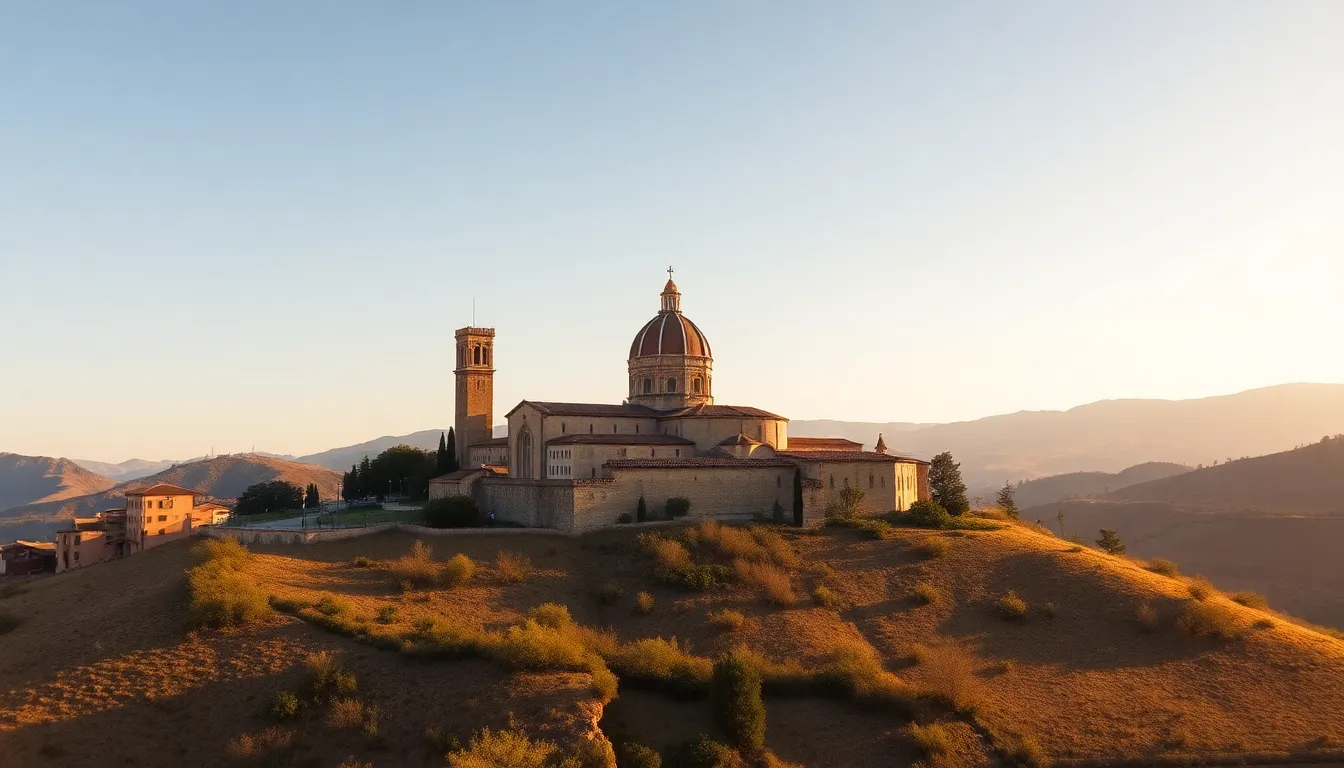
People ask me why I would spend a whole week in one small corner of Umbria when Italy has Rome, Florence, and Venice waiting. My answer is always the same. You do not understand Francis from a single afternoon in Assisi. You understand him by walking the places he walked, in the order his life took him there, until the geography of his story becomes something you feel in your legs and not just your head.
Francis of Assisi shaped Christianity in a way few people ever have. He took the radical poverty of the Gospel literally, founded an order that reshaped the medieval church, received the stigmata, and wrote a hymn to creation that people still sing eight hundred years later. But Francis was not a figure of cathedrals and crowds. He was a man of mountains, caves, small chapels, and quiet places. To follow him well, you have to leave the basilica and climb into the hills.
This itinerary is built for groups drawn specifically to Francis: Franciscan parishes, contemplative communities, retreat groups, and pastors who want to lead their people through a slower, more reflective kind of trip. It is not a rushed sightseeing route. It is a pilgrimage in the older sense, structured around the Franciscan sites of Assisi and the wider trail that runs to La Verna and Greccio. The pace is gentle on purpose. Francis would have wanted it that way.
Days 1 to 2: Assisi, the Town That Made Him
Two days in Assisi is the right amount, because the town itself is the first teacher. Francis grew up here, the son of a wealthy cloth merchant, and the most important moment of his life happened in the town square. He stood before his father and the bishop, stripped off the fine clothes his father had given him, and chose poverty. Walking the streets where that happened gives the story a weight that reading it never can.
Day 1 centers on the Basilica of St. Francis. The lower church holds Giotto’s frescoes depicting Francis’s life, scene by scene, and the crypt below contains his tomb. But I always tell groups not to treat the basilica as the destination. Spend the afternoon walking down to San Damiano, the small church outside the walls where Francis heard the crucifix tell him to rebuild the church, and where Clare later founded her community. San Damiano is quiet, humble, and far more in the spirit of Francis than the grand basilica that bears his name.
Day 2 climbs above the town to the Eremo delle Carceri, the mountain hermitage where Francis and his early followers went to pray. It is a short drive and a walk through holm oak forest to a cluster of tiny cells and chapels built into the rock. This is where you feel the contemplative Francis. Spend real time here. Let the group sit in silence in the woods. Then visit the Basilica of St. Clare in town, where Clare’s body rests and where the original San Damiano crucifix now hangs. By the end of the second day, your group will have met both the public Francis of the great basilica and the private Francis of the hermitage.
Day 3: The Porziuncola and the Birth of the Order
Below Assisi, on the plain, stands the Basilica of Santa Maria degli Angeli. Inside this large church sits something small and astonishing: the Porziuncola, the tiny stone chapel that Francis rebuilt with his own hands and that became the cradle of the Franciscan order. This is where Francis received Clare into religious life and where, in the adjoining cell, he died in 1226.
Spend the morning here. The contrast of the modest chapel inside the vast basilica is the entire Franciscan message in physical form. The order grew enormous, but it began in a hut. After the basilica, the day is good for rest or a quiet walk in the Umbrian countryside. A Franciscan itinerary should breathe. Do not fill every hour. The empty time is part of the point.
Day 4: Greccio and the First Nativity Scene
Drive south toward the Rieti Valley to Greccio, one of the most beloved sites on the Franciscan trail. In 1223, Francis created the first living nativity scene here, recreating the manger at Bethlehem so that ordinary people could see and feel the humility of Christ’s birth. Every nativity scene in the world traces back to this hillside.
The sanctuary at Greccio is built into the rock face, a cluster of small spaces clinging to the cliff. It is humble and steep and deeply atmospheric. For groups traveling in the Christmas season, this site carries an obvious charge, but it moves people any time of year. We read the account of the first nativity here, and the group understands that a tradition they have known their whole lives was born in this exact place, from one man’s desire to make the Gospel tangible.
Day 5: The Rieti Valley Sanctuaries
The Rieti Valley holds a cluster of Franciscan sanctuaries beyond Greccio, sometimes called the Holy Valley. Depending on your group’s energy and interest, this day can include Fonte Colombo, where Francis wrote the definitive Rule of his order and where he underwent eye surgery, and La Foresta, associated with the writing of the Canticle of the Creatures and with a wine miracle in local tradition.
These are working sanctuaries, often quiet, set in beautiful country. This is a day for the contemplative core of your group. We move at a walking pace, read where it fits, and let the valley do its work. For some groups this is the most peaceful day of the entire trip, and several leaders have told me it is the day their people remember most.
Days 6 to 7: La Verna and the Stigmata
The journey ends at La Verna, the mountain in Tuscany where Francis received the stigmata in 1224, the wounds of Christ marked on his own body. It is the most dramatic and the most sacred site on the Franciscan trail, a sanctuary perched on a forested cliff at over a thousand meters. The drive from Umbria takes a few hours and the landscape grows wilder as you climb.
Day 6 is the arrival and the first encounter with the sanctuary. La Verna is still a working Franciscan friary, and the friars maintain a daily rhythm of prayer. The Chapel of the Stigmata marks the spot, and the walk out to it along the corridor of the friary, especially during the friars’ daily procession, is unforgettable. The forest itself, with its great beech and fir trees, feels charged. Francis loved this mountain, and it is easy to see why.
Day 7 is for reflection and departure. Spend the final morning at La Verna before traveling on. I encourage leaders to close the trip here with a reading of the Canticle of the Creatures, Francis’s hymn praising God through Brother Sun and Sister Moon and Sister Water. Reading it on this mountain, at the end of a week spent walking his life, brings the whole journey to rest. The man who began in a merchant’s house in Assisi ended marked by the wounds of the one he followed. To have walked that arc on the ground stays with people for a long time.
Adapting the Franciscan Trail for Your Group
This route can flex in several directions. Groups with limited time can keep it to Assisi and the Porziuncola in three or four days, which still delivers the core of the Francis story. Groups wanting a fuller pilgrimage can add the broader Rieti sanctuaries or extend toward Rome, where the Franciscan order received papal approval. Contemplative and retreat groups often want more silent time built in, and we adjust the daily rhythm to allow it.
The terrain is the main thing to plan around. The hermitages and mountain sanctuaries involve walking on uneven ground and some climbs. For groups with members who cannot manage that, we choose accessible alternatives, and our accessible Italy itinerary offers a structure that still honors the Franciscan sites within mobility limits.
The group leader sets the spiritual tone. On a Franciscan trip more than any other, the leader’s ability to hold silence, to read at the right moment, and to let the pace stay slow is what shapes the experience. We handle the route, the access to working sanctuaries, and the logistics. You bring your people and the prayer. Together it becomes a pilgrimage and not a tour.
With fifteen or more participants, the group leader travels at no cost. That is how we have always structured group heritage travel, because the leader is what makes the journey what it is.
To place this within the wider heritage of the country, our 10-day Italy itinerary shows how Assisi fits alongside Rome, Florence, and Venice, and our early church itinerary explores the deeper roots of the tradition Francis later renewed.
FAQ: A Saint Francis Itinerary in Italy
What are the most important Saint Francis sites to visit?
The core sites are in and around Assisi: the Basilica of St. Francis with his tomb, the hermitage of the Eremo delle Carceri, San Damiano, and the Porziuncola chapel inside Santa Maria degli Angeli. Beyond Assisi, the Franciscan trail extends to Greccio, where Francis created the first nativity scene, the Rieti Valley sanctuaries, and La Verna in Tuscany, where he received the stigmata. A full Franciscan itinerary connects these into the arc of his life.
How many days do you need for a Franciscan pilgrimage in Italy?
Three to four days covers Assisi and its immediate Franciscan sites well. A fuller pilgrimage that includes Greccio, the Rieti Valley, and La Verna needs six to seven days, because the sites are spread across Umbria and into Tuscany and the pace is intentionally slow. We help you decide based on whether you want the essential Assisi experience or the complete trail of Francis’s life.
What is special about La Verna?
La Verna is the mountain in Tuscany where Francis received the stigmata in 1224, the wounds of Christ on his own body, two years before his death. It is the most sacred and dramatic site on the Franciscan trail, a sanctuary set on a forested cliff that remains a working friary today. The Chapel of the Stigmata marks the spot, and the daily procession of the friars along the friary corridor is one of the most moving moments of any Franciscan pilgrimage.
Is a Saint Francis itinerary physically demanding?
Parts of it are. The hermitages and mountain sanctuaries involve walking on uneven ground and some climbs, and La Verna sits at over a thousand meters. The pace overall is gentle and reflective, with plenty of rest built in. For groups with members who cannot manage the climbs, we substitute accessible alternatives so no one misses the heart of the experience.
Can a Franciscan trip work for a contemplative or retreat group?
It is ideally suited to one. The Franciscan sites are mostly quiet sanctuaries built for prayer, and the whole route is designed to move slowly with room for silence. We build in contemplative time at the hermitages and at La Verna, and we coordinate readings, such as the Canticle of the Creatures, to fit your group’s spiritual rhythm. Many retreat leaders tell us this is the most peaceful trip they have led.
If you feel drawn to walk the life of Francis with your community, I would welcome that conversation. Start with our Italy destination page or learn how our group heritage tours support contemplative travel.
Contact us when you are ready to begin.