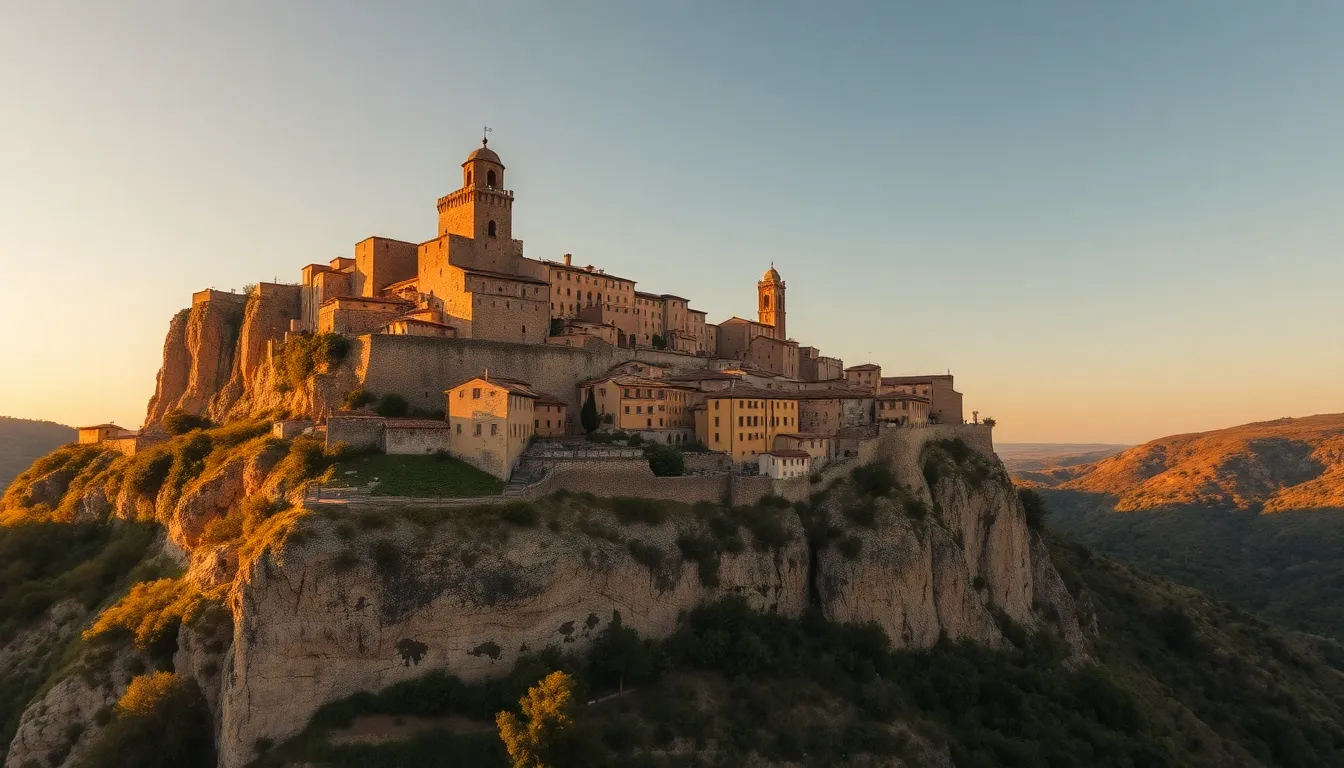
The first sight of Pitigliano stops a busload of people mid-sentence every single time. You come around a bend in the southern Tuscan countryside and there it is, a town built straight out of a cliff of golden volcanic stone, the houses growing right out of the rock as if they had always been part of it. And somewhere in that improbable hill town, for centuries, was a Jewish community so woven into the place that the town earned a name I never tire of saying to a group. La Piccola Gerusalemme. Little Jerusalem.
I love bringing groups here precisely because it is the opposite of Rome and Venice. No ghetto walls locked at night in the way those cities knew. For long stretches, a Jewish community that lived in relative peace with its Christian neighbors, in a remote corner of Tuscany, until history caught up with it anyway. It is a gentler story, and then a harder one, and your group needs both. Here is how I tell it.
Why Little Jerusalem
Jews settled in Pitigliano from the sixteenth century, many of them refugees moving through Italy in the wake of expulsions and pressures elsewhere. The town sat in a territory whose rulers, and later the Medici grand dukes of Tuscany, were comparatively tolerant by the standards of the time. The community grew, prospered in trade and crafts, and at its height in the nineteenth century made up a substantial share of the town’s population.
The name Little Jerusalem came from that density and that visibility. This was a small Tuscan hill town where Jewish life was simply part of the fabric, where Jewish and Christian neighbors lived side by side, traded together, and in many cases protected one another. I am careful not to romanticize it past what is true. There were restrictions and there were hard periods, including a ghetto established under later Medici rule. But compared to the locked gates of Rome and Venice, Pitigliano holds a different and more neighborly memory, and groups feel the difference as soon as we start walking.
The Synagogue Carved Into the Rock
The synagogue of Pitigliano dates to the late sixteenth century, with later rebuilding, and it is set into the tufa rock at the edge of the old Jewish quarter. The sanctuary above is modest and warm, with a women’s gallery and an ark of carved and gilded wood, the kind of room that feels intimate rather than grand. It served the community for generations.
What makes Pitigliano remarkable, and what I make sure a group sees in full, is everything carved into the soft volcanic rock beneath and around the synagogue. The community did not just have a place to pray. It had a complete set of institutions cut into the cliff.
The Mikveh, the Bakery, and the Rock-Cut Quarter
Below the synagogue, steps lead down through the tufa into a series of chambers, and this is where the visit becomes unforgettable for most groups.
There is the mikveh, the ritual bath, cut into the rock and fed by the natural springs that run through the cliff. There is the kosher bakery with its oven, where the community baked unleavened bread for Passover, the room still bearing the marks of its use. There are cellars for kosher wine, a dyeing workshop, and storage spaces, an entire economy of Jewish life carved into the stone. You descend from the sanctuary into the working heart of the community, and the temperature drops, and the rock closes around you, and people go quiet.
I tell groups to notice what this layout means. This was self-sufficiency. A community that could bake its own matzah, immerse in its own mikveh, and press its own wine, all within the rock of a single Tuscan hillside. It is one of the most complete pictures of an everyday traditional Jewish community you can walk through anywhere in Italy.
The Community That Was Lost
Then comes the harder part of the story, and I do not soften it. The community of Pitigliano declined through the late nineteenth and early twentieth centuries as younger people left the remote hill town for the cities and for opportunities elsewhere. By the time of the Second World War, only a small number of Jews remained.
Under the racial laws and the German occupation, those who stayed were in grave danger. Here the neighborly character of the town showed itself one last time. Christian families in and around Pitigliano hid their Jewish neighbors, in farmhouses and in the countryside, at real risk to themselves, and a number of lives were saved because of it. That part of the story deserves to be told with the same weight as the loss, because both are true.
But the community did not recover. The numbers were too small, and the survivors mostly moved away. By the later twentieth century, Jewish life as a living, daily presence in Pitigliano had effectively ended. For a congregation that carries the memory of vanished communities, this is a place to stand quietly. Little Jerusalem is, today, a memory carefully kept rather than a living community.
I handle this moment the way I handle it everywhere. Space, not commentary. I let the group sit with it. And then I make sure they understand what has been done to keep the memory honest.
A Memory Carefully Kept
In the 1990s and early 2000s, the synagogue and the rock-cut chambers were restored, and a small museum was established, run with care by people committed to keeping this history alive. The synagogue is used for occasional services when visiting groups or the small association make it possible. The bakery, the mikveh, and the cellars are open to visitors, preserved as they were.
For a group, this is the kind of site where advance arrangement matters. Heritage Tours coordinates the visit and a knowledgeable local guide ahead of time, builds in the unhurried pace this place asks for, and connects Pitigliano to the wider arc of the trip so it is understood in context. It pairs especially well with the great urban communities, the Roman Ghetto and the Venice Ghetto, because it shows a completely different shape of Jewish life. Our Jewish heritage in Italy overview frames how it all fits together.
When a group reaches fifteen or more participants, the group leader travels at no cost, which often makes a fuller itinerary, with a town like Pitigliano included, reachable for a congregation.
FAQ: Pitigliano, Little Jerusalem
Why is Pitigliano called Little Jerusalem?
Pitigliano earned the name La Piccola Gerusalemme, Little Jerusalem, because of the density and visibility of its Jewish community from the sixteenth century onward. In this remote Tuscan hill town, Jewish life was woven into the everyday fabric, with Jewish and Christian neighbors living side by side in relative harmony for long stretches of its history.
What can you see at the Pitigliano synagogue?
The visit includes the synagogue itself, modest and warm with a carved and gilded ark, and the remarkable chambers cut into the soft volcanic tufa rock beneath it, including the mikveh fed by natural springs, the kosher bakery with its oven, wine cellars, and a dyeing workshop, a near-complete picture of a self-sufficient traditional community.
What happened to the Jewish community of Pitigliano?
The community declined from the late nineteenth century as younger people left for the cities, and only a small number remained by the Second World War. Christian neighbors hid many of them during the German occupation, saving lives at real risk to themselves. The community did not recover afterward, and Jewish life as a daily presence in the town effectively ended.
Is the Pitigliano synagogue still active?
It is preserved and used for occasional services when arranged, rather than serving a permanent living community. The synagogue, mikveh, bakery, and cellars are maintained as a museum and are open to visitors, kept by people committed to preserving the memory of Little Jerusalem.
Is Pitigliano worth adding to an Italy heritage tour?
For many groups, yes. It offers a completely different shape of Jewish history from the urban ghettos of Rome and Venice, a remote, neighborly, self-sufficient community carved into a Tuscan cliff, with both a gentler past and a sobering end. It adds real range to an itinerary and is often a quiet highlight.
If a town like Pitigliano speaks to what you want your community to experience, I would be glad to help you weave it into a fuller Italian journey. Learn more about our Italy heritage tours and our group heritage tours, then reach out whenever you are ready. The conversation is always the first step.