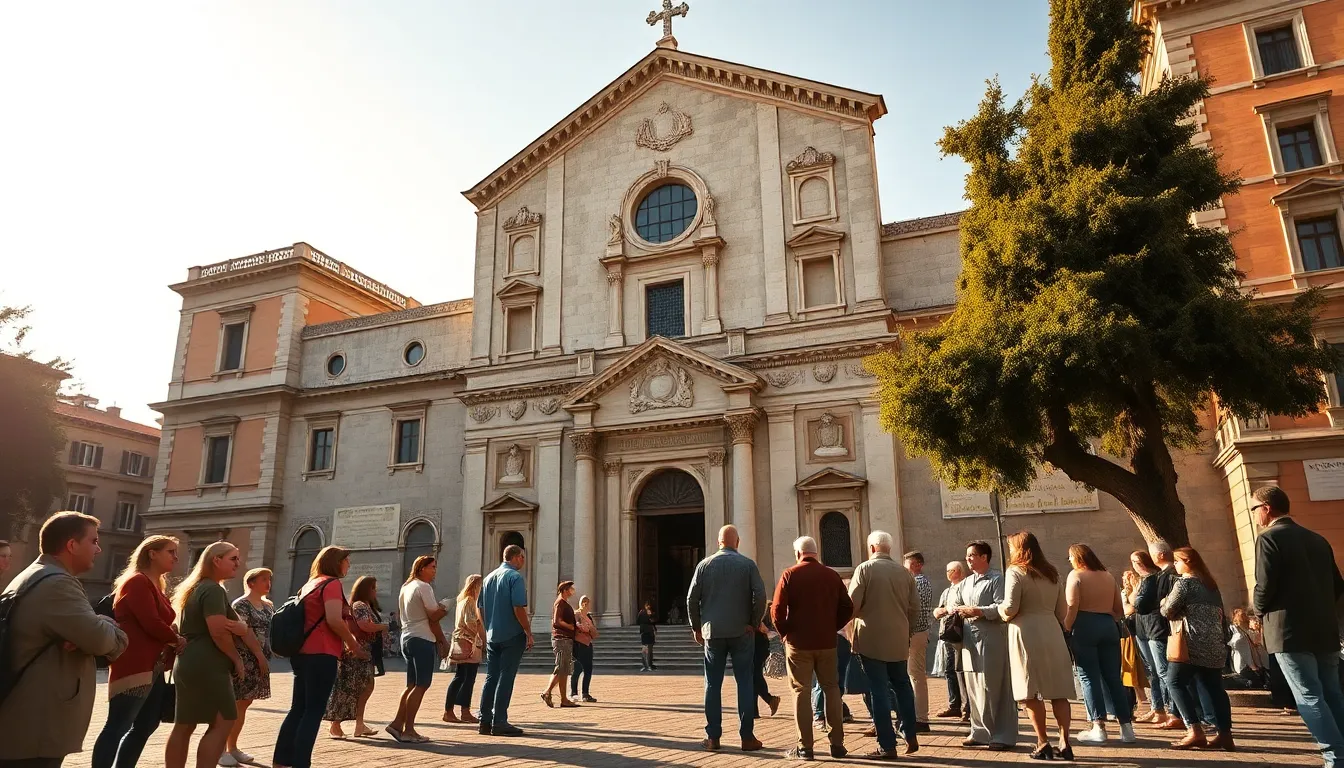
Most group leaders ask me where to go and when to go long before they ask how many people to bring. But group size quietly shapes the whole trip more than either of those, and getting it wrong is one of the few planning mistakes that is hard to fix once you are on the ground. After forty years of leading congregations through Italy, I have watched the same numbers play out again and again, and there are real thresholds where the experience and the economics change.
So let me lay out how I actually think about group size for an Italy heritage trip: what each size feels like inside the churches and synagogues and on the streets, where the money tips in your favor, and how to land on the number that fits your congregation. If you are still in the early stages, our best-time-to-visit guide pairs naturally with this one, since dates and group size are the two decisions that anchor everything else.
Why Group Size Is an Experience Decision First
Before the economics, understand what size does to the trip itself, because Italy’s heritage sites are not neutral about how many people you bring.
A small group, say ten to fifteen, moves through a site like a single body. In a synagogue in Venice or a side chapel in Rome, the guide can speak quietly and everyone hears. People can ask real questions. You can linger when a moment lands and move on when it does not. The intimacy that heritage travel is supposed to create comes naturally at this size.
A larger group, twenty-five to forty, is a different animal. It has energy and momentum and a real sense of community, which many congregations want. But it also needs more structure. The guide often needs a headset system so everyone can hear in a crowded gallery. Moving the group through narrow streets and timed entries takes longer. Restaurants and small sites have to be chosen for capacity. None of this is bad, but it is a different kind of trip, and it has to be planned as one rather than treated like a small group with extra people stapled on.
The mistake I see is leaders who picture the intimacy of a small group but build the roster of a large one, and then wonder why the trip felt rushed and impersonal. Decide what kind of experience you want first. The number follows from that.
The Economics: Where the Money Tips
Now the part every leader has to reckon with, because heritage travel runs on group economics, and the per-person cost moves with the size of the group.
The core driver is that fixed costs spread across more people. A guide, a coach, timed-entry coordination, and the leader’s own travel are largely the same whether you bring twelve people or thirty. Spread those costs across a dozen travelers and each person carries a bigger share. Spread them across thirty and the per-person number comes down. This is why a slightly larger group often delivers better value per person, up to the point where the experience starts to suffer from the size.
There is also a hard, specific threshold worth knowing: with Heritage Tours, the group leader travels free with fifteen or more participants. That is not a small detail in the planning math. For a pastor or rabbi, it changes the conversation with the church board or the synagogue committee, because the leader’s seat is covered once the group reaches fifteen. It also gives you a concrete number to build toward when you start recruiting from your congregation, which makes the recruiting itself more focused.
Below fifteen, a trip is absolutely possible, but the per-person cost is higher and the leader’s travel is not covered. That is a real trade-off, not a dealbreaker. Some leaders deliberately keep a group small and intimate and accept the cost. But if you are within reach of fifteen, getting there usually improves both the economics and the leader’s own position with the congregation.
What Each Size Range Actually Feels Like
Let me put rough ranges to it, from how it plays on the ground.
Ten to fifteen is the intimate end. Deep, quiet, flexible. Everyone hears the guide without a headset. You can adapt the day on the fly. The per-person cost is at its highest, and at the low end of this range the leader’s seat is not yet free. This size suits a congregation that wants closeness over scale, and it shines in the quieter seasons like late fall and winter when the sites themselves are emptier.
Fifteen to twenty-five is, in my experience, the sweet spot for most heritage congregations. You have crossed the threshold where the leader travels free, the per-person economics have improved meaningfully, and the group is still small enough to feel personal at most sites. The guide may want a headset for the busiest galleries, but the group still moves with reasonable agility. If a leader asks me for a single recommendation with no other information, this range is usually it.
Twenty-five to forty is the community-scale trip. Strong shared energy, the best per-person value of the ranges, and a real sense of your congregation moving through Italy together. It requires the most structure: headsets, careful restaurant and site selection for capacity, more buffer time at every transition. With good planning it is wonderful. Without it, it sprawls. This size rewards leaders who are comfortable with logistics or who lean on an operator that handles them.
Beyond forty, you are generally into splitting the group into two coaches or two guide units, which is its own undertaking and usually a sign the trip should be planned as a multi-group departure from the start.
How to Land on Your Number
Here is how I help a leader settle it. Start with the experience you want, intimate or community-scale, because that sets the band. Then look honestly at how many people you can realistically recruit from your congregation in the time you have, which is why an early start matters so much. Then check the number against the fifteen-person threshold, since crossing it covers the leader’s travel and improves everyone’s per-person cost.
For most congregations, the answer lands in that fifteen-to-twenty-five band: large enough for the economics to work and the leader to travel free, small enough to keep the intimacy that makes heritage travel worth doing. But the right number is the one that fits your people, your budget, and the kind of trip you want to give them. Our accessibility guide is worth reading alongside this, because mobility makeup also influences how large a group you can comfortably move through Italy’s older sites.
FAQ: Italy Heritage Group Size
What is the ideal group size for an Italy heritage tour?
For most faith congregations, fifteen to twenty-five is the sweet spot. It crosses the threshold where the leader travels free, brings the per-person cost down meaningfully, and still keeps the group small enough to feel personal at most sites. Smaller groups of ten to fifteen offer more intimacy at a higher per-person cost, and larger groups of twenty-five to forty offer the best value with more structure required.
Why does the group leader travel free at fifteen people?
With Heritage Tours, the group leader travels free with fifteen or more participants. The reason is group economics: the leader’s seat is covered by the structure of a group that size, which is why fifteen is a meaningful planning number. It changes the conversation with a church board or synagogue committee and gives a leader a concrete target to recruit toward from the congregation.
Does a larger group cost less per person?
Generally, yes, up to a point. Fixed costs like the guide, coach, and entry coordination spread across more travelers, so the per-person share comes down as the group grows. The trade-off is that very large groups need more structure, headsets, capacity-conscious site and restaurant choices, and buffer time, and can lose intimacy. The value improves with size until the experience starts to suffer from it.
Can we run an Italy heritage trip with fewer than fifteen people?
Absolutely. A group of ten to fifteen is entirely workable and gives you the most intimate, flexible experience, which some leaders deliberately choose. The trade-offs are a higher per-person cost and that the leader’s travel is not yet covered below fifteen. If you are close to fifteen, reaching it usually improves both the economics and the leader’s position, but a smaller, closer trip is a valid choice.
How do I decide how big our group should be?
Start with the experience you want, intimate or community-scale, since that sets the range. Then look honestly at how many people you can recruit from your congregation in your timeframe, which is why starting early helps. Then check that number against the fifteen-person threshold, because crossing it covers the leader’s seat and improves everyone’s cost. For most congregations the answer lands between fifteen and twenty-five.
If you are trying to figure out how many people to bring, that is a question I work through with leaders constantly, and the answer is always specific to your congregation. Explore our Italy heritage tours, see how our group journeys are structured, and contact us so we can find the right number for your community.