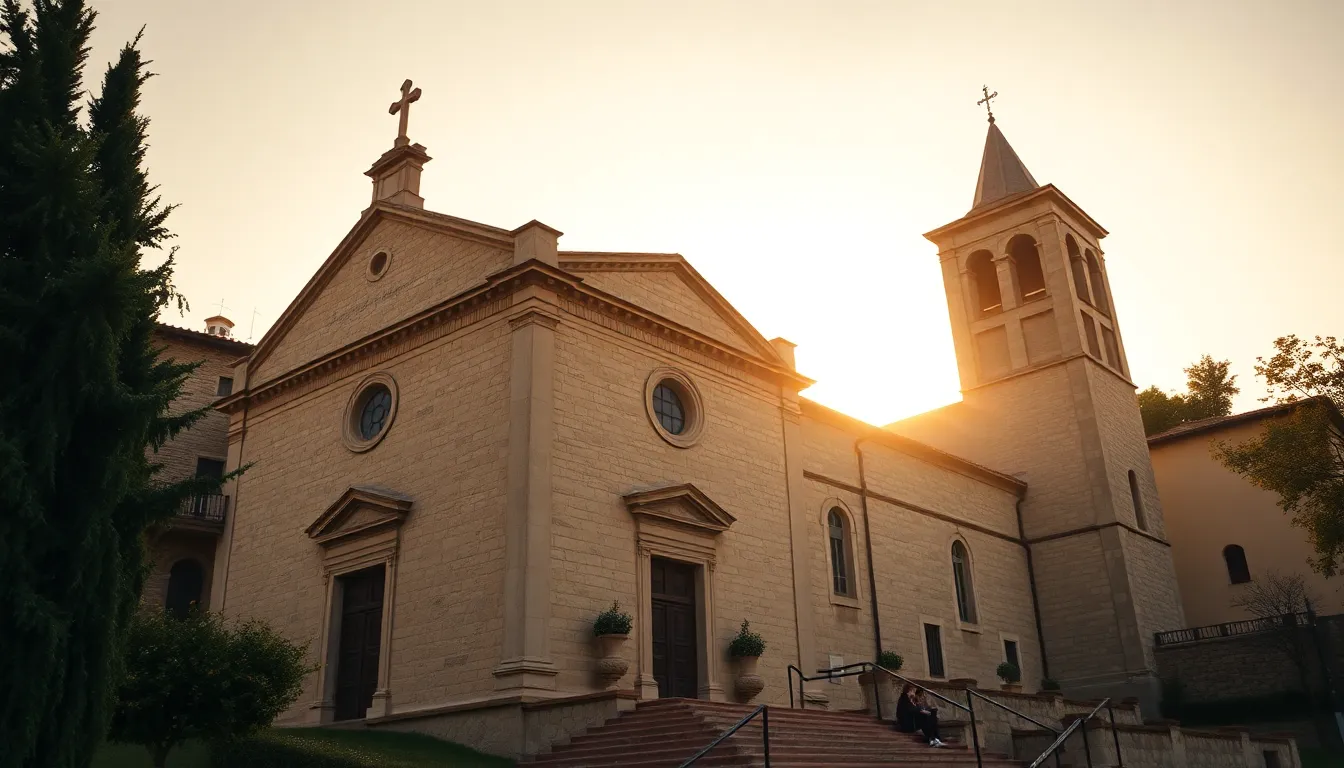
If you sat me down and made me pick one season to bring a heritage group to Italy, I would not pick spring. I would pick fall. I have led groups through every month of the Italian year for over forty years, and autumn is the window I quietly steer people toward when they ask me, off the record, when I would go myself.
The reason is simple. Fall gives you most of what makes spring wonderful, warm enough weather, long enough days, sites you can actually move through, without the Easter crush and without the spring rain gamble. But September, October, and November are not interchangeable. Each one has its own weather, its own crowd level, and its own set of holiday overlaps that matter for faith groups. Our season-by-season Italy guide gives you the full year. This piece zooms into fall, month by month.
Why Fall Is the Underrated Window
The summer crowds thin out fast once September arrives. The families who could only travel during the school break are gone, the peak-season pricing relaxes, and the major sites loosen up. The Uffizi in Florence, the Vatican Museums, St. Mark’s in Venice, all of them are more navigable in October than in July, and timed-entry slots that vanish in summer reappear.
The weather is the other half of the case. Early fall is still genuinely warm, and the light through October has a particular golden quality that makes the stone of Rome and the mosaics of Ravenna glow differently than at any other time of year. For a group with older members or anyone who struggles with heat, fall removes physical difficulty from the equation and lets the focus stay where it belongs.
And then there is the calendar. Fall holds the Jewish High Holidays, which require real attention for Jewish groups, and a quieter Christian calendar that offers depth without the intensity of Easter. Both deserve a closer look, which is what the month-by-month breakdown is for.
September: Warm, Lively, and Calendar-Heavy
September is the warmest of the three fall months and the closest to a summer trip without the summer crowds. Daytime temperatures in Rome sit in the mid 70s to low 80s Fahrenheit early in the month, easing as it goes. The days are still long. The countryside is at the tail end of harvest season, which gives Tuscany and the wine regions a particular energy.
The crowds drop noticeably from August, but the first half of September can still carry some late-summer volume at the headline sites, so early entry and timed access still matter. By the back half of the month, the city exhales.
For Jewish groups, September is the month to read the Hebrew calendar carefully. Rosh Hashanah and Yom Kippur frequently fall in September or very early October, and these are not travel days. If your trip overlaps the High Holidays, the itinerary has to build in full rest days, arrange synagogue attendance, and respect the rhythm of the fast on Yom Kippur. The Jewish communities of Rome and Venice welcome visiting groups for High Holiday services with advance coordination, and being in Rome’s ancient community for Rosh Hashanah can be one of the most meaningful pieces of an entire trip. But it must shape the dates from the first conversation, not be patched in afterward.
For Christian groups, September is simply a strong, warm, lively month with no major liturgical overlap to plan around, which makes it one of the more flexible windows of the year.
October: The Best Month I Know
If I could bottle one month, it would be October. The summer heat is gone, the daytime temperatures settle into the comfortable mid 60s to low 70s, the rain risk is still low through most of the month, and the light is at its richest. Walking between sites all day is genuinely pleasant. This is the month where a full, ambitious heritage itinerary feels easy instead of taxing.
The crowds are thinner than spring and far below summer. Smaller heritage sites that are hard to arrange in peak season, the synagogue and Jewish quarter in Ferrara, the old Jewish community in Livorno, the tufa town of Pitigliano in southern Tuscany, become much easier to fold into a route. Timed-entry availability at the Vatican and the Florence museums opens up.
October carries its own quiet religious texture. In Catholic tradition it is the month of the Rosary, and many churches hold special services and processions through it. For Jewish groups, Sukkot usually falls in early to mid October, just after the High Holidays, and some Italian synagogues maintain a sukkah where your group can observe the holiday with advance arrangement. The end of October generally clears the major Jewish holiday cycle entirely, which makes late October one of the cleanest, most flexible heritage windows on the whole calendar.
November: Cool, Quiet, and Reflective
November is the start of the cool-down and the quietest of the three months. Daytime temperatures in Rome slip into the low 60s and cooler in the north, the rain risk rises, and the days shorten. This is not a beach-weather month. But for a group that values reflection and near-empty sites over warm afternoons, November is a gift.
The crowds are at their thinnest of the fall. The Vatican in November is a fraction of what it is in April. Smaller sites and synagogues are almost entirely available for private, unhurried visits. For a group of fifteen or so people who want deep, quiet time inside these spaces, November delivers an intimacy the busier months cannot.
November 1st is All Saints’ Day, a public holiday across Italy, when cemeteries are visited and decorated throughout the country. It is a tradition that connects beautifully with the heritage themes of memory and continuity, and it can be a moving inclusion for a group traveling at the start of the month. Just plan around the holiday closure itself, since some businesses and offices shut for the day. Hanukkah occasionally reaches into late November in some years, and the menorah lighting in Rome’s Jewish Ghetto is a public event worth folding in for a group that happens to be there.
How to Choose Your Fall Week
Here is the short version of how I guide it. If you want the warmest fall weather and you are not tied to a tight High Holiday window, look at September, with the calendar open in front of you. If you want the single best balance of weather, light, and access on the whole calendar, aim for October, ideally the back half once the Jewish holidays clear. If you want quiet, reflective, near-empty sites and you do not mind cooler, shorter days, November rewards you.
Fall does not book out as ferociously as Easter, but the good October weeks still go early, and the group economics reward an early start: with Heritage Tours, the group leader travels free with fifteen or more participants, and more lead time makes that threshold easier to reach. If you are still comparing seasons, our spring heritage guide lays out the other strong window side by side.
FAQ: Italy Heritage Travel in Autumn
What is the best fall month to visit Italy with a heritage group?
October is the strongest single month for most groups: comfortable mid 60s to low 70s temperatures, rich light, low rain risk, and crowds well below spring or summer. September is warmer but carries the Jewish High Holidays, and November is the quietest but cooler and shorter on daylight. Late October, after the Jewish holidays clear, is the cleanest window of all.
Is autumn less crowded than spring in Italy?
Yes, generally. Fall avoids the Easter crowds that dominate spring in Rome and avoids the spring rain gamble. Major sites like the Vatican, the Uffizi, and St. Mark’s are more navigable in October than in April or July, and timed-entry slots that disappear in peak season tend to reopen. Smaller heritage sites are also easier to arrange.
How do the Jewish High Holidays affect a fall Italy trip?
Significantly, for observant groups. Rosh Hashanah and Yom Kippur usually fall in September or early October and are not travel days, so the itinerary must build in full rest days and arrange synagogue attendance. Sukkot follows in October. The communities of Rome and Venice welcome visiting groups with advance coordination. Plan the dates around the calendar from the very first conversation.
Is November too late for an Italy heritage tour?
Not for the right group. November is cooler, with daytime temperatures in the low 60s and shorter days, and the rain risk rises. But it offers the thinnest crowds and the most intimate access of the season. For a small group that prioritizes quiet, reflective time inside the sites over warm afternoons, November is genuinely rewarding.
What is the weather like in Italy in October?
October is comfortable for full days of walking. Rome runs in the mid 60s to low 70s Fahrenheit, cooling in the evenings, with low rain risk through most of the month and the golden autumn light Italy is known for. The north is a few degrees cooler. It is one of the best walking-weather months on the entire calendar for mixed-age heritage groups.
If fall sounds like the right fit for your community, the next step is picking the week that matches your people and your calendar. Explore our Italy heritage tours, see how our group journeys are structured, and reach out so we can find your autumn window together.