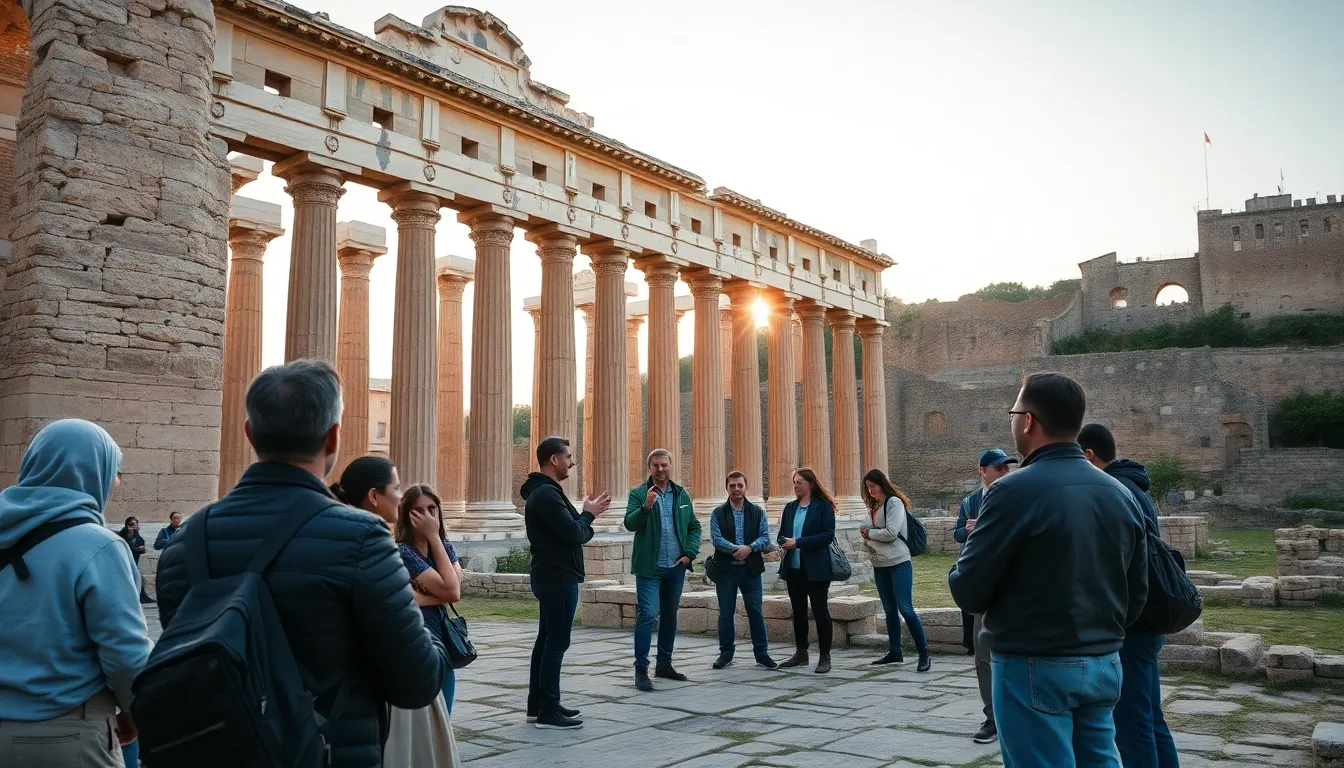
There is a moment on every trip when I can tell whether the leader has done the educational work. The group is standing in front of something extraordinary, the Roman catacombs, the five synagogues of the Venice Ghetto, the mosaics of Ravenna, and either they are seeing it or they are just looking at it. The difference is framing. A group that arrived prepared sees layers, connections, a story they are standing inside. A group that arrived cold sees an old wall.
For clergy and educators, this is the whole game. A heritage trip is the richest classroom you will ever have, but a classroom only works if someone teaches in it. The good news is that the teaching is entirely in your hands, and it is the part you are already gifted at. The operator handles the logistics so that you are free to do what you do best, which is help people understand.
I have spent more than forty years watching leaders turn trips into learning, first at the Israel Ministry of Tourism and now at Heritage Tours. Here is how to frame an Italy heritage trip as real education.
Define the Learning Outcome First
Educators know this instinctively and clergy sometimes skip it. Before you design anything, decide what you want your people to understand by the end. Not “see Rome” but “understand how the early church survived three centuries underground and emerged into the open.” Not “visit the ghetto” but “grasp what enclosure did to Italian Jewry and how the community refused to disappear.”
A clear learning outcome turns a sightseeing route into a curriculum. It tells you which sites matter and which are optional. It tells you what to teach at each stop and what to leave out. It gives your group a thread to hold across ten days, so that the catacombs on day two connect to the basilica on day five connect to the Renaissance chapel on day eight. Without that thread, even spectacular sites become a disconnected slideshow.
Write the outcome as one sentence and let it govern everything. When you are choosing between two sites or deciding how long to teach, you hold each decision up against that sentence. This is the same discipline that shapes a good itinerary, covered in our guide for pastors and rabbis planning an Italy heritage tour, applied specifically to teaching.
Build the Pre-Trip Curriculum
The most underused tool in heritage travel is the weeks before departure. A group that studies before they go arrives able to learn on the ground. A group that does not arrives needing the basics explained while standing in the heat, which wastes the very moments you traveled across the world for.
Build a simple pre-trip curriculum. It does not need to be elaborate. A few short readings tied to the sites you will visit. A reading on the early church before you walk the catacombs. A piece on 1516 and the birth of the ghetto before Venice. A short history of the Sephardic expulsion before Livorno or Ferrara. Pair each with one or two questions to hold in mind.
For congregations, a few teaching sessions in the weeks before departure work beautifully and double as recruiting and momentum, a connection explored in our piece on marketing an Italy heritage trip to your congregation. For school or educational groups, this is straightforward classroom work, assigned reading and discussion before the field portion.
The goal is simple. When your people arrive at a site, you are not introducing it for the first time. You are deepening something they already half-know. That is when real learning happens.
Teach On Site Without Lecturing
On the ground, the temptation is to lecture, to stand in front of a monument and deliver everything you know. Resist it. A heritage site is not a podium. The most effective on-site teaching is short, anchored, and leaves room for the place to speak.
Keep your teaching at each stop brief, a few minutes that name what your group is seeing, place it in the thread, and pose a question. Then let them be with it. The mosaics of Ravenna do more in five minutes of silence than in twenty minutes of your commentary. Your job is to frame, not to fill.
Lean on your local guide for the dense historical detail. A licensed Italian guide who knows the early Christian sites or the Jewish ghettos brings depth you cannot, the dates, the archaeology, the architectural specifics. Your role is different and complementary. You connect the history to faith, to your community’s own story, to the question your group is holding. The guide teaches the what. You teach the why it matters to us.
Build in time to debrief, too. An evening conversation, a shared meal where the day’s sites get processed together. This is where the learning consolidates, where a member says the thing that helps everyone else understand. The unstructured and reflective time is not a break from the education. It is part of it.
Match the Itinerary to the Curriculum
The route itself is a teaching tool, and a well-sequenced itinerary teaches even before you open your mouth.
For a Christian educational frame, a chronological build works powerfully. Rome first, the catacombs and the early church underground, then the basilicas built once Christianity emerged into the open, then Assisi and the medieval church, then Florence or Ravenna for the Renaissance or Byzantine chapters. Your group physically walks the timeline. The progression itself becomes the lesson.
For a Jewish educational frame, you might sequence by theme rather than strict chronology, continuity in Rome, enclosure in Venice, the Sephardic story in Ferrara or Livorno, memory and the Shoah woven through. Each city becomes a unit in the curriculum, and the movement between them carries the argument.
For interfaith or mixed educational groups, Italy is one of the few places where both stories live in the same cities, often a short walk apart. In Rome, the Jewish Ghetto and St. Peter’s sit close enough to teach in a single day, two narratives that share the same centuries. That proximity is itself a profound lesson about how these histories are intertwined.
The Leader Travels Free, Which Frees You to Teach
A practical word, because it bears directly on the educational work.
At Heritage Tours, with fifteen or more participants, the group leader travels at no cost. Flights, hotels, meals, everything your group receives, you receive at no charge. This is not a marketing incentive. It reflects a conviction I have held for decades. The person who builds the curriculum, prepares the teaching, and carries the educational and spiritual weight of the trip should not also be paying their own way.
For an educator or clergy leader, this matters beyond the money. Because the logistics are handled and your own travel is covered, your attention is free to go where it belongs, into the teaching. You are not managing buses or worrying about your own costs. You are preparing the readings, framing the sites, leading the debriefs. The structure exists so you can be the educator, not the tour manager. You can see how the full leader experience works on our group heritage tours page, and reaching fifteen participants is the threshold where it all applies.
FAQ: Educational Framing for Italy Heritage Trips
How do I turn a heritage trip into a real educational experience?
Start with a clear learning outcome, one sentence describing what you want your group to understand. Build a short pre-trip curriculum of readings tied to the sites, teach briefly and on-theme at each stop, lean on your local guide for historical depth, and debrief together in the evenings. The framing is what turns sightseeing into learning.
What should my group study before the trip?
A few short readings matched to the sites you will visit, paired with one or two questions to hold in mind. The early church before the catacombs, 1516 before the Venice Ghetto, the Sephardic expulsion before Ferrara or Livorno. The aim is for your people to arrive already half-knowing each site so you can deepen rather than introduce.
How much should I teach on site versus letting the guide teach?
Keep your own teaching brief at each stop, a few minutes to name what they are seeing and connect it to your thread. Lean on the licensed local guide for the dense historical detail, the dates and archaeology. Your distinct role is the why it matters, connecting the history to faith and to your community’s story.
Does the educator or clergy leader pay for the trip?
No. With fifteen or more participants, the leader’s costs are fully covered, including flights, accommodation, meals, and included activities. Because the logistics and the leader’s travel are handled, your attention stays free for the teaching, which is where it belongs.
Can the itinerary itself be a teaching tool?
Yes, and a well-sequenced one teaches before you say a word. A chronological route through Rome, Assisi, and Florence walks a Christian group through the timeline of the church. A thematic route through Rome, Venice, and Ferrara moves a Jewish group through continuity, enclosure, and the Sephardic story. The sequence carries the argument.
If you want this trip to teach and not just impress, the framing is everything, and it is exactly the part I love helping leaders build. Tell me what you want your people to understand, and we will shape the itinerary and the curriculum around it. There is no commitment and no pressure. Reach out whenever you are ready, or explore our Italy heritage tours to see where the teaching could lead your group.